



Music meets medicine as Parkinson’s patient plays clarinet during brain surgery


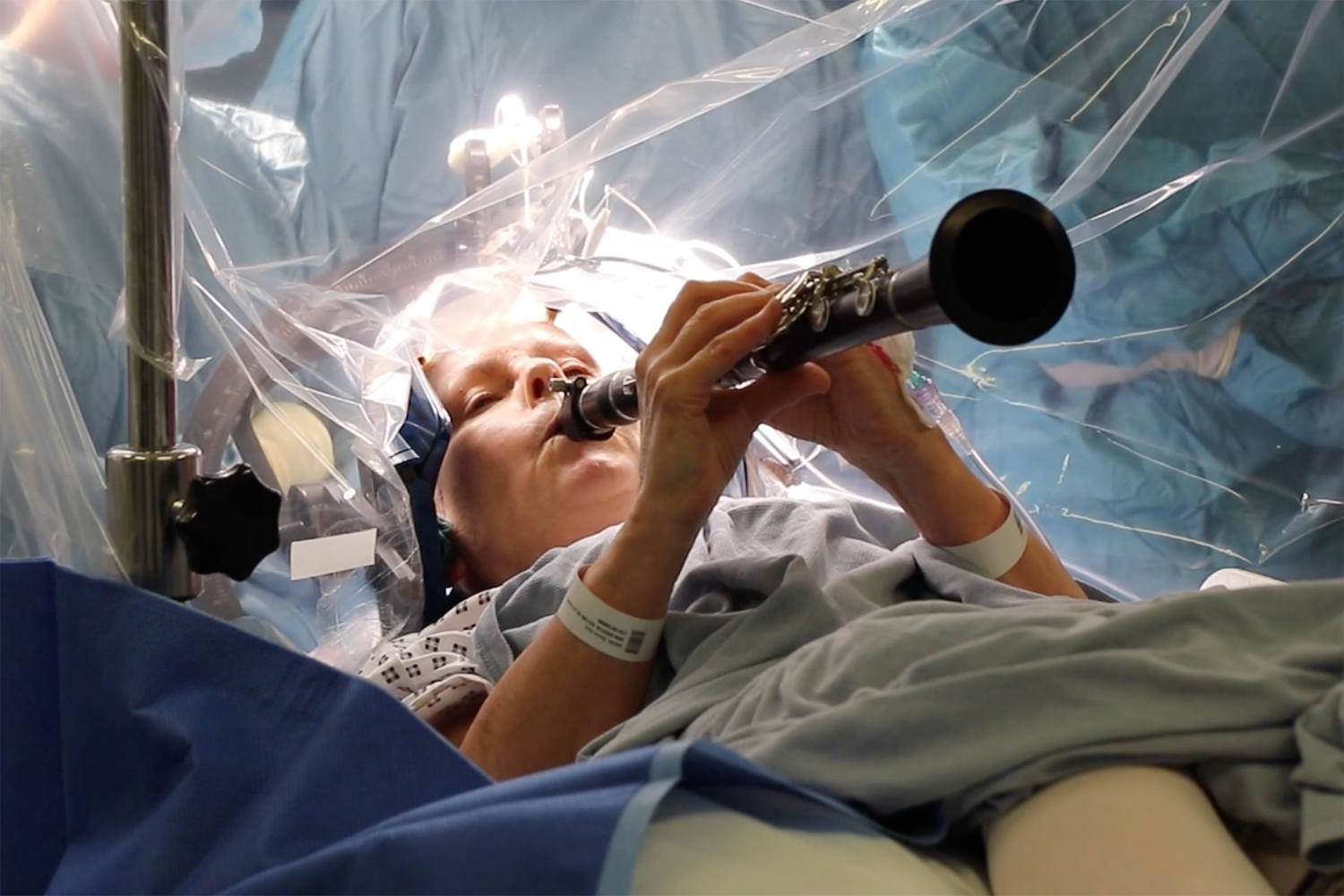
LONDON — Music met medicine when a patient played a clarinet solo as she underwent brain surgery for Parkinson’s disease and proved that the treatment was working in real time.
Denise Bacon, 65, saw her finger movements improve instantly during four hours of Deep Brain Stimulation (DBS) surgery — all while staying awake and performing on the musical instrument, London’s King’s College Hospital said in a news release Tuesday.
The retired speech and language therapist was diagnosed with Parkinson’s in 2014, She has since suffered difficulties walking, swimming, dancing and playing her beloved clarinet as the progressive neurological disorder that affects movement has taken hold of her body.
To help Bacon get these abilities back, Keyoumars Ashkan, professor of neurosurgery, performed DBS on her, implanting electrodes in Bacon’s brain and tracking her body’s reaction in real time.
“Stimulating electrodes are placed into the deep structures of the brain,” Ashkan said in the hospital’s news release, adding that it was “a long-established procedure to improve motor symptoms in patients with movement disorders.”
Although the brain itself has no pain receptors, Bacon was given local anesthetic to numb her scalp and skull, as doctors made holes half the size of a small coin in her skull and implanted the stimulating electrodes inside.
A pulse generator, similar to a pacemaker, was then connected to the electrodes to send targeted electrical signals to the brain.
“As a keen clarinetist, it was suggested Denise bring her clarinet into the operating theatre to see whether the procedure would improve her ability to play, which was one of Denise’s main goals for the surgery,” Ashkan said.
An amateur musician, Bacon played the instrument with the East Grinstead Concert Band until Parkinson’s symptoms made it impossible for her to continue five years ago.
However, as she played during the surgery, she noticed an immediate improvement in her hand movements.
“I remember my right hand being able to move with much more ease once the stimulation was applied, and this in turn improved my ability to play the clarinet, which I was delighted with,” she said in the news release.
Brain surgeries usually require general anesthesia, but certain procedures require the patient to be awake so doctors can ensure they aren’t damaging vital brain functions.
It is not the first procedure of this kind to be performed by Ashkan at King’s College Hospital. In 2020, a violinist played jazz classics as a tumor was removed from her brain.
Bacon also said she had seen early progress in her walking and is now looking forward to returning to activities such as swimming and dancing.
For the next 20 years, the chest-implanted pulse generator will help Bacon by constantly delivering electrical impulses, and giving her the chance to return to the hobbies and passions she loves, King’s College Hospital said in the release.
You may be interested

How wildlife photographer Chris Fallows captures the natural world
new admin - Apr 12, 2026When wildlife photographer Chris Fallows first ventured into the waters of False Bay, in Cape Town, South Africa, he saw…

4/12: Sunday Morning – The Money Issue
new admin - Apr 12, 2026Jane Pauley hosts our annual "Money Issue." Featured: Obstacles to home ownership; fighting health insurance denials; Chinese EVs; opposition to…

Oil prices surge after Trump says U.S. will blockade the Strait of Hormuz
new admin - Apr 12, 2026The price of oil surged Sunday night after President Donald Trump said the U.S. would blockade the Strait of Hormuz…