



Missouri Lawmakers Consider Shuffling Public Higher Ed Funds

Some college and university leaders are worried for the future of their institutions as the Missouri Senate considers a spending bill for fiscal year 2027 that would reshuffle funding for public higher education in the state. The bill, which narrowly passed the House last week, would mean major cuts for some institutions, including the state’s two historically Black universities.
The legislation would base state funding to public colleges and universities on full-time enrollments. The bill’s sponsor, Missouri representative Dirk Deaton, argued the core funding institutions receive “varies wildly” because these allocations are primarily based on the amounts institutions have historically received for decades, augmented by their political advocacy over the years.
For example, Truman State University, a predominantly white liberal arts institution in Kirksville that serves under 4,000 students, receives $18,075 per full-time student, while Missouri State University, a PWI in Springfield that enrolls over 27,000 students, receives $6,589 per full-time student, Deaton pointed out in an op-ed in The Missouri Times. Moberly Community College gets $3,058 per full-time student, while St. Louis Community College gets $5,031, even though St. Louis enrolls more students—“not as pronounced” an effect, Deaton wrote, but still a “problem.” Deaton’s proposal would give four-year institutions about $8,376 per full-time equivalent enrollment. Two-year institutions would receive about $3,656 per FTE.
“The General Assembly has a duty to ensure that taxpayer dollars are distributed fairly, transparently, and in a way that reflects where students are actually choosing to attend school,” wrote Deaton, the Republican chairman of the Missouri House Budget Committee. “The single best indicator for determining where taxpayer dollars should go is to use enrollment data to view where students are choosing to pursue their college education and subsequently directing taxpayer dollars toward those schools.”
But opponents of the funding overhaul argue core funds shouldn’t be primarily determined by enrollment, and a new formula should embrace more performance-based metrics. Otherwise, smaller institutions are in for a lean year, even if they’re succeeding in other ways, critics say.
Missouri Senate president pro tem Cindy O’Laughlin told the Jefferson City News Tribune she doesn’t believe the Senate will pass the House’s plan. The bill would halve appropriations to Truman State University, which lies in her district, from more than $50 million in fiscal year 2026 to about $24 million.
“No university can operate on a 50 percent cut, and to suggest it indicates a lack of serious thought,” she wrote to the News Tribune, noting that funding should be “based on outcomes.”
“We need to seriously consider the type of graduates we are looking for and prioritize funding accordingly.”
Winners and Losers
Large universities, such as Missouri State University and the University of Missouri, stand to benefit if the spending bill becomes law.
Missouri State University president Richard B. Williams voiced his support.
He told Inside Higher Ed in a statement that the current funding model hasn’t kept up with enrollment growth since it was established in the early 1990s; as a result, Missouri State receives the second-lowest per-student allocation among the state’s four-year institutions. He thanked lawmakers backing the bill for “their leadership in modernizing state funding for public higher education.”
“This proposal would make a meaningful difference for the students we serve and help ensure we can continue providing an affordable, Missouri-based education that prepares the workforce our state needs,” Williams said.
Christopher Ave, the University of Missouri’s director of media relations and public affairs, expressed more mixed feelings.
He wrote to Inside Higher Ed that the university is “grateful for the strong support of the governor and legislature” and appreciates “the legislature considering new approaches to provide state funding to Missouri’s public universities.”
At the same time, “we believe that funding models should include sound rationale based on enrollment, graduation and placement rates, research activity and awarding of professional degrees, among other performance factors,” Ave said. “We look forward to working with the governor and legislature on funding approaches that focus on performance and outcomes that benefit Missourians.”
Some higher ed institutions are pushing back, even as they prepare for the possibility of major losses if the legislation passes.
Truman State University officials emphasized that the proposal has been “met with bipartisan opposition.”
“It does not account for Truman’s state-mandated role as a public liberal arts and sciences university, nor does it take into consideration Truman is one of the state’s highest performing public universities and consistently has among the highest retention and graduation rates,” the statement read. “Truman State University is precisely the kind of educational institution the citizens of Missouri expect to support with their tax dollars.”
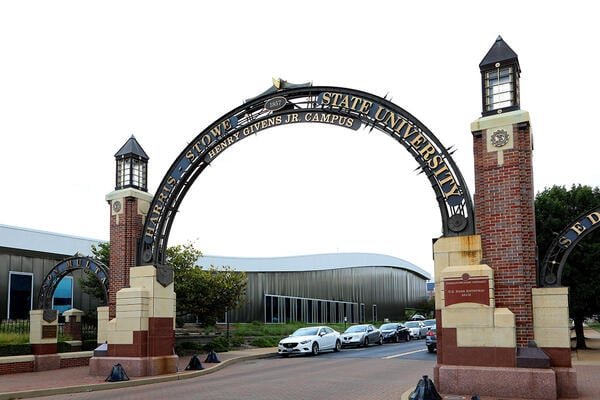
The state’s HBCUs, Lincoln University and Harris-Stowe State University, would also face sizable cuts.
Lincoln University, which reported 2,256 students last fall, could lose about $10 million in core funding.
John B. Moseley, Lincoln’s president, wrote to Inside Higher Ed that he’s thankful for the state’s past investments in the historically Black land-grant university, which “have helped drive significant, measurable progress in enrollment, retention and student success.” But he worries about those gains slowing.
The proposal raises “serious concern,” as “cuts of this magnitude could disproportionately impact institutions like ours and the populations we serve,” he said. “We believe any funding model should reflect institutional mission and the students served, or it risks undermining the outcomes the state has worked to strengthen. We remain engaged and committed to working with state leaders to support strategic investment and long-term success for Missouri’s public institutions.”
For Harris-Stowe State University, the legislation could pose an existential threat, said President LaTonia Collins Smith. The university expects a $5 million reduction in its core funding, which would amount to a roughly 40 percent cut.
Harris-Stowe already receives the lowest level of state funding among four-year institutions in the state, she said. Should the legislation become law, Collins Smith would have to consider laying off employees, raising tuition costs and cutting academic programs “we worked really hard to add and to build” to align with the state’s workforce needs. She worries that already vulnerable students will bear the negative consequences.
She stressed that the institution is small—about 1,080 students, with 934 attending full-time—but most students are eligible for Pell Grants, federal financial aid for low-income students. The college disproportionately serves first-generation students and older learners taking classes part-time or earning certifications because of job and family responsibilities, which count against the university under the proposed FTE funding model.
Collins Smith said she’s not opposed to a new funding formula that takes performance into account, but it “should consider the diverse types of institutions that we have in the state of Missouri.”
Institutions “currently serving the marginalized populations are the ones who are not necessarily benefiting from this new model,” she said.
Harris-Stowe “prides itself on … providing a high-quality education that is affordable,” Collins Smith added. Having to raise tuition would compromise its mission. “But if we continue down this pathway, and we’re not able to adequately fund the university, the conversation becomes very real. What happens to Harris-Stowe?”
You may be interested

Louisiana May Broaden University Public Records Exemptions
new admin - Apr 01, 2026[ad_1] Louisiana is one step closer to broadening public records exemptions for its public universities. On Tuesday, the Louisiana Senate…

Bruce Springsteen Launches New Tour With Politically Charged Set List
new admin - Apr 01, 2026[ad_1] Before a single note of music was played at the opening night of the 2026 Land of Hope and…

What is birthright citizenship, and can Trump end the constitutional right in the U.S.?
new admin - Apr 01, 2026Washington — President Trump is seeking to end birthright citizenship after years of criticizing the constitutional right, and now the…