


Michigan Research Center Faces Local Opposition

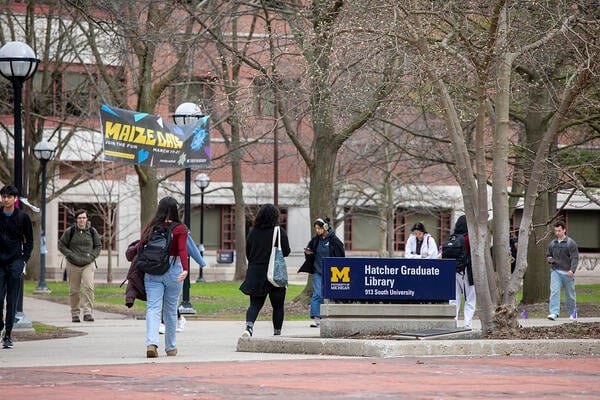
The University of Michigan wants to bring hundreds of jobs and a high-performance computing facility to a township nearly 20 miles away from its Ann Arbor campus. However, local opposition could derail the project.
Among other concerns, the local leaders and community members say they are worried the facility could make the township a target for terrorism. They also accused the university of lying to them.
The Ypsilanti Township Board of Trustees unanimously passed a resolution Tuesday night “declaring strong and unequivocal opposition” to a proposed computational research facility to be built in collaboration with the Los Alamos National Laboratory. University officials have cast the project as a computational research center focused on science, energy and national security. The site will be used for nuclear weapons research, but officials have repeatedly said such weapons will not be manufactured there.
The project is expected to cost $1.2 billion and be split into two buildings: a 240,000-square-foot research facility to handle classified work and another 50,000-square-foot facility for nonclassified work. UM is currently considering two township sites for the center.
But community members and representatives don’t want it.
In the resolution, township officials listed a litany of concerns, including safety and environmental impacts. They argued in the resolution that the facility would be a high-value target with the potential to attract drone and cybersecurity attacks and “sabotage upon the Township’s established infrastructure with significantly high impact consequence.” The resolution states that “these threats disproportionately endanger civilian populations located near the High Value Targets.”
Michigan spokesperson Paul Corliss disputed that characterization in an emailed statement.
“As we have previously stated, the proposed facility is a high-performance computational research center designed to support advanced research in areas such as medicine, climate science, energy and national security,” he wrote. “It is not a nuclear weapons facility and would not involve the storage or handling of hazardous materials. Further, the characterization of the yet-to-be-built facility as a ‘Tier 1 High Value Target Risk’ is not supported by facts.”
Township officials also argued in the resolution that the proposed research facility “will constitute a public nuisance in that it will have an irreparable impact upon the public health, safety, welfare and security” of residents and businesses and negatively affect property values in the area.
Township attorney Doug Winters accused UM representatives of arrogance and of misleading elected officials about the location of the site and failing to communicate with the board. He alleged in a letter to township officials that UM is trying to become “an active participant” in the Trump administration’s “war machine.” He also criticized UM for ending its partnership with the PhD Project—which helps universities recruit diverse candidates from underrepresented backgrounds—while seeking to set up a lab in Ypsilanti Township, a “historically marginalized community.”
In an interview with Inside Higher Ed, he said the project has been “based upon lies, lies, lies” and questioned why the university didn’t seek to set up the site near its Ann Arbor campus, which is about a 20-minute drive away and in the same county.
“Ann Arbor is the wealthiest community in this state, by far. And this county is divided by race and place. They wouldn’t dare bring this proposal to the U of M campus in the city of Ann Arbor. Instead they have tried to locate it in an area that has been historically marginalized, historically low income, historically had a higher percentage of Black and brown people, poor people,” Winters said.
UM has said it picked Ypsilanti Township rather than Ann Arbor for infrastructure reasons. Steven Ceccio, project lead and UM engineering professor, said in an interview with an in-house communications website that the university wanted to build in Ann Arbor but the township emerged as a better option, because it offers “the required power, water and zoning for light industrial activity.” (The township has a population of over 55,000.)
UM has also argued township officials previously supported the research facility.
“We value our relationship with the township and respect the role of local officials, as well as the importance of community input in this process. At the same time, we are disappointed by this change in position. Township leaders had previously indicated support for this project—both publicly and privately—and specifically encouraged the university to focus on the proposed Willow Run site in Ypsilanti Township,” Corliss wrote to Inside Higher Ed by email.
He added that the university “has been responsive to that input” and continues to evaluate both the Willow Run site and another property on Textile Road as part of its “due diligence process” for the project.
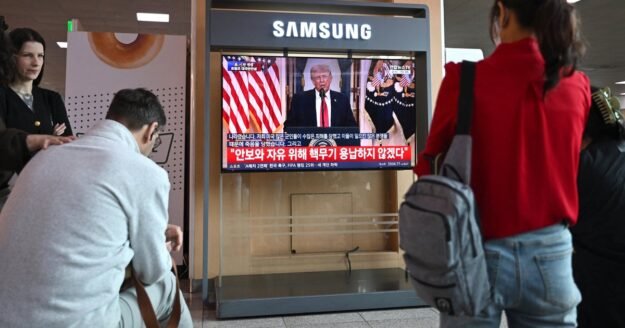
Although township officials previously urged UM to choose the Willow Run site, local opposition to the project has hardened since then, particularly after the U.S. and Israel attacked Iran.
Elected officials raised some of the same issues in another resolution last year, such as concerns about environmental impact. That resolution urged UM to reconsider building on the site on Textile Road in favor of the Willow Run property. But a new—and emphasized point—in the resolution passed this week is the concern about potential threats to the community created by having a “high-value target” in its backyard. The resolution also makes passing references to “the war in the Mideast,” which Winters noted has included Iranian attacks on research facilities overseas.
“At this point in time, our research has shown that no matter where they want to go, they’re a high-value target, and we don’t want them located anywhere in the township,” Winters said.
Beyond war-related issues, opposition from the township reflects growing concerns nationwide about the effects of data centers on local communities, even though UM has explicitly said its facility isn’t a data center.
With unprecedented demand for such data centers among a recent boom in artificial intelligence usage by both companies and individuals, such growth has prompted a flurry of community protests amid concerns over environmental impacts and rising energy costs.
Now, in a corner of southeast Michigan, the war with Iran is fueling new fears in that fight.
“It should be located on some type of federally protected property where you can provide the appropriate security and not located near a civilian population,” Winters said. “I don’t know why it’s so hard for anybody at Michigan to understand they are a high-value target.”
You may be interested

Path Toward Equity in Athletics Runs Through the Classroom
new admin - Apr 02, 2026[ad_1] As I watched the 68 teams in the NCAA women’s March Madness tournament winnow to a Final Four, I…

NFL news: Robert Saleh says spat with Jaguars’ Liam Coen is ‘water under the bridge’
new admin - Apr 02, 2026[ad_1] NEWYou can now listen to Fox News articles! A fiery postgame interaction over sign-stealing accusations has finally been resolved,…

Senate takes first step toward ending DHS shutdown after House GOP reverses course
new admin - Apr 02, 2026Washington — The Senate early Thursday took the first step toward funding the bulk of the Department of Homeland Security…