



Melissa Etheridge Talks New Music, Addiction, Grief, Hall of Fame


M
elissa Etheridge likes to change lanes — in her car, where country music is on repeat, with her Americana-tinged guitar, and certainly as a songwriter with pop hits to her name. But rock & roll will always be at the heart of her music, going back to Etheridge’s self-titled debut in 1988, when the openly gay singer (out nearly a decade before Ellen DeGeneres’ 1997 reveal) asked in the song “Like the Way I Do,” “Does she stimulate you, attract and captivate you?/Tell me, does she miss you, existing just to kiss you, like the way I do?” Today, Etheridge is still putting her best rock foot forward, while also embracing the sounds of Nashville on her new album, Rise, out March 27. Produced by Shooter Jennings at Sunset Sound, where parts of Prince’s Purple Rain and the Rolling Stones’ Exile on Main St. were recorded, Etheridge’s 18th studio effort is proof of a songwriter at her introspective height, and a deserving candidate for the Rock & Roll Hall of Fame.
Having Shooter Jennings produce your new album was inspired — it sounds just like classic Melissa Etheridge. How did you link up?
I was looking for a producer who could walk the line between rock and country. I looked at his work and thought, “Oh, yeah.” [I’m a] big fan of [his father] Waylon Jennings. I like that he’s an L.A. guy who’s got this heavy-metal rock background, but is also very rooted in that country-rock sound. We met, talked, and, boy, did we get on. I knew — this is the guy. He gets out of the way, [and] is solid and steady the whole time. When I’d go, “OK, what do you think?” He’d definitely let me know. He just shepherds it in such an amazing way … because it’s so hard [when] you finish a song. You give it everything, and so often, producers are like, “Right, that’s perfect, let’s do it again.” And he’s just excited. He loves music, and that’s such a pleasure to be around.
You duet with Chris Stapleton on the soberly hopeful “The Other Side of Blue.” Is there a backstory?
Sometimes you just have to work up the nerve and ask somebody. I called my manager [and] said, “I’m only interested in writing with one person, and that would be Chris Stapleton.” She goes, “Well, we’ll ask.” And she asked, and the answer came back yes, which is just thrilling. I’d never met him, but I was a massive fan. I went to Nashville, where he records in Dave Cobb’s studio. It’s a huge, historic soundstage. It was just me and him, talking about our families. I spoke about my three surviving kids and mentioned Beckett, who I lost [to addiction issues in 2020, when he was 21]. Chris said, “Oh, you talk in song.” Within 15 minutes of sitting down, we were deep into writing. It was pretty magical; just a really special moment.
Has country music helped bring rock back?
Yes, I think country is the place. I find myself turning on SiriusXM in the car, [stations like] Outlaw Country or the Highway. I always felt like I made music for people that drive cars and listen to music. Then you listen to these artists, and they sound like Nineties rock & roll artists. I did grow up on Tammy Wynette and Johnny Cash, but I always stood more in the rock & roll world. But I don’t know anymore.
Spoken like someone who made the short list for the Rock & Roll Hall of Fame …
The Rock Hall is part of that. There was that classic rock & roll we know, and then there’s everything that has been influenced [by it] and has that rock & roll spirit. That’s your R&B, rap, and country.
That runs counter to what Gene Simmons said in February, specifically: “It’s not my music. I don’t come from the ghetto. Hip-hop does not belong in the Rock & Roll Hall of Fame.”
That says more about him than anything. Rock & roll is a feeling. You can’t bottle it up and say, “This is mine, not yours.”
You’ve written through a lot: illness, grief. Has there been an evolution to the vulnerability you present in your songs?
The writing was always the healing. Early on, it was love, heartache — that awful stuff that happens to you in your twenties. When I came out, there were no parts of me that were like, “I can’t talk about that.” After cancer, it was “I’m going to write songs for me, so that when I perform them 20 years from now, I’m going to feel my strength.” The writing was always the good medicine that made me feel better. And then, losing my son … The first song that I wrote for this album was “Call You.” It had been four years since Beckett passed, and I still missed being able to call him — just picking up the phone. And that little emotion is enough to put into the song and say, “OK, but I’m not going to stop living. I’m not going to curl up into a ball of guilt and shame, and roll over. I’m going to keep on living, even if I can’t call you anymore.” I wrote that, and then I was able to dig deep into the rest of the album.
As a breast-cancer survivor, you’ve advocated for cannabis use. What happened to your line of botanicals?
I’ve given up on the cannabis business. When I jumped in 10 years ago, I thought [it was] going to be legalized in the next couple of years. But it’s still not federally legalized, and you really can’t run a business without federal banking support. I sunk a whole lot of money into it. Now, I focus my energy on my foundation, which funds research into plant medicine for trauma and addiction. That includes cannabis, psilocybin, and psychedelics.
Have your views on addiction changed since Beckett’s passing?
I’ve always thought of addiction as deeply psychological and neurological. The more I experienced plant medicine, the more I felt confident that this is a good thing. When Beckett needed help, I wished there was a place I could take him to experience plant medicine. But he was underage, and there was no such thing. So when he passed, I said, “I want to find a way to change the laws, so we can have this as an option for addiction.”
Is “Melissa Etheridge” still you, or a persona?
[Laughs.] Melissa Etheridge is me. I’ve never put anything out there that wasn’t me. My music may seem intense — heartbroken, angry — but if you know me, then you know it’s all authentically me.
If your 23-year-old self were heading into the studio for the first time, what would you tell her?
Whatever I’d tell myself, I wouldn’t listen to it — I was a stubborn 23-year-old! But I’d say, “It’s about the long run. You’re going to have hits, and you’re going to have albums no one hears of. Just keep making music you love, and keep performing live. Keep on the path of making music and performing music, and you will have a lovely, long, delicious career.” Also, I’d tell myself to do more situps.
You may be interested

Dead Man’s Wire review – Al Pacino stars in real life hostage thriller | Films | Entertainment
new admin - Mar 20, 2026If the title of this movie sounds familiar, it's probably because it is not dissimilar to the 2018 documentary about…

Trump administration making heavy preparations for potential use of ground troops in Iran
new admin - Mar 20, 2026Washington — Pentagon officials have made detailed preparations for deploying U.S. ground forces into Iran, multiple sources briefed on the…
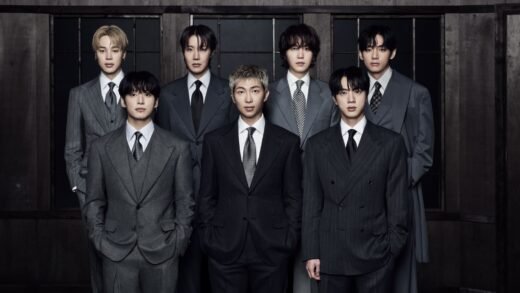
BTS Nails Its Comeback With ‘Arirang’
new admin - Mar 20, 2026[ad_1] On its blockbuster return, the world's biggest band stresses group identity and South Korean roots, while pushing the songs…