



Major federation of unions calls for ‘worker-centered AI’ future

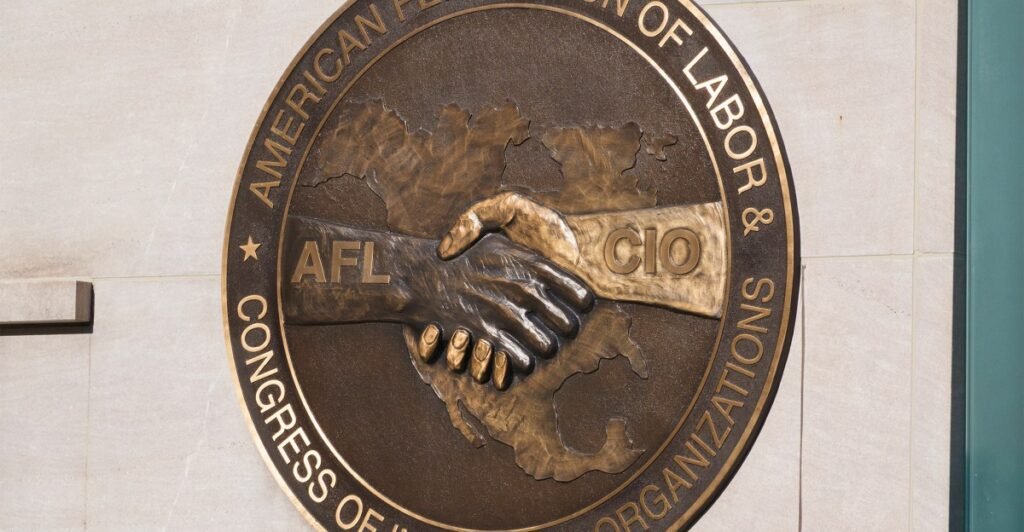
On Wednesday, the largest US group of unions called on employers and policymakers to join in an effort it’s calling the “workers first initiative on AI.” Functionally, the effort by the American Federation of Labor and Congress of Industrial Organizations (AFL-CIO) amounts to strengthened collective bargaining in the workplace and advocating for regulations to limit the negative effect of AI on workers, in addition to an education campaign.
“We reject the false choice between American competitiveness on the world stage and respecting workers’ rights and dignity,” AFL-CIO president Liz Shuler says in the press release. The AFL-CIO’s membership includes 63 unions and nearly 15 million workers, ranging from pro hockey players to nurses to merchant mariners.
The AFL-CIO released a list of top priorities for a “worker-centered technological future.” These priorities include, among others, stronger enforcement of labor rights against AI-powered workplace surveillance or layoffs; protections against copyright infringement; retraining programs for workers to enter the AI workforce; and transparency into AI systems purchased with taxpayer dollars.
While the AFL-CIO’s priorities are clear, the group does not specify which “serious consequences” employers should face “for using technology to undermine democracy and civil rights.” However, the AFL-CIO’s interim director of its Technology Institute, Ed Wytkind, tells The Verge that possible remedies used for decades to protect workers included court cases, fines, or criminal charges.
Wytkind calls collective bargaining “one of the best tools available to manage this transition” to a future with AI. He points to how the UAW worked with carmakers to automate the auto sector starting in the 1950s. “It’s why you have state-of-the-art equipment in some transportation sectors with workers working with that equipment quite well,” he says.
The group also says it will use the power of collective bargaining to fight against AI-powered workplace surveillance. Wytkind says contract negotiations are a tried-and-true method of barring employers from hiding video cameras around the workplace or other surveillance issues that started in the 1980s. (Now, however, most office technologies can surveil workers, he says.)
The AFL-CIO also says that workers need to be involved in the AI development process. It is a big ask of tech companies, but the AFL-CIO points to the government-funded AI research as the place for workers and unions to have a say. “Incorporating worker voices and unions into these research initiatives should be a requirement and a national priority,” the AFL-CIO says. In practice, Wytkind says that workers can help companies save money by avoiding purchasing useless or unsafe technology.
In addition to labor efforts, the AFL-CIO is focused on state and national bills to regulate AI. “There are ways to put in the law and in the regulations, a requirement that you have workers involved in the future of new technologies,” Wytkind says.
Regulating AI has been an uphill battle at both the state and federal level. When bipartisan efforts came together to cut the AI moratorium of state-level regulation from President Trump’s Big Beautiful Bill, an action which the AFL-CIO endorsed, Trump revived the idea in his AI action plan. In California, the legislature passed the AFL-CIO-backed Senate Bill 7, requiring humans to oversee AI-enabled firings and any workplace discipline. California Gov. Gavin Newsom then vetoed the “No Robo Bosses Act” on October 13th.
Wytkind calls Newsom’s veto a disappointment but not a deterrent. The AFL-CIO will continue to bring “strong, commonsense guardrail policies to state legislatures — and, oh by the way, it is one of the issues that unifies Republicans and Democrats in ways that we don’t see almost in any other issue area,” Wytkind says.
The AFL-CIO faces monied opponents. AI super PACs are in vogue this year. Meta created its own pro-AI California super PAC to funnel money into ads promoting the company’s own political agenda in August. The AFL-CIO’s California chapter spent over $2 million in political donations to California elected officials in 2024, according to the latest data available in the CalMatters Digital Democracy database. That is over 30 times the $70,000 that the group spent in 2023 in California.
The AFL-CIO has never passed a unified technology agenda like this before, Wytkind says. Prior tech agendas typically focused more on one sector or type of worker than others. Not with AI, Wytkind says. “You cannot point to a single sector of the economy or public services that will not be affected by AI, at least moderately, if not overwhelmingly.”
You may be interested

Room for the Moon is thrillingly weird experimental pop
new admin - Apr 12, 2026For obvious reasons, I’ve had Moon on the mind all week. So I was trying to figure out what I…

Trump says U.S. will blockade Strait of Hormuz and intercept ships that paid tolls to Iran
new admin - Apr 12, 2026Washington — President Trump said on Sunday that the U.S. Navy will begin blockading ships from entering or exiting the…

David Byrne’s Performance Burned Down the House
new admin - Apr 12, 2026[ad_1] One thing that is great about music is its ability to uplift, even when — especially when — shit…