



Kashkari says inflation could be extended “the longer there’s back and forth” in Canada tariff fight

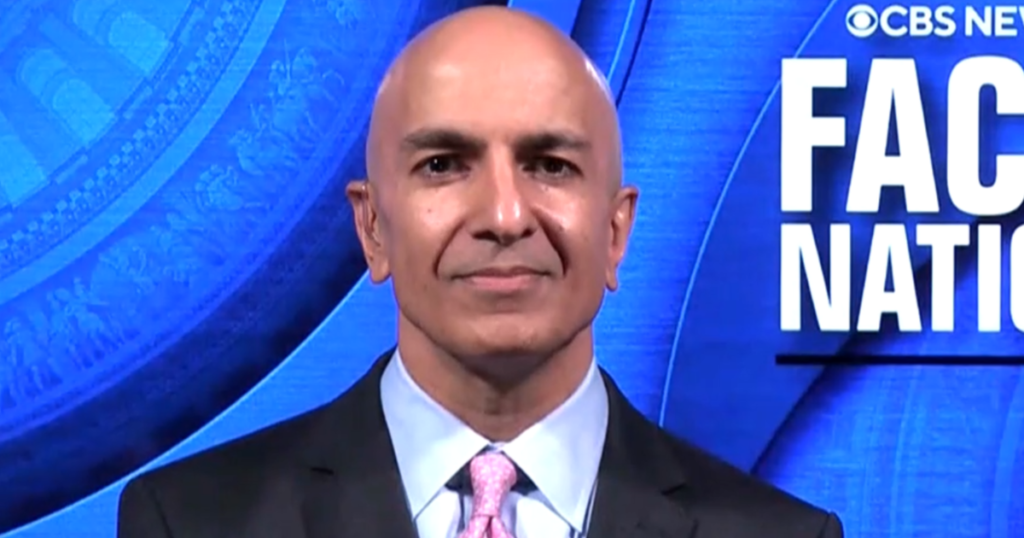
Washington — Neel Kashkari, president of the Federal Reserve Bank of Minneapolis, said Sunday that the tariff fight with Canada could extend U.S. inflation, should the tense trade dynamic that came to a head in recent days between the historically allied countries continue.
“The longer there’s back and forth on the trade front, just like the longer there’s back and forth in the conflict of Iran, the imprint and inflation end up being extended and delayed,” Kashkari said on “Face the Nation with Margaret Brennan.”
The U.S. on Saturday began imposing 50% tariffs on Canadian products after negotiators failed to reach an agreement to resolve the standoff over trade between the key partner countries. U.S. Trade Representative Jamieson Greer said Saturday that no new planned talks with the Canadians were on the table.
Meanwhile, Canadian Prime Minister Mark Carney promised new retaliatory tariffs against the U.S., with details to come this week ahead of their planned implementation on Sept. 8. The tariffs are expected to target steel, dairy, appliances, agricultural equipment, pulp, paper and electronics.
Mr. Trump has had a tense relationship with Canada over trade, NATO, a dispute over a Detroit-area bridge, and his threats to make Canada the U.S.’ 51st state.
Kashkari noted that Canada is “an important trading partner for America.” The two countries sold $880 billion worth of goods and services to one another in 2025, with Canada coming in behind Mexico as the U.S.’ second-largest trading partner.
Kashkari outlined the U.S.’ current economic picture, pointing to five years of elevated inflation that he said was largely driven by supply shocks.
“One of those supply shocks is the trade and tariff conflicts,” Kashkari said.
The Minneapolis Federal Reserve Bank president said along with issues like the war with Iran, which he called “a big driver of what’s happening on inflation” due to energy’s broad impact on the U.S. economy, the trade dynamic is “another factor to pay close attention to.”
“And so to the extent that we can get to a new normal, a level of whatever the trade dynamic is going to be, once we can get to that steady state, then businesses can adjust, and the inflationary impact can fade into the background,” Kashkari said.
You may be interested

Beauty fan opens £98 advent calendar worth over £605 with £145 anti-ageing cream
new admin - Sep 23, 2026Curated by Hannah Martin, the OK! Beauty Box advent calendar 2026 has 25 products worth over £605, including 22 full-sized…

Lydia Millen’s Fairfax & Favor collection is back – act fast before it sells out
new admin - Sep 23, 2026[ad_1] EXCLUSIVE: Fairfax & Favor co-founder Marcus Fairfax Fountaine speaks to the Daily Express as the sell-out collaboration returns for…

Building a Black Honors Community
new admin - Sep 23, 2026[ad_1] When Naomi Thrower was applying to college, she knew she wanted the historically Black college or university experience but…