




Japanese Gothic is a gorgeously grotesque ghost story

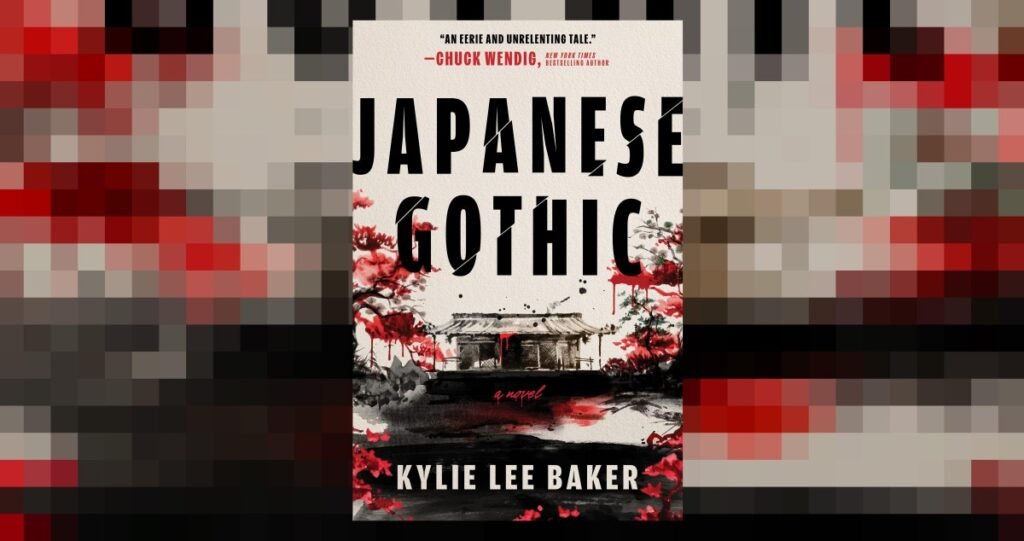
I’ll give the usual caveat: The horror novel Japanese Gothic is best experienced going in with as little information as possible. Content warnings for graphic gore, scenes of domestic violence, self-harm, and mental illness. If you’re okay with that, then consider pausing here. While I will try to keep this relatively spoiler-free, there will be some plot points I can’t avoid.
Lee Turner is an NYU student in 2026 who has fled to Japan to stay with his father after murdering his roommate. He can’t quite remember why he did it, or where he stashed the body, partially because Lee stumbles through life in a haze of sedatives ranging from Benadryl to Ativan.
Jumping back a century and a half, Sen Iwasaki is the daughter of a samurai, trained by her father to be a warrior. She lives in hiding with her family, many years after the samurai were effectively abolished. Her father is one of the few survivors of the Satsuma Rebellion, in which the samurai attempted to rise up against Emperor Meiji’s imperial army and were mercilessly crushed.
What the two share is a house. Nearly 150 years after Sen’s family seeks refuge in the house behind the sword ferns, so too does Lee, and a portal opens up between their worlds.
Lee believes that Sen is a bridge to the world of the dead. He thinks that, through her, he might be able to find out what happened to his mother, who went missing when he was just 12.
From here, the mysteries just keep piling up. Why does the door between their worlds only open during certain times? How did Sen die? Why is Hina (Lee’s dad’s girlfriend) acting so strangely? Why didn’t Sen’s father die on the battlefield?
Some of the twists you’ll see coming, but it doesn’t take away from the experience. The plot is mind-bending and filled with unreliable narrators. The truth is eventually revealed in a climax that somehow feels more dreamlike than the rest of the novel.
In the hands of a lesser writer, such a convoluted narrative could feel unnecessarily confusing. But Baker’s vision is clear; her prose is, at turns, gorgeous and grotesque. There are plenty of passages that describe in great detail the salty taste of blood, teeth clattering out of a person’s skull, and “ropes” of intestines. But there are also passages that describe food tasting of “TV static,” or Sen as being not a girl, but a “refraction of light.” This is one of my favorite lines: “Once, the house had felt like it had a heartbeat. Now it only felt like a piece of driftwood chewed through with rot.”
Of course, Japanese Gothic isn’t just a time-bending ghost story. It tackles generational trauma, child abuse, colonialism, the patriarchy, and mental health. It’s equal parts folk horror, crime thriller, and gothic fiction. And most importantly, it’s compulsively readable.
You may be interested

How Jeffrey Epstein earned a $25 million payout through a bank’s DOJ settlement
new admin - Jul 15, 2026How Jeffrey Epstein earned a $25 million payout through a bank's DOJ settlement - CBS News Watch CBS News Documents…

American League shuts out National League 4-0 in Philadelphia All-Star Game 2026
new admin - Jul 15, 2026[ad_1] NEWYou can now listen to Fox News articles! The 2026 MLB All-Star Game arrived in Philadelphia with the feel…

NASA astronaut joins two Russians on trip to International Space Station for 8-month stay
new admin - Jul 15, 2026Physician-astronaut Anil Menon, a former flight surgeon with NASA, rocketed into space Tuesday with two Russian cosmonauts for an eight-month…