



Iran war will throttle oil flows even if Strait of Hormuz reopens soon, analysis predicts

The Iran war will continue to disrupt global oil supplies even if a ceasefire in the region leads to a swift reopening of the Strait of Hormuz, according to a new analysis.
Henning Gloystein, managing director of energy, industry and resources at geopolitical risk consultancy Eurasia Group, said it would take several months to repair oil refineries and other energy infrastructure in the Persian Gulf that have been damaged in the conflict.
Shipping companies that operate oil tankers in the region would also take at least two months to resume operations if the war is suspended, he added in a report on Monday.
The Strait of Hormuz remains virtually closed to oil tankers and other ship traffic, a United Nations panel said in a report on Monday. Ship transits dropped from roughly 130 per day in February to six in March, according to the group.
“In a visible sign of the scale of the disruption, there are currently at least 70 large empty crude oil tankers anchored off the eastern coast of Singapore and Malaysia,” Gloystein said. “Collectively, these tankers have the capacity to hold at least 100 million barrels of crude oil, which would usually be picked up in the Gulf region and delivered to refineries across Asia.”
Murat Usubali/Anadolu via Getty Images 
“The voyage from Singapore to the Gulf region takes a tanker about four weeks. Accordingly, these vessels could begin delivering Middle Eastern crude to Asia roughly eight weeks after departing their current anchorage,” Gloystein added.
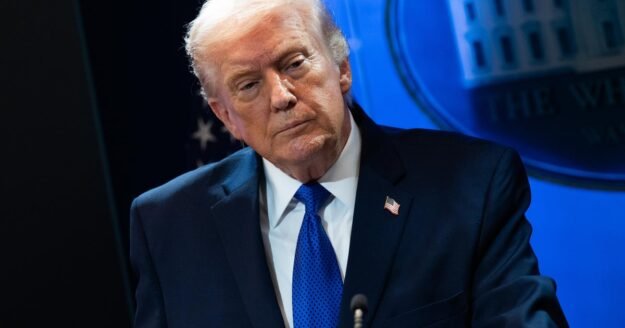
President Trump said in a news conference on Monday that Iran is negotiating, “we think in good faith,” over a possible ceasefire. Asked whether he would be willing to make a deal with Tehran that does not include reopening the Strait of Hormuz, Mr. Trump said the strait is a “very big priority.”
“We can bomb the hell out of them. We can knock them out for a loop. But to close the Strait, all you need is one terrorist that somehow has a truck loaded” with mines to plant in the water, he said.
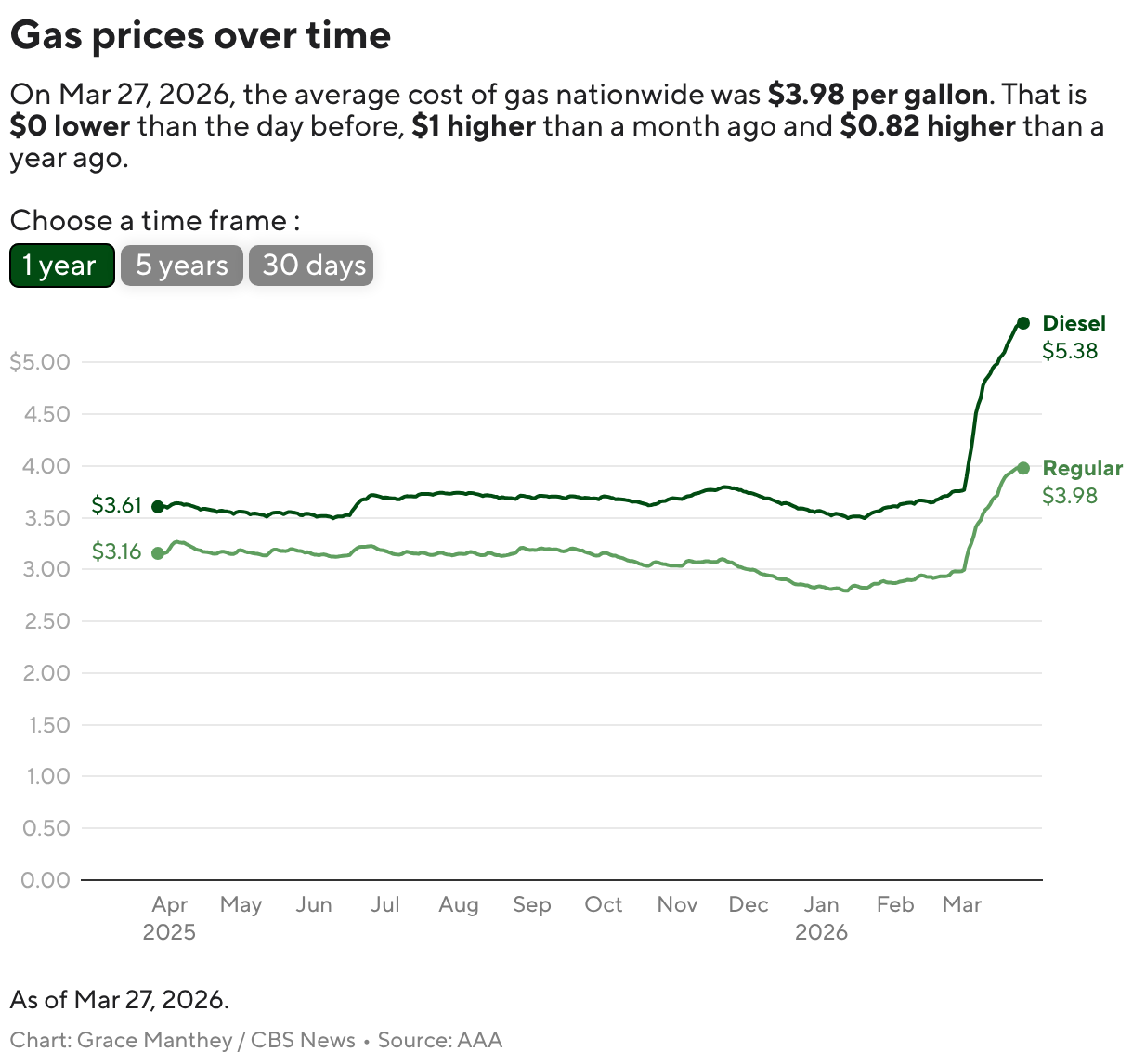
Oil prices swung from a modest dip to gains on Monday as financial markets assessed whether a break in hostilities between the U.S., Israel and Iran is on the table. The price for a barrel of benchmark U.S. crude rose 1.3% to $113.09 after erasing an earlier drop. Brent crude, the international standard, added 1.2% to $110.37 per barrel and remains well above its roughly $70 price from before the war.
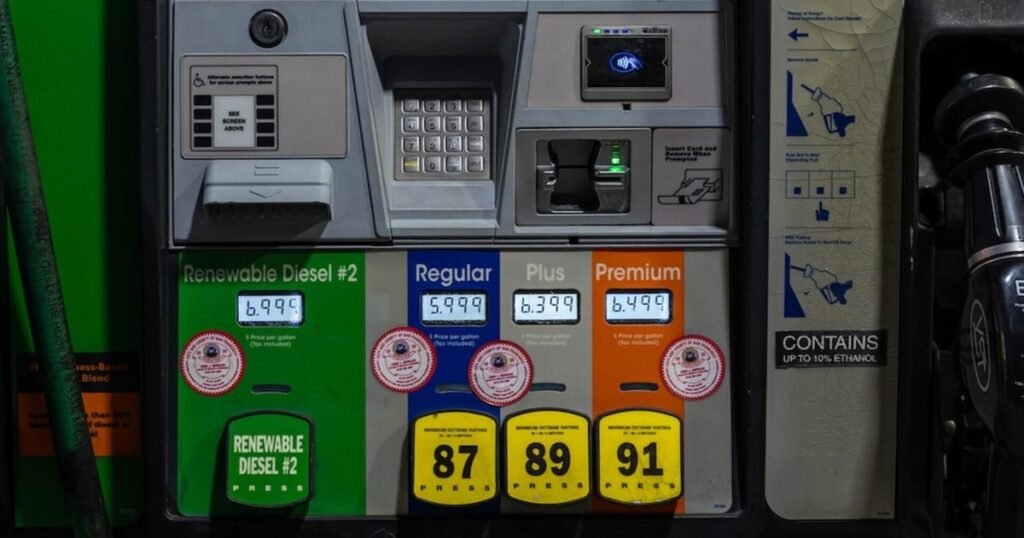
In the U.S., the average price of gasoline rose on Monday to $4.12 a gallon, up from $2.98 just before the outbreak of hostilities and the highest since 2022, according to data from AAA.
In the short term, “oil markets will remain undersupplied, even with some increase in shipping through the Strait of Hormuz,” Gloystein said. “This tightness is reflected in record-high prices for key fuels such as jet fuel and bunker fuel, used in aviation and shipping, respectively.”
You may be interested

Augusta National flags Jason Day’s Malbon golf outfit again at Masters
new admin - Apr 06, 2026[ad_1] NEWYou can now listen to Fox News articles! The Masters Tournament is all about tradition, and that includes everything…

Missing American who reportedly fell off boat in the Bahamas identified as Michigan woman
new admin - Apr 06, 2026Police say they're searching for an American woman who disappeared Saturday in the Bahamas. The woman's husband told authorities that…

Doechii, Lady Gaga Tease New Song ‘Runway’ From ‘Devil Wears Prada 2’
new admin - Apr 06, 2026[ad_1] Every week is fashion week for Doechii and Lady Gaga. The artists have teamed up for “Runway,” a new…