


Iran Threats Against U.S. Institutions Lead to Closures

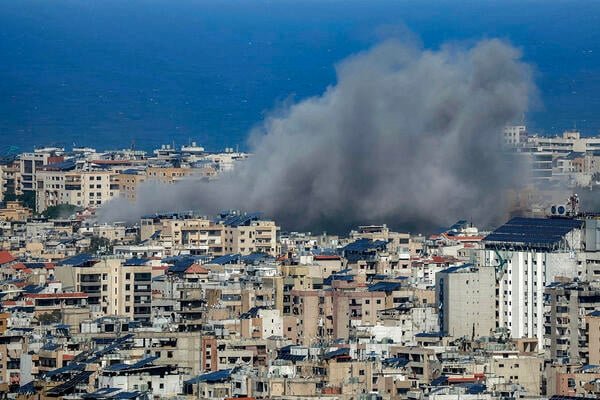
Since the U.S. and Israel began their war with Iran in late February, U.S. institutions of higher education with branch campuses in the region have switched to online classes, and many universities have suspended all travel to the Middle East.
But the situation grew more dire over the weekend, when Iran’s military threatened to attack American and Israeli universities following U.S.-Israeli strikes on Iranian universities, according to multiple news outlets. The warning, from Iran’s Islamic Revolutionary Guard Corps, advised students, employees and nearby residents to evacuate at least a kilometer from the campuses.
Amid the ongoing military activity in the region, U.S. institutions are weighing how best to keep their students safe. Several U.S. branch campuses in the Middle East have temporarily shut down or switched to remote operations in response to the warning. A recap of the latest developments:
NYU Temporarily Closes Abu Dhabi Campus
New York University’s student newspaper, The Washington Square News, reported Monday that the institution’s campus in Abu Dhabi, in the United Arab Emirates, would be closed indefinitely; the campus had already moved all classes online in response to the war, but students and employees could still access campus.
Only a small portion of NYU Abu Dhabi students live on campus, but those who do had already been relocated during spring break, a university spokesperson told Inside Higher Ed.
Other U.S. campuses have responded to the threat as well. According to The Hoya, the Georgetown University student newspaper, Georgetown’s Qatar campus had been planning to switch from virtual to hybrid learning this week for students who opted to stay in Qatar. But in light of the Iranian military’s new threats, the institution decided to continue remote-only courses. Students can also opt in to pass-fail grading for this semester, The Hoya reported.
Georgetown is one of six U.S. institutions with campuses in Qatar’s Education City, an education and research complex near the capital of Doha. Two weeks ago, students living in the dorms in Education City were briefly evacuated amid missile attacks, but they were able to return the same day.
In a statement, Francisco Marmolejo, president of higher education at the Qatar Foundation, which operates Education City, wrote that all six U.S. campuses continue to operate remotely and that decisions about their operations are made in coordination with both the Qatar Foundation and the U.S. campuses.
“QF remains in continuous contact and full alignment with official guidance from Qatari authorities and has activated its well-rehearsed contingency plan to address any potential threats. As we always do, we are working closely with national stakeholders and our Partner Universities to ensure the safety of everyone in Education City, including the higher education community,” he wrote. “We are confident that whether delivered in person, or online, student support will continue without interruption, and learning outcomes will be met. We are grateful for the resilience and cooperation of our students, families, faculty, and staff as we navigate this period together.”
One Georgetown Qatar student who is still in the country told The Hoya in a written message that although he feels relatively safe, “there is still a constant underlying sense of anxiety and fear that many of us are living with. Since last month, our routines have been completely disrupted,” he said. “There’s always uncertainty about when the next strikes might happen or when emergency alerts will go off on our phones.”
In response to the latest threats, Arkansas State University’s campus in Doha transitioned to online learning on Monday for the first time since the war began, local media reported, as did American University of Beirut, a U.S.-based university with its main campus in Lebanon’s capital.
Texas A&M University’s campus in Qatar announced last Thursday that the rest of its semester would also be fully remote.
Study Abroad Trips Canceled
Several institutions have cut short current study abroad programs in the Middle East or announced that upcoming programs will not move forward.
Rice University in Texas has canceled a summer study abroad program scheduled to run in the Jordanian capital of Amman from May 17 to June 26, according to The Rice Thresher, the institution’s student newspaper. The trip was one of seven Rice in Country programs—faculty-led six-week study abroad offerings worth six credits each—slated for summer 2026. According to the Thresher, students would have taken two Arabic courses while in Amman.
Rice made the decision after the U.S. Department of State raised its travel advisory for Jordan to level 3 earlier this month; university policy prohibits students from traveling to countries classified at level 3 or 4. Last summer, Israel and Iran’s 12-day war occurred while the Rice in Jordan program was occurring, but Jordan remained classified at level 2, according to the article.
“[When] you see that the American Embassy and State Department are advising evacuation, that’s generally a really big red flag that you know the trip is probably not, unfortunately, going to be viable for this year,” Juliana Crim, global travel safety manager for Rice Global, told the Thresher.
Northeastern University also adjusted a summer Dialogues of Civilization course that planned to visit Egypt, the UAE and Turkey from early May to early June. The trip will now include Turkey, Bosnia-Herzegovina and Serbia, the student paper, The Huntington News, reported. A trip to Pakistan organized by Harvard University’s Pakistani Students Association slated to leave March 11 was interrupted when the group’s flight was canceled.
Some current study abroad programs in Jordan and surrounding countries have also been cut short. The seven students enrolled in Middlebury College’s program in Amman were relocated to Morocco, where Middlebury has another program, according to articles in both the Middlebury and Brown University student newspapers (the majority of the program’s participants are not Middlebury students).
Middlebury’s program in Jordan is unique because students study the Levantine Arabic dialogue, according to the Middlebury Campus. Now that they’ve relocated, students in the program will continue to take online classes with their Jordanian professors, but they will not have the benefit of living in home stays with families that speak the dialect.
An NYU spokesperson told Inside Higher Ed that the university’s Tel Aviv study away site is closed and students who were studying there have been relocated.
Many institutions—including Penn State, Washington State, Texas Tech and Brown Universities—have banned or strongly advised against any travel to the Middle East for the time being.
SATs Scrapped
Beyond U.S. institutions, Middle Eastern students hoping to apply to selective U.S. colleges later this year were also impacted by the ongoing war when the College Board canceled the March SAT at some locations in the region. About 11,000 students had their March 14 exam postponed, the College Board said in an email to Inside Higher Ed, and about half that number were ultimately able to take the makeup test on March 28. The organization said they have contacted the impacted students to offer support and outline possible paths forward.
“The health and safety of students, families, and educators is our top priority. Our thoughts are with all those affected by the conflict, and we recognize the uncertainty and disruption this moment is creating for students, families, and school communities,” a College Board spokesperson wrote. “We are working closely with our partners at local test centers and test coordinators, who are best positioned to assess conditions and determine whether it is safe to administer the SAT. We fully support their decisions, and we provide guidance and options such as scheduling makeup test dates or providing full refunds to affected students.”
Students impacted by cancellations bemoaned the situation on social media.
“Imagine studying 4 months just for this to happen,” one student from Lebanon wrote on Reddit, sharing the email they received about a test cancellation. “[I know] I should’ve already guessed that this would happen cause if [sic] the war in the region but I was just in denial and kept my hopes up till I wanted [sic] to set up my device and found this email [broken heart emoji].”
Another student commiserated in the comments: “I know we’re from different sides of the war[.] But maybe it will bring you some compassion; all test centers in Israel offering make up tests cancelled too, mine as well [sad face emoji].”
The ACT, which administers tests in about half the countries in the Middle East, said it is planning to move forward with tests in early April.
“Based on information provided by education and testing partners in the region, ACT plans to administer the April 10-11 tests as scheduled in regions affected by the ongoing conflict,” a spokesperson told Inside Higher Ed in an email. “ACT will continue to monitor events in the region and will inform examinees and test administrators of any change to the schedule.”
You may be interested

Fingernail warning sign could be early symptom of heart failure
new admin - Mar 31, 2026Certain warning signs could mean you have early diabetes or liver disease (stock image) (Image: Getty)People are being encouraged to…

OkCupid settles claims it shared user photos with a facial recognition company
new admin - Mar 31, 2026Dating app OkCupid agreed to settle claims from the Federal Trade Commission that it deceived millions of users by sharing…

Sharon Stone reflects on her career and talks about joining "Euphoria" cast
new admin - Mar 31, 2026Sharon Stone reflected on her legendary career as she discussed joining the cast of "Euphoria," working with the show's creator,…