




Iran-backed Houthis capture Yemen’s Red Sea coastline on Bab-el-Mandeb Strait

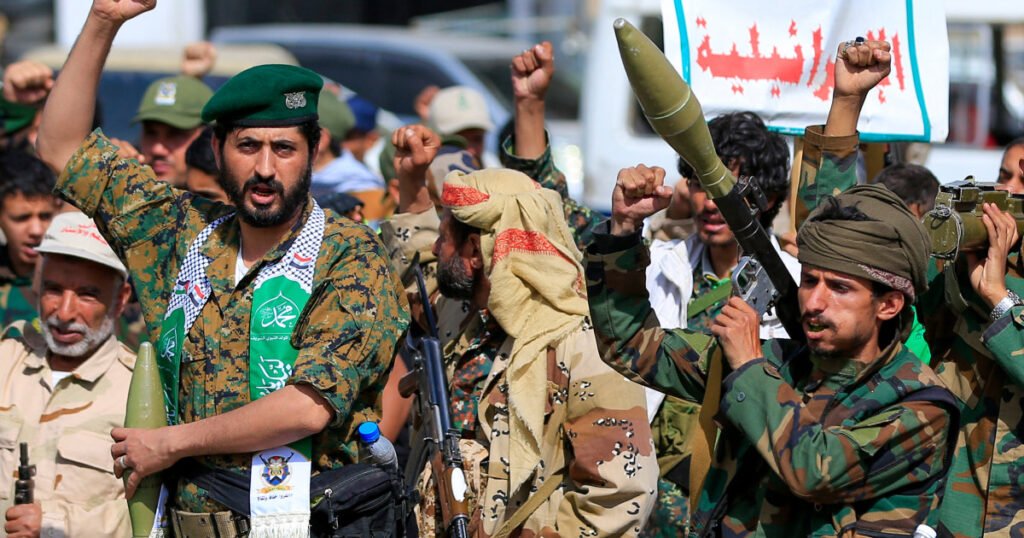
The Houthi rebels effectively completed their rapid push to take control of Yemen’s Red Sea coastline on Friday, tightening their grip on one of the world’s most important shipping routes and delivering a dramatic boost to their backers in Iran.
Houthi forces captured Perim, an island in the middle of the vital Bab el-Mandeb Strait, several news agencies reported, citing multiple sources. It comes after they captured the historic port city of Mocha just a day earlier.
That was followed by an advance on the strategic coastal town of Dhubab and the apparent withdrawal from Perim — also known as Mayun — of forces from the Saudi-backed, internationally recognized Yemeni government.
The Houthis and the opposing coalition have been fighting a civil war since 2014. The conflict has simmered for years following a truce but erupted into intense fighting again in recent weeks, raising concerns of a return to all-out war and posing a serious new threat to the global economy.
Effective Houthi control over the Bab-el-Mandeb, a gateway to the Red Sea trade route that links Europe and Asia, could further imperil oil exports while granting Iran powerful new leverage in its war with the United States.
Saudi Arabia, the world’s biggest oil exporter, has had to rely on the Red Sea route given the disruption to the Strait of Hormuz, through which some 20 percent of the world’s oil typically passes, since the U.S. and Israel waged war with the Islamic Republic in late February.
If the Houthis are similarly able to threaten shipping along the Bab el-Mandeb Strait, it could reduce oil supplies through another key waterway and deepen the world’s energy crisis.

Global oil prices appeared set to end the week above $100 a barrel for the first time since mid-May, after the dramatic developments in Yemen and new U.S.-Iran exchanges.
The Houthis have also attacked oil facilities in Saudi Arabia itself, and in another potentially significant development satellite imagery on Friday showed a 60-mile smoke plume along the route of the kingdom’s East-West oil pipeline. This has been a key alternative for Saudi exports that can’t transit Hormuz.
Fire detection data showed high-temperature readings at several sites where infrastructure for the underground pipeline is located, but it was unclear what transpired. Neither Saudi officials or the Houthis have commented.
You may be interested

In Ohio rally, Obama blasts Ramaswamy, GOP over controversial Acton ad: “No low he will not sink to”
new admin - Oct 25, 2026Former President Barack Obama on Saturday seized on what he described as cruelty and indecency coming from President Trump and…

Foldable iPhone Duo hits market amid debate about price, features
new admin - Oct 25, 2026The first-ever foldable iPhone hit stores nationwide Friday. Apple is playing catch-up — Samsung, Google and Motorola have had folding…

Breast cancer impacting more young women every year, studies show
new admin - Oct 24, 2026Studies show breast cancer is affecting more young patients every year. Survivors stress the importance of speaking and advocating for…