



Infant Water Safety: Protect Your New Baby from Drowning

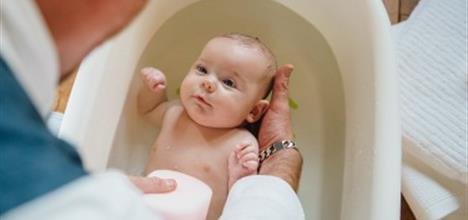
Babies are drawn to water and quickly discover the fun of splashing it. To keep your new baby safe, protect against potential water hazards where you live and where you visit. Here are some tips from the American Academy of Pediatrics.
Water doesn’t have to be deep to be dangerous to a baby.
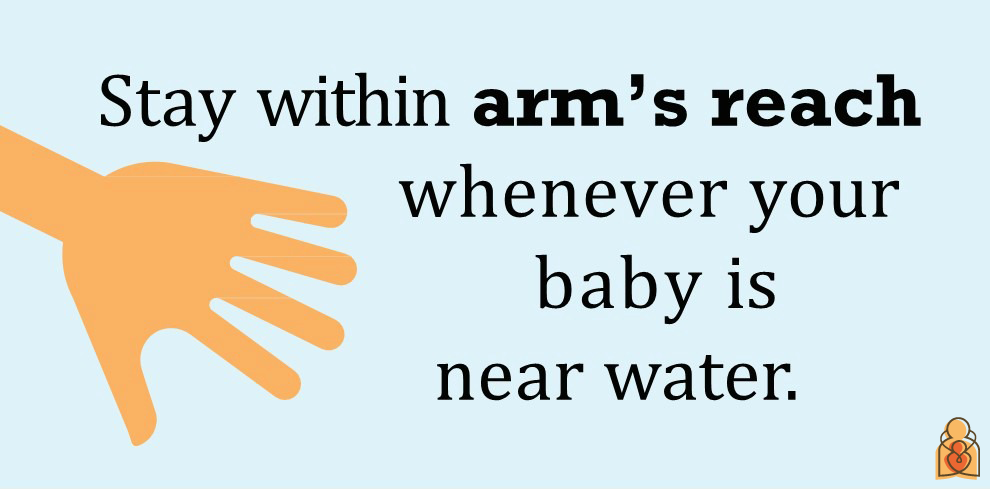
Did you know that
babies can
drown in as little as just 1 or 2 inches of water? It can happen silently, and within seconds. Infants don’t have much neck and muscle control. If even a small amount of water covers their nose and mouth, they won’t be able to breathe.
Remember: Never leave your baby alone or in the care of another young child in or near water—not even for a moment.
Water safety starts at home
Start thinking about your baby’s safety around water as soon as you bring her home. Infants’ movement and
motor skills develop at an amazing and often unpredictable speed. It’s hard to know exactly when infants will start to reach, roll over, crawl, pull themselves up and start to walk. The key to keeping them safe is to stay one step ahead.
Safety in the tub—bath time basics
For new parents, practicing water safety often begins with baby’s first
bath. Whenever your baby is in the water, be sure to:
Most child drownings inside the home occur in bathtubs, and more than half of bathtub deaths involve children under 1 year of age.
In many cases, bathtub drownings happen during a lapse in adult supervision. If you forgot something or need to answer the door, bring your baby with you. This is important even if you are using a supportive infant tub or bath seat.
Infant bath seats can tip over and children can slip out of them and drown in even a few inches of water in the tub.
-
Check the water temperature. Before putting your baby in the bath, check the water temperature with your wrist or elbow. Tap water that’s too hot can quickly cause burns serious enough to require a hospital visit or even surgery. In fact, hot water
scalds are the top cause of burns among babies and young children.
The AAP recommends that the hottest temperature at the faucet should be no more than 120 degrees Fahrenheit to help avoid scald burns. In many cases you can adjust your
water heater setting to not go above this temperature.
Water safety in the bathroom
Beyond bath time, protect your baby from other bathroom water hazards. Babies can topple headfirst into the toilet bowl, for example, and be unable to get themselves out. Help prevent drowning by:
-
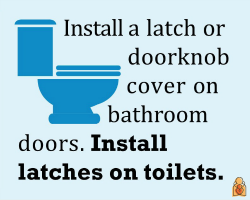 Put toilet lids down. Install safety latches or locks on all toilet seat lids to keep curious little fingers from lifting them.
 -
Pull the plug on the tub. Consider removing the bath tub drain plug when it’s not in use to avoid the tub filling if a child turns on the faucet.
-
Keep the bathroom door closed. As an added layer of safety, use safety latches or door knob covers to keep bathrooms closed.
Empty water containers immediately after use
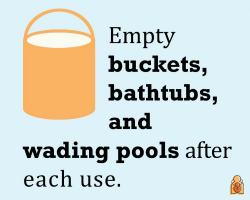 Never leave a filled, open-top water container unattended. Whenever they’re not in use, be sure to completely empty any liquids in containers such as:
-
buckets and pails used for cleaning or painting
-
wading pools
-
coolers with melted ice
-
large water bowls for pets
-
trash cans or recycling bins that may collect rainwater
Secure swimming pools
Swimming pools, including large, inflatable above-ground pools and other temporary pools, should be completely surrounded by a fence on all 4 sides. Pool fences should:
-
be at least 4 feet high and have no opening under it or between slats more more than 4 inches wide.
-
completely separate the pool from the house.
-
have a self-closing and self-latching gate that opens away from the pool, with the latch at least 54 inches from the ground.
Check the gate frequently to be sure it works and keep it locked at all times. Keep toys out of the pool area when not in use so that children are not tempted to try to get through the fence during
non-swim time. Also be sure to always cover and lock
spas and whirlpools right after using them.
Other backyard water hazards
Before your baby begins to crawl or walk, check your yard and surrounding area for any other potential water dangers. Watch your child constantly and attentively whenever you are near water, including:
-
Wells and irrigation or drainage ditches. Also be careful around open post holes while structures like fences, decks, birdhouses and flagpoles are being put in. -
Bird baths, fountains and ponds. Although these can be beautiful landscape features, consider holding off on installing or using them until your baby is older.
Hot beverages and other scald risks in the home
Bath water that is too hot is not the only scalding hazard in the home. Coffee, tea, soup and other hot liquids can cause serious burn injury if they get pulled down, spilled or splashed on young children. Studies show that between 27% to 60% of scald burns in children under age 5 are from hot liquids in cups, mugs and tableware. Remember:
-
Never carry a hot beverage and your baby at the same time. Infants often begin to reach for interesting objects within the first three months. Even if they haven’t reached that stage, a bump could easily cause a spill.
-
Avoid the edge. Place mugs, bowls and other hot liquid containers away from the edge of tables and other surfaces. A baby could reach them if he is on someone’s lap at the table, if he pulls down a table cloth from the floor, or if he pulls himself up to stand. Similarly, don’t leave boiling liquids unattended on the stove, especially on the front burners.
Learn CPR
Parents and caregivers should know
CPR and how to
get emergency help. Find classes with infant-specific training through the
American Red Cross, the
American Heart Association, and local fire departments, park districts and other organizations.
Remember
Always keep your baby’s safety in mind around water―at home, where your friends, relatives, and caregivers live, and places you stay during family trips. Be sure to talk with your pediatrician, starting with your baby’s first wellness visit, about guarding against common water dangers.
Additional Information
The information contained on this Web site should not be used as a substitute for the medical care and advice of your pediatrician. There may be variations in treatment that your pediatrician may recommend based on individual facts and circumstances.
You may be interested
Sales engineer takes home $1 million Picasso with $117 raffle ticket
new admin - Apr 15, 2026A sales engineer from Paris won a Pablo Picasso painting worth at least $1 million in a raffle this week,…

Roman’s ‘luxurious’ wedding guest dress ‘doesn’t cling anywhere’
new admin - Apr 15, 2026[ad_1] Spring has sprung and wedding season is upon us. The likelihood is shoppers have at least one wedding pencilled…

Nothing makes it easy to share files between any Android phone and a Mac
new admin - Apr 15, 2026I test Android phones for a living, but I write about them using a company-supplied MacBook Air. Both platforms are…