

How Will We Look Back on This Moment in Higher Ed?

The 250th celebrations of the signing of the Declaration of Independence on campuses and in cities across the country encourage us to think more deeply about our nation’s founding. But while we reflect on independence and what it means to be “American,” it’s also kind of a weird time for history and higher ed. The tension shows up in two places this week: how the past is being interpreted and how colleges are facing historical reform.
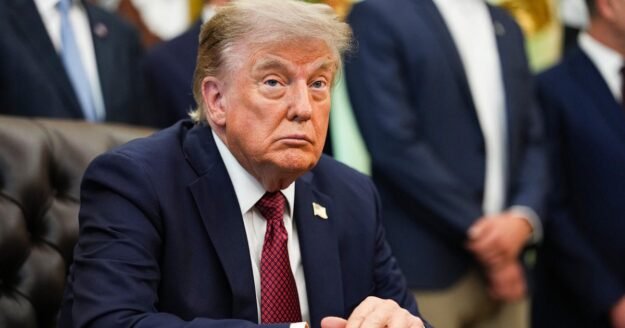
Last March, the president signed an executive order in the service of “restoring sanity to American history.” He directed the vice president to prohibit funding for any Smithsonian exhibits or programs “that degrade shared American values.” He told the secretary of the interior to ensure all public monuments, landmarks and parks “do not contain descriptions, depictions, or other content that inappropriately disparage Americans past or living.”
A federal judge later compared the Trump administration’s efforts to “disassemble historical truths” to totalitarianism. Conservationists and historical associations, meanwhile, have been fighting to preserve the fullness of U.S. history, including stories of LGBTQ+ advocacy, slavery, Indigenous rights and civil rights. In a recent podcast conversation with me on Inside Higher Ed’s The Key, Sarah Weicksel, executive director of the American Historical Association, said the administration’s tactics omit narratives and highlight the histories of only a few. “If you leave out whole swaths of history, you are not able to effectively learn from it, and, frankly, when all is said and done, it’s pretty boring,” she said.
Weicksel also underscored the futility of trying to enforce one way of interpreting history, because researchers follow historical evidence, wherever it leads. “We can never work with a stated purpose of achieving alignment with a single vision about what the United States is or what history should be … because we’re historians … we’re going to work in the way we work.”
While historians endeavor to put forward a fact-based narrative of the past this July 4, colleges and universities are struggling to understand the present. And who can blame them? In the fog of this administration’s flood-the-zone political strategy, comprehending the scale and scope of policy reform, regulation rollout and political attacks in the last year is almost impossible.
Here’s what we do know: On July 1, three key policy changes brought forward by the One Big Beautiful Bill Act took effect. Colleges and universities are now responsible for how much money their graduates make: Graduates must earn more than someone with a high school diploma for the undergraduate level and a bachelor’s degree for the graduate level. If they don’t, institutions could lose access to Title IV federal funding.
Also, graduate students can no longer borrow unlimited money from the federal government to pay for their degrees. OBBBA ended Grad PLUS loans and introduced caps of $100,000 for graduate programs and $200,000 for a narrower set of professional programs. The bill also capped Parent PLUS loans at $65,000 per student.
Finally, Congress made Pell Grant funding available to students on short-term courses with a workforce focus.
In less than a year, Congress conceived and passed these policies and the Education Department finalized them. The speed shows the administration’s urgency to leave its mark on higher ed. It also means a lot is still left to be decided. ED released the final regulations for earnings tests on Monday evening, less than 48 hours before they took effect. Meanwhile, the systems needed to collect and track state-level data for those measures are patchy. And what counts as a professional degree and meets the requirement for a higher loan cap remains in flux.
Rumbling in the background is the complete overhaul of the accreditation system. After two weeks of negotiated rule making, accreditors are preparing for a vastly different future, where they will assess viewpoint diversity among faculty and students, evaluate the integrity of research, and measure economic returns for graduates. All this as ED continues to dismantle itself by offloading its duties to other government agencies and the administration remains locked in legal fights with Yale, Harvard and the University of California.
For anyone keeping up with all the changes, you’d be forgiven for thinking that the role that higher education plays in American society is being molded into one of pumping out future employees and doing political bidding.
Zoom out, though, and you might see that higher ed isn’t totally doomed. Peter Lake, director of the Center for Excellence in Higher Education Law and Policy at Stetson University, believes a renaissance is brewing. “We’re being forced into a once-in-a-1,000-year pivot point to re-examine the purpose of higher education and what it really means in a society that desperately needs more educated people to solve the problems that are out there,” he told me recently. “We’re starting to realize that what we inherited from the Middle Ages isn’t really working on a lot of different levels.”
Weicksel, who spent a good part of her career working as a project historian at the Smithsonian’s National Museum of American History, said that people go to museums to feel a connection—to the past, to themselves, to who they think they are or to other shared stories. In many ways, higher education serves the same purpose. So the question for this week of historical milestones in higher ed is: What kind of connection will future students and higher ed leaders feel toward today’s institutions? Whatever the answer, it won’t be predetermined, but it will be shaped—and eventually judged—by the evidence of what institutions do today.
You may be interested
Bad numbers for Trump on economy, Iran, in latest CBS News poll
new admin - Jul 27, 2026A new CBS News poll found that 65% of Americans disapprove of how President Trump is handling the economy, 71%…

2-day pause in Iran strikes linked to progress in diplomatic talks, sources say
new admin - Jul 27, 2026The current two-day pause in fighting between the U.S. and Iran comes after nearly two straight weeks of intense fighting…
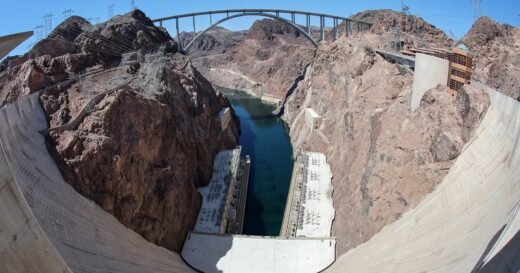
States relying on Colorado River water face major cuts as reservoir levels fall to all-time lows
new admin - Jul 27, 2026The Colorado River, a lifeline for the American West, is now a line in the sand dividing seven states that…