


How Loud is Too Loud?


We hear many types of sounds every day. While many of those sounds are safe, sounds that are too loud and last too long can permanently damage your hearing. The louder the sound, the more damage it can cause to your hearing, and the faster this damage will occur. This damage is called noise-induced hearing loss (NIHL).
NIHL may not be noticeable at first, but it can build over time, particularly when combined with hearing loss that happens as you grow older. Speech and music might start to sound muffled or distorted, making it difficult for you to understand enjoyable—and important—sounds. There is good news, though! You can protect your hearing by turning down the volume, moving away from the noise, and wearing hearing protectors, such as earplugs or earmuffs.
Is the Noise Too Loud?
Here are some rules of thumb to tell if the sounds around you are too loud:
- You find yourself speaking loudly or shouting so people an arm’s length away can hear you. (Or you have trouble hearing someone talking in a conversational volume when you’re an arm’s length away.)
- The noise hurts your ears.
- Your ears buzz or ring during the noise or after the noise goes away.
How Do You Measure Sound?
Sound intensity is measured in units called decibels (dB). The decibel scale works differently than other units like inches or ounces. An increase of 10 dB seems about twice as loud to your ears, but it’s actually 10 times more intense, or powerful! Because people can’t hear all frequencies, or pitches of sound, we often use A-weighted decibels (dBA) to describe sound intensity based on what human ears can actually hear.
How Many Decibels Are Too Loud?
The National Institute for Occupational Safety and Health (NIOSH) says that workers who are regularly exposed to sounds at or above 85 dBA are more likely to get NIHL and should wear hearing protectors. Even below 85 dBA, some workers can still get hearing damage.
You can extend this advice for everyday noises. Wear hearing protectors when noise is at or above 85 dBA. Because some people—based on genetics or other factors—may be more sensitive to NIHL at even lower decibel levels, you may want to avoid noise or wear hearing protectors even if the sound is less than 85 dBA. For instance, it is currently considered safe for most people if all the sounds you hear over the course of the day average out to be 70 dBA or lower.
Also, remember that the louder the sound, the more likely it is to damage your hearing, and the faster that damage will occur.
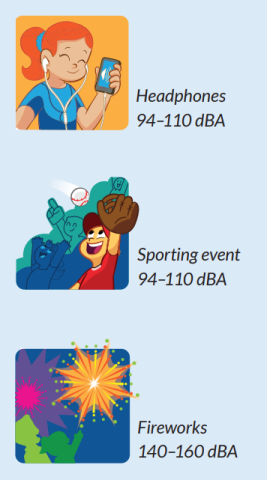
Many devices that children and teens use today (such as music players) create noise levels at or above 85 dBA. Fun activities such as playing musical instruments, going to concerts and sporting events, watching fireworks, and especially watching or participating in shooting sports can put you and your family at risk for hearing damage. Other loud noises such as ambulance sirens, leaf blowers, and farm equipment can also put you at risk.
You may be interested

North Korea continues streak of weapons tests with multiple ballistic missile launches
new admin - Oct 12, 2026North Korea on Monday fired multiple ballistic missiles toward its eastern waters, South Korea's military said, adding to a recent…

Trump announces Russia-Ukraine energy ceasefire, Russia later strikes Ukraine
new admin - Oct 12, 2026President Trump announced that he struck an energy ceasefire with Ukraine and Russia. Hours later, the Russians hit a neighborhood…

Yemen's Houthis target King Khalid airport in Saudi Arabia again
new admin - Oct 12, 2026Tensions flared in the Middle East following attacks by Iran-backed Houthi rebels on Saudi Arabia. Leigh Kiniry reports. Source link