



How HSIs Can Move Forward After Federal Funding Cuts

The story of Hispanic-serving institutions, according to author Gina Ann Garcia, can be told in three parts: the enrollment era, the transitional era and the still-to-come thriving era.
The enrollment era, which ran from when Congress established the designation in 1992 through 2019, was marked by institutions’ focus on becoming HSIs, which required meeting certain thresholds such as enrolling at least 25 percent Latino students.
Garcia, who studies equity in higher education as a professor at the University of California, Berkeley, noticed in 2019 that some colleges shifted their focus from enrollment and grants to what it would mean to serve Latino students well. That marked the beginning of what Garcia calls the transitional era.
Today, more than 600 HSIs across the country—including the 200 or so that had been receiving federal grant funding—are still in that transition era, though they face threats to their funding from the federal government. In the last year, the Trump administration has said the designation was unconstitutional because of the eligibility criteria and rerouted millions for HSIs and other minority-serving institutions to other programs.
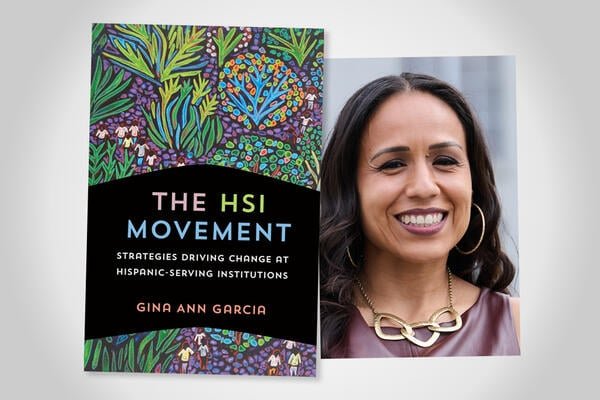
Garcia, author of The HSI Movement: Strategies Driving Change at Hispanic-Serving Institutions (Johns Hopkins Press), said HSIs shouldn’t give up. In her book, published Tuesday, Garcia said HSI leaders need to continue to prioritize Latino student outcomes and improve campus culture.
“I see people trying,” Garcia said. “I might be giving us too much credit, but I see people trying. There are a lot of campuses trying to do right by their students.”
Even if it takes decades, this work will eventually lead to the thriving era for HSIs, Garcia said.
Garcia spoke with Inside Higher Ed about the pivotal moment for HSIs and the work they’re doing to support their students. This interview has been edited for clarity and length.
Q: What would it mean to do right by Latino students?
A: People focus a lot on outcomes and trying to get to equitable GPAs, equitable graduation rates, equitable completion rates, equitable transfer rates, equitable job market outcomes—all of those things. Getting equity for Latino students, a lot of people feel like that is Latino-serving. It’s always been my argument that that’s not enough.
Equitable outcomes are important, but if the culture hasn’t shifted, the environment hasn’t shifted, then are you really serving your Latine students? If your students experience hardships, racism, discrimination, you know, terrible things on campus, but they still graduate, that’s their resilience. You’re not serving them; they’re just resilient.
Hispanic students are not a monolith. It’s hard to say we’re serving Hispanic students when that “H” is so complex.
Latino students have cultural wealth. One aspect of that is their language. Understanding that language and bilingualism is actually powerful. We should be leaning into multiculturalism or multilingualism and bilingualism and serving students bilingually. It’s not the sort of English-learner conversation—these are people who are 100 percent bilingual. What do we do with all that tremendous amount of wealth that comes in? How we acknowledge that is coming up a lot as part of serving Latino students.
They also have distinct needs. Intersections come up a lot. Our low-income students have different needs than our middle-income or higher-income students. We see higher inequities by income, including in graduation rates and time to earn a degree. Right now, immigration comes up a lot because obviously we have a lot of attacks on our immigrant students. Our immigrant students need different things, and our undocumented students need different things.
Changing the culture and meeting the needs of Latino students requires training faculty. Faculty going through extensive cultural relevance training helps them shift their mindset. Why do I need to think about Latino students differently? In what ways? What do Latino students need that might be different from the needs of students I have historically served? When they are trained, they then are able to change their curriculum, they’re able to change their approach to teaching and ultimately the goal would be that it affects outcomes.
There are a lot of examples in the book of programmatic work. But the programs aren’t enough—the mindset shift is better. Changing people’s mindset and the way they approach the work is going to be the better organizational shift.
Q: Since the Trump administration cut $350 million from minority-serving institutions last year, we’ve seen HSIs cut programs and staff. Can you explain what you mean when you write that forward-thinking “HSIs in transition” are not as affected by the funding cuts?
A: This is a slippery slope. The grants are really, really important and we need them, but also [the funding cuts] doesn’t mean that the work has to stop.
It’s challenging, because where do you find the money and the resources to help people do the work? But even campuses that haven’t reached the 25 percent enrollment threshold are preparing to become HSIs. They’re doing the same or similar work—the training of faculty, the rethinking of curriculum, the writing of an HSI mission statement. A lot of campuses are doing the work even though they don’t have the grants.
Q: Separate from the changes at the federal level, what are some of the challenges HSIs face today?
A: A lot of the challenges come from within the organization. One of the barriers is executive-level leadership not being on board. People want their highest level of administration to be like, “Yes, we’re an HSI. Yes, do the work. Yes, go get a grant.” [Institutional leaders] are not going to necessarily do the work, but they are empowering others to do the work. If senior leaders aren’t on board, [people focused on HSI-related work] feel like they’re going to struggle to get momentum going and then sustain that momentum.
Also, if leadership doesn’t have the understanding of what Latino students need, if we aren’t able to access their community and cultural wealth and think about things that Latino students bring to the campus, it slows people down.
Other times leaders don’t understand what it means to be an HSI. They think it means “We got 25 percent, we got a grant, we got a seal of Excelencia, we’re an HSI, right? That’s it. The work is done. We’ve arrived.” The people who are in the movement know it’s much more than that. There are long-term organizational change efforts we’re doing. We’re driving cultural change. That’s not the end point.
Q: Who is doing the work to lead HSIs into the next chapter and what do they need to be successful?
A: A lot of them are at this middle-level management. They’re managers, but they’re not up at the highest level of leadership making budget decisions. They have some power but maybe not enough where they feel like they can transform the whole culture. They can sort of drive it from the bottom, but they need some more support.
I think that’s where the idea of the HSI movement comes in. The people at the grassroots or at the middle of the organization are a powerful bunch, but they need to kind of work together and also acknowledge their power—there is power in that movement.
What do they need to keep moving it? Well, resources. Getting those grants back is essential and should be our No. 1 priority. The grants help drive innovative ideas. But they also need support from their institutions.
I think economic resources are important, but I talk about human resources as well. Like, this is the human having a desire to make change and do right by their students.
A lot of the lost grants were funding positions, and the people in those positions were driving the work. And so we lost the funding, we lost the people and now the work is not happening, because the people were driving it. Even if they were working off a few more resources, we need the humans to drive the work.
Q: You write that serving Latino students is “heart work” and it’s often driven by Latinas. Can you say more about that?
A: I say it’s often Latinas because it’s my own lived experience—I see it. Because Latinas are not necessarily at the highest levels of the administration, they have to drive it from the middle because that’s where they’re at. I call it “heart work” because they are truly, truly committed to changing the environment for Latino students. They see themselves in the students and that drives their work. Even if they have to do it with fewer resources and less support, they’re still going to do it.
Q: What role does research and knowledge about HSIs play in the HSI movement?
A: In the book, I give a history of the research about HSIs as I see it over the last 30 years. I argue that the knowledge is actually really important and it contributes to that HSI-mindedness. In order to know what HSIs are beyond the enrollment and grant-seeking eligibility, acquiring the knowledge has actually been essential.
The people who are really driving the movement from within the organizations have done a lot of learning. They’ve read the books, they’ve listened to the podcast, they’ve attended conferences, they go to Excelencia in Education trainings. They’ve taken the time to understand what HSI is beyond the federal government’s definition.
We’ve created this knowledge only in the last 10 years … this really critical perspective of HSIs. That moved us out of the enrollment era in research as well. Early research was also very much enrollment-focused and grant-focused, until we started thinking about it a little differently.
Q: What’s your vision for an HSI thriving era?
A: The ideal vision that I think about all the time is that it would actually be common knowledge that HSIs exist. Because a lot of people don’t know what an HSI is—like, a lot of people. There are over 600 HSIs. So, at what point would it be common knowledge that HSIs exist and what they mean right at this deeper level?
It wouldn’t mean they were just 25 percent enrollment, grant-seeking institutions. It would mean they have done the work in the transitional era to get to the point where they’ve adapted their culture and they’ve adapted the kind of work they do to meet the needs of Latino students. That would get us to the thriving era.
You may be interested

Save hundreds and recreate Zara Tindall’s 'chic' blouse look for less than £50
new admin - Oct 06, 2026[ad_1] Zara Tindall's silky blue style comes with a designer price tag, but I've found a purse-friendly alternative that looks…

How to Protect Your Online Identity and Remove Unwanted Info
new admin - Oct 06, 2026[ad_1] IE 11 is not supported. For an optimal experience visit our site on another browser.Now PlayingHow to Protect Your…

Spain’s government approves new urgent housing measures after unrest in Barcelona
new admin - Oct 06, 2026MADRID — Spain’s government on Tuesday approved urgent measures on the country’s housing crisis, after an outbreak of violence the…