



How GOP State Lawmakers Are Reshaping General Education


Thousands of college students in some states now have to read the Constitution and Declaration of Independence as well as pass American history and government courses to graduate.
More changes are coming as red state lawmakers reshape general education requirements—what students must learn before they can graduate.
Republicans’ gen ed playbook varies state by state and has evolved over the years as lawmakers assert their power and increase state-level governing boards’ authority over curricula—an area previously mostly under faculty purview. Over all, this yearslong effort has narrowed the list of courses students can take to satisfy graduation requirements and put a greater focus on Western civilization and civics while sidelining courses focused on diversity and social justice. The patriotic, pro-West themes hark back to the surge in gen ed requirements after the world wars.
Critics argue states are circumventing faculty expertise and engaging in censorship in deciding what students learn, all to push a political agenda. Concerns over the future of gen ed have ramped up recently as Republicans in a couple of states have said only the civics centers they established at public universities can choose, or teach, which courses fulfill gen ed requirements.
The stakes of changes to which courses count toward gen ed requirements can be high for faculty and departments. Gen ed inclusion drives funding and enrollment to departments, and exclusion can cause these academic units and their disciplines to wither. And Republicans giving the reins over gen ed to civics centers—which lawmakers, not faculty bodies, created, and which have significant autonomy from the universities where they’re located—puts these previously siloed entities at the center of the curriculum.
“I’ve never seen such intrusion” into curriculum, said John Thelin, an emeritus professor of higher ed at the University of Kentucky. He said he’s also surprised at how effective the intrusion has been.
Usually with state lawmakers, he said, “the last thing they want to be spending their time doing is dealing with syllabi.”
Republican lawmakers haven’t been the only ones intervening in gen ed this decade. Barrett Taylor, a University of North Texas professor of higher ed, noted that in 2020 the Democratic-controlled California Legislature and Gov. Gavin Newsom instituted an ethnic studies undergraduate requirement across California State University, the nation’s largest four-year public university system.
“Increasingly, policymakers are casting higher education as a partisan good,” said Taylor, who’s also a faculty fellow in the American Association of University Professors’ Center for the Defense of Academic Freedom.

miflippo/iStock/Getty Images Plus
Now, Republican legislators are using universities’ vulnerabilities to “push a conservative cultural agenda that is part of a bigger culture war project,” said Roosevelt Montás, director of the Chang Chavkin Center for Liberal Education and Civic Life at Bard College. Montás said the goal seems to be to “attack and discredit progressive left ideology.”
But Montás, a languages and literature professor, said there are “significant weaknesses and failures” with most universities’ gen ed—or rather, their “general education in name only.”
“There is, in fact, fire from which the smoke is coming,” he said, noting that some selective private institutions are also beefing up gen ed.
“General education is a kind of backwater hodgepodge of things that happen to be in the catalog,” Montás said. He added that “no two students have the same general education, and it varies dramatically from school to school, and it’s largely a function of the particular disciplinary expertise of the faculty. In a very real sense, universities have withdrawn from the task of general education.”
From the Wars in Europe to the War on DEI
Gen ed could be considered conservative by definition: conserving a tradition. But it’s also long been intertwined with conservative political beliefs.
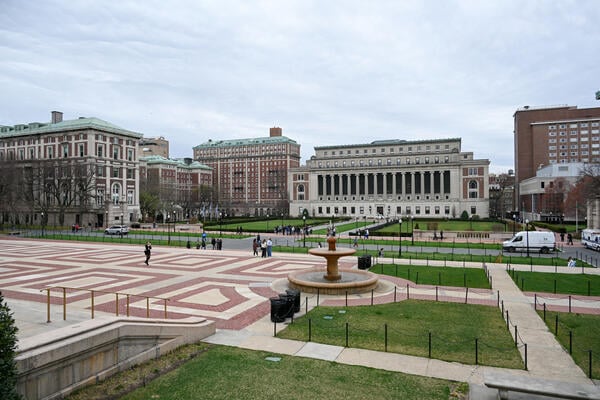
By the start of the 20th century, classical education—with its focus on teaching Greek, Latin and other core subjects, often to elite white men—had waned. But, during World War I, Columbia University worked with the U.S. Army to create War Issues, a course that was then adopted by Student Army Training Corps units on hundreds of campuses, according to Columbia’s online histories.
“The intensive year-long course was intended to provide soon-to-be soldiers with an understanding of the war’s causes and the liberal-democratic ideals for which they were fighting,” one history says.
The course soon became Contemporary Civilization, which is still part of Columbia’s Core Curriculum a century later. Former Inside Higher Ed columnist Steven Mintz, a history professor at the University of Texas at Austin, wrote that “War Issues, a product of U.S. wartime propaganda, served as the progenitor for later general education classes and helps explain gen ed’s Eurocentrism.”
Montás, of Bard College, said Columbia’s core influenced a 1945 Harvard report called “General Education in a Free Society,” or the Harvard Redbook, which he said remains the most “influential statement of what general education should do.” Gen ed became a nationwide movement after World War II ended that year.
There is, in fact, fire from which the smoke is coming.”
—Roosevelt Montás, Bard College professor
The conservative Manhattan Institute, in a publication called “Correcting the Core: University General Education Requirements Need State Oversight,” said that “Amid Cold War tensions and the West’s need for a cohesive front against Communism, education leaders recognized that citizenship in a democratic society requires deliberate teaching.”
But gen ed fell from favor. Mintz wrote that social science departments argued their courses were too specialized, while students demanded more electives and choices. He added that the common core ideal was “fading even before the student protests of the later 1960s turned their ire against Western Civ requirements” and their implication that culture solely comes from Europe.
The conservative National Association of Scholars says this shift to giving students a broad menu of gen ed options has hurt the country.
“American universities abandoned traditional general education requirements that gave students shared knowledge of the history, civilization, and ideals and institutions of America and the West, as well as a proper introduction to science, mathematics, and composition,” it wrote.
In this current moment, overhauling gen ed requirements is another way for Republican lawmakers to stamp out what they call “diversity, equity and inclusion.” Ohio state Sen. Jerry Cirino introduced last year’s Senate Bill 1, a sweeping higher ed law that, among other things, now requires bachelor’s degree seekers in Ohio to pass an “American civic literacy” course. He said he wanted to address young adults’ lack of history knowledge, but also to combat DEI and “wokeness.”
We-Ge/iStock Unreleased/Getty Images
“It’s not just that I want more conservative stuff,” Cirino told Inside Higher Ed. “I want balance. And these universities, in the past, have not been delivering balance.”
In December, the Manhattan Institute said many existing anti-DEI laws have a limitation: They don’t affect the curriculum.
“At least 12 states with DEI bans still allow public universities to mandate diversity-focused courses for graduation,” the Institute said when announcing the publication of “Correcting the Core.” The document says restricting universities’ control of their gen ed would be “more strategic” than censoring their curricula writ large, which a judge might consider a violation of First Amendment protections of academic freedom.
“A more strategic approach is for lawmakers to balance the needs of all stakeholders,” it continued. “Ending diversity course requirements, placing stricter standards on general education course qualifications, and periodically reviewing courses all address politicization and the quality of courses while preserving academic freedom.”
The National Association of Scholars recommends states create new schools at universities to teach all of gen ed, except in “sciences, mathematics, economics, or foreign languages,” or give “Schools of Intellectual Freedom” the power to pick “which courses will satisfy the Western Heritage and American Heritage” gen ed requirements. (Utah has made a civics center teach all gen ed at Utah State University. Iowa has said that, at the University of Iowa, only the center can offer the required American history and government classes.)
Overhauls Take Different Shapes
The recent effort to rethink gen ed requirements started with a push to change what students had to read. From there, Republican lawmakers only got more involved in curriculum. A snapshot of state laws passed since 2021 offers a glimpse at how the playbook has evolved and how the campaign has spurred further action from university leaders.
I’ve never seen such intrusion.”
—John Thelin, University of Kentucky professor emeritus
Requiring Readings
South Carolina was an early mover in the ongoing gen ed overhaul. Jameson Broggi said he started working on what would become the state’s Reinforcing College Education on America’s Constitutional Heritage (REACH) Act in 2013, when he was a University of South Carolina undergraduate. Public universities, including his own, weren’t following a 1924 state law requiring students to take a one-year course on the founding documents.

Overwriting the past law, the REACH Act—which finally passed in 2021 after advocacy from Broggi and the conservative American Council of Trustees and Alumni—requires bachelor’s degree seekers to take a “comprehensive” course in “American history, American government, or another equivalent course of instruction.” It gets specific, requiring students to read, “in their entirety,” the Constitution, the Declaration of Independence, the Emancipation Proclamation, at least five Federalist Papers essays and “one or more documents that are foundational to the African American Freedom struggle.”
Broggi told Inside Higher Ed in 2024 he was concerned about students graduating with a lack of understanding about their freedoms and how their government works.
Broggi and ACTA urged North Carolina to follow suit. In 2023, that state’s House passed a similar REACH Act that also required reading the Gettysburg Address, Martin Luther King Jr.’s Letter from Birmingham Jail and the North Carolina Constitution.

Eros Hoagland/Getty Images North America
But the bill didn’t ultimately become law, after University of North Carolina system faculty worked with the UNC Board of Governors on what Broggi calls an inferior alternative. Under a 2024 policy, bachelor’s degree seekers at all public universities in the state must generally study the same documents the REACH Act would’ve required. But students don’t have to read them in their entirety or take a full course in U.S. history or government.
A year later, Ohio lawmakers passed legislation similar to the REACH Act as part of SB 1, the omnibus Ohio higher ed law that Cirino pushed. The law requires bachelor’s degree seekers to complete a course “in the subject area of American civic literacy,” specifically including “a study of the American economic system and capitalism.” It requires reading familiar REACH Act documents in their entirety, plus all of “the writings of Adam Smith.” Students must pass a final exam on the documents, something the failed North Carolina REACH Act would’ve mandated.
Broggi told Inside Higher Ed he only worked on the REACH Acts in the Carolinas, and Cirino said he couldn’t remember where he got the language.
“I was talking to a whole lot of people—that’s how you build a good bill,” Cirino said. He said he has relationships with ACTA and the National Association of Scholars, but didn’t recall if either was the source. Michael Poliakoff, president of ACTA, said he didn’t know where Cirino got it, either, but “we certainly shared with him what South Carolina had done.”
2 Big States Upend Gen Ed
Florida took a different, and much broader, approach to overhauling gen ed—one that presaged significant changes to core classes.

The 2023 law known as Senate Bill 266 says gen ed “core courses may not distort significant historical events or include a curriculum that teaches identity politics … or is based on theories that systemic racism, sexism, oppression, and privilege are inherent” in U.S. institutions “and were created to maintain social, political, and economic inequities.” Further, gen ed humanities courses “must include selections from the Western canon.”
The State Legislature said it wanted to ensure students take gen ed courses that “promote and preserve the constitutional republic through traditional, historically accurate, and high-quality coursework,” adding in the law that these classes must, “whenever applicable, provide instruction on the historical background and philosophical foundation of Western civilization and this nation’s historical documents.” The law says courses “based on unproven, speculative, or exploratory content are best suited as elective or specific program prerequisite credit.”
The Florida Board of Education governs the state’s public colleges, while the Board of Governors oversees universities. SB 266 gave them the power to approve or reject institutions’ gen ed course lists, and a new legislation this year would further give them a legal scalpel to amend the lists. This spring—even before the new legislation passed—both boards ordered their institutions to remove sociology, a common conservative punching bag, from the list of courses that can fulfill gen ed requirements.
Bryan Pollard/iStock Editorial/Getty Images Plus
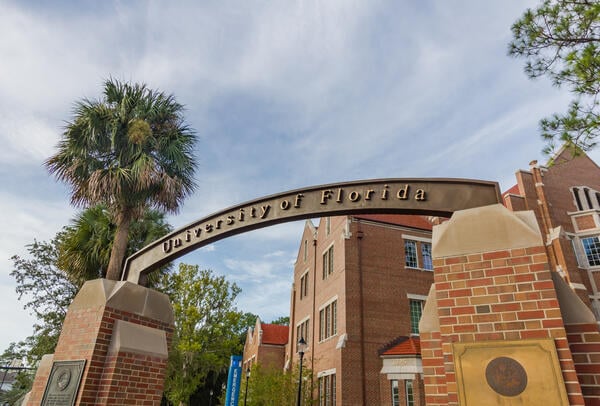
The Manhattan Institute’s “Correcting the Core” praised Florida as a case study, citing state data that the number of gen ed courses at colleges plummeted nearly 60 percent. The flagship University of Florida, according to the Institute, dropped its proposed 1,200 gen ed courses to fewer than 300. UF didn’t provide Inside Higher Ed a comment.
“Departments that are particular hotbeds for activism and controversy were most likely to have their classes removed from the general education list,” the Institute wrote of UF. “For example, none of the women’s studies courses qualified for general education status in the 2025–26 academic year. Other courses that were removed because of the state’s revised standards included ‘Be a Social Justice Activist: #Activism, Intersectionality, and Social Movement Organizing,’ ‘Latin American and US Latinx Theatre,’ and ‘Diversity and Inclusion in Sports Organizations.’”
In Texas, which already requires American and Texas history and government courses, lawmakers have taken a less prescriptive approach. Senate Bill 37, which became law last year, ordered the Texas Higher Education Coordinating Board to establish a committee to consider how to condense gen ed course requirements statewide. It further requires institutions’ own governing boards to review gen ed curricula every five years.
That review, according to the law, must ensure the required courses are “necessary to prepare students for civic and professional life,” among other such broad, undefined criteria. Boards must also consider the costs the “curriculum may impose on students, including for additional tuition, fees, and time a student must spend to complete an undergraduate degree.”
But, whether due to the law or other factors, the boards leading Texas’s large state-level university systems are restricting curricula, even beyond gen ed. Texas A&M and Texas Tech recently passed comprehensive restrictions on how faculty can teach about gender, sexuality and race.
Handing Gen Ed to Civics Centers
In an evolution, as part of a 2025 law establishing the Center for Civic Excellence at Utah State University, Utah lawmakers required that the faculty appointed to that center teach all gen ed courses. (Utah State has roughly 26,000 undergraduate students.) And the law, Senate Bill 334, ensured that those faculty members won’t have tenure protections, since they can only be appointed at will, on renewable two-year contracts.

Utah and Iowa required civics centers to teach some or all gen ed courses at some universities.
Reaching beyond Utah State, the law requires the Utah Board of Higher Education, which oversees 16 public colleges and universities statewide, to develop a proposed core of systemwide gen ed courses.
Similar to Utah, civic centers in Iowa are set to play a greater role in gen ed. A new law signed earlier this month, House File 2800, requires that civic centers at Iowa State University and the University of Northern Iowa decide which classes meet two new course requirements for undergraduates: a “comprehensive survey of all American history” and a similar course in American government.
At the flagship University of Iowa, the Center for Intellectual Freedom is the only academic unit that will offer the courses, according to the law.

Cirino’s SB 1 in Ohio contained no requirement that civics centers there pick or teach the gen ed U.S. courses. But he told Inside Higher Ed he’s pushing for them to be involved.
“We have 14 universities and only five civics centers,” Cirino said. “However, if they can develop a model curriculum to meet this course requirement, it could be used by the others that don’t have civics centers as well.”
Poliakoff, of ACTA, defends these state interventions in higher ed.
“Why hadn’t there been a required course in American history and government at these universities before?” he said, adding that “we’d much prefer if the institutions themselves would take responsibility for that, but since that wasn’t happening, it seemed entirely appropriate for a legislature to say, ‘Well, these are taxpayer-funded universities; we owe it to the people of this state, if not to the nation, to do a better job.’”
Montás said faculty should be the ones making gen ed changes. He said a “big weakness of the state legislature–driven reform” is that, for the changes to be viable, “they have to be owned by the faculty. They cannot realistically be imposed on the faculty.”
He noted that political moods and priorities—and legislatures themselves—change. “So, unless these programs somehow find a fertile native soil in which to grow,” he said, “they will not last.”
You may be interested

Is There A 3rd-Place World Cup Game? Who’s Playing In Bronze Game?
new admin - Jul 16, 2026[ad_1] NEWYou can now listen to Fox News articles! Yes, there's a third-place game in the 2026 World Cup.Following their…
The foods you should avoid as the cyclosporiasis outbreak grows
new admin - Jul 16, 2026The foods you should avoid as the cyclosporiasis outbreak grows - CBS News Watch CBS News Over 1,600 cases of…

Dana White assumes McGregor tore his ACL in fight against Holloway
new admin - Jul 16, 2026[ad_1] NEWYou can now listen to Fox News articles! After five years out of the Octagon, Conor McGregor's return barely…