


How an 8-year-old designed a zero-gravity indicator for Artemis II

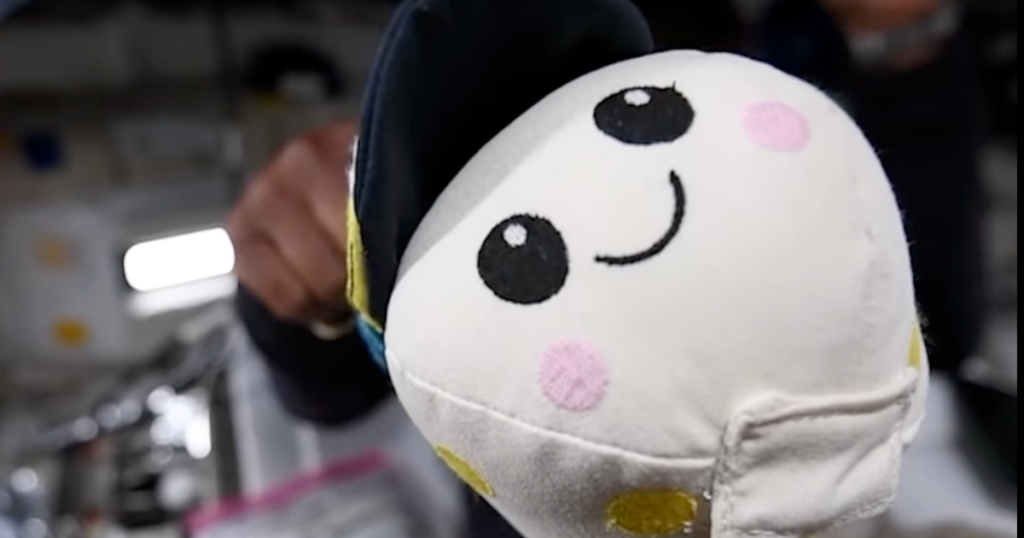
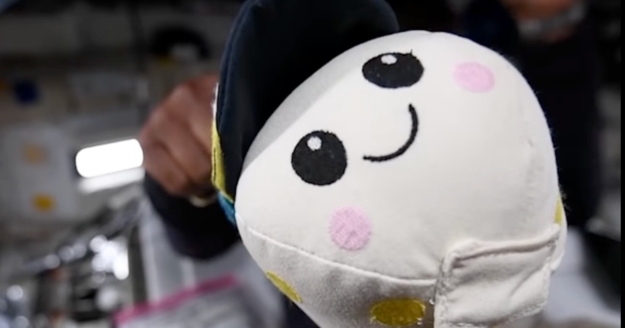
The four astronauts who traveled around the far side of the moon will return to Earth on Friday. With them will be a plush toy named Rise, a mission mascot who became a viral sensation while serving an important role aboard Artemis II.
Rise’s development began more than a year before Artemis II blasted off for its historic trip. In March 2025, NASA partnered with Freelancer, the world’s largest crowdsourcing company, to run a design contest to lead to the mascot’s design. The winner didn’t just have to be cute and cuddly: It also needed to serve as a zero-gravity indicator that would signal when the crew reached weightlessness.
Designs had to fit into tough parameters, according to a news release from Freelancer. It had to fit in a 6″x6″x6″ box and weigh no more than 12 ounces. It could only be made with specific materials, and it had to “represent humanity, exploration, and the spirit of the Artemis campaign,” according to Freelancer.
Second-grader Lucas Ye decided to take part. Some early ideas “didn’t really work out,” he said in Freelancer’s news release. After “some brainstorming,” he came up with the design that would become Rise.
Freelancer 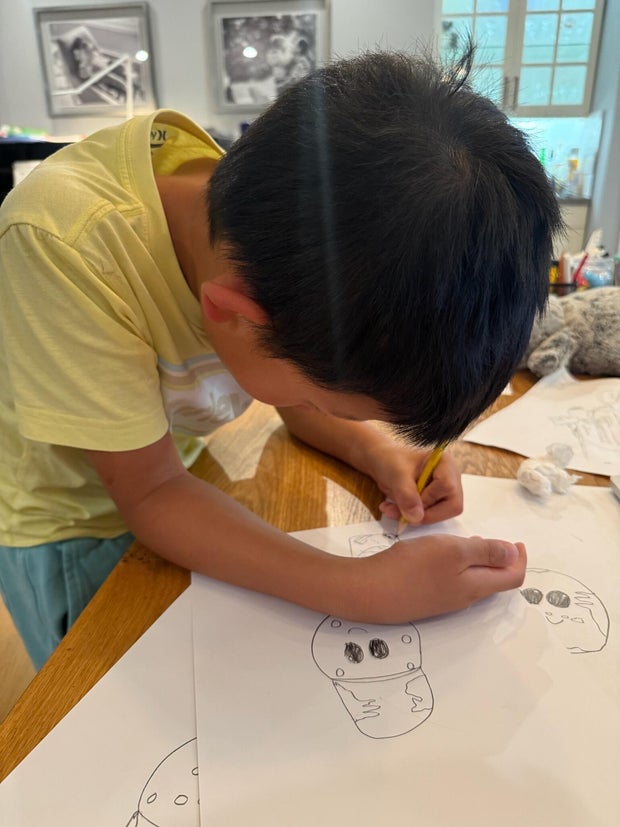
Each aspect of the plush references a moment in space history, according to Freelancer: The round white body represents the moon, and a tiny footprint on the back references Neil Armstrong’s arrival there in 1969. The toy’s cap is inspired by Apollo 8’s “Earthrise” photo, and its visor and brim are decorated with a galaxy and rockets. The constellation Orion is also featured in the design. Orion is the name of the capsule used by the Artemis II astronauts.
Lucas sketched the design, then built a prototype himself, according to Freelancer. When submissions for the contest closed in June 2025, the company reviewed 2,605 entries from more than 50 countries. In August, Freelancer selected 25 finalists, including Rise. At the time, Lucas told Freelancer that he would feel “hyperactive” if Rise was actually selected.
Five designs were shortlisted. Then the Artemis II crew picked their favorite. Of course, it wound up being Rise.
Freelancer 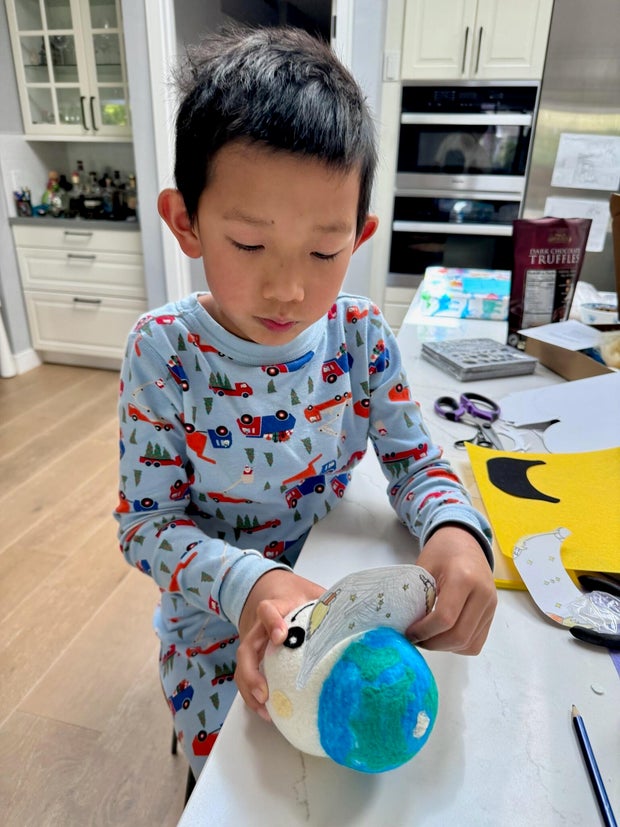
In a NASA behind-the-scenes video showing Rise’s production, Artemis II pilot Victor Glover said selecting the design was a “difficult decision.” Mission specialist Christina Koch said that Rise’s historical references helped win them over.
“It was a design inspired by the Earthrise photo taken on Apollo 8, which is very special to our crew,” Koch said. Among the photos the Artemis II crew captured was an “Earthset” image that mirrors that iconic photo.
The version of Rise that was used in the mission was crafted by NASA’s Thermal Blanket Lab at the Goddard Space Flight Center in Greenbelt, Maryland, according to NASA. Usually, the lab builds custom materials to protect fragile equipment. Rise had to meet NASA’s safety standards.
Technician Pamela Cain used a mix of machine and hand-sewing techniques to put the mascot together. She also needed to add a pocket so Rise could hold a micro SD card that contained more than 5.6 million names submitted through NASA’s “Send Your Name with Artemis” campaign.
NASA 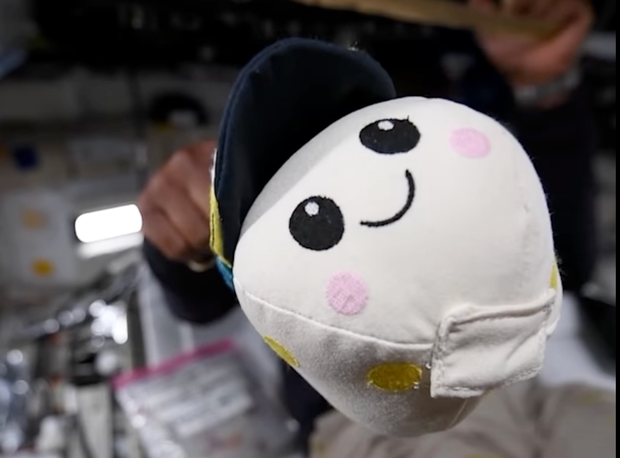
On April 1, Rise was tethered inside the Orion capsule with the Artemis II astronauts. Lucas and his family watched Artemis II’s launch from the Kennedy Space Center.
“We never thought we got an opportunity to be part of this mission,” Lucas’ father told Freelancer. “This is really meaningful to us, especially [since] Lucas has such a passion about space and rockets. It’s a very meaningful project for the whole family.”
Rise became a sensation as the mascot floated through videos taken aboard Artemis II. On Monday, the Artemis II crew set a record for the farthest humans have ever travelled from Earth. As the crew returns to Earth on Friday, Rise will eventually drop back to the ground to indicate gravity has returned.
NASA 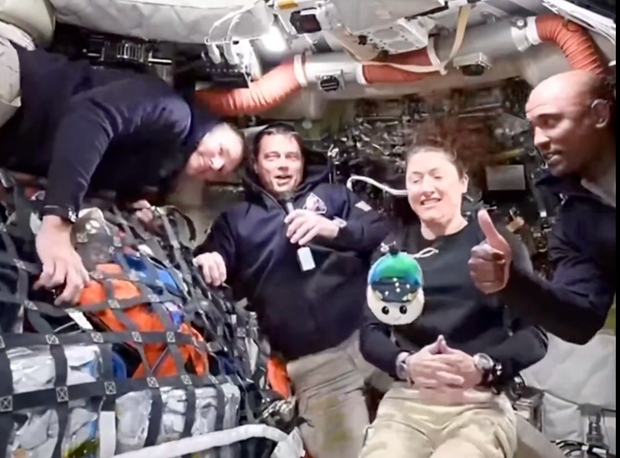
Freelancer did not specify what would happen to Rise once the astronauts splash down on Friday. The Orion capsule is set to land in the Pacific Ocean.
Lucas told Freelancer that the entire experience has inspired a dream for his future: To “work at NASA” and “be an astronaut.”
You may be interested

NBA news: Heat reportedly release Terry Rozier amid sports betting scandal
new admin - Apr 10, 2026[ad_1] NEWYou can now listen to Fox News articles! Miami Heat guard Terry Rozier, who was arrested in October as…
Planned Trump arch would dwarf Lincoln Memorial, new plans show
new admin - Apr 10, 2026Washington — The Interior Department has submitted renderings of President Trump's proposed triumphal arch near Arlington National Cemetery, showing that…
NFL news: Jaguars will reportedly change Travis Hunter’s usage next season
new admin - Apr 10, 2026[ad_1] NEWYou can now listen to Fox News articles! The Jacksonville Jaguars reportedly plan to deploy former Heisman Trophy winner…