



How 401(k) fees can cost tens of thousands in retirement savings


More than half of U.S. workers rely on 401(k) plans to save for retirement, but many may not be aware of fees that can fly under the radar and end up costing them tens of thousands — or more — in retirement income.
While these fees may appear small at first glance, they can add up: As the Department of Labor explains, a 1% difference in fees could significantly reduce a person’s ultimate account balance at retirement.
In the Labor Department’s example, a person with $25,000 in 401(k) savings who has 35 years until retirement and is charged 1.5% in fees could end up with $163,000 in retirement savings versus $227,000 if they were charged 0.5%, a 28% difference.
About four in 10 workers aren’t even aware that they pay fees on their 401(k)s, according to a 2021 study by the Government Accountability Office. Retirement plans typically face two types of fees, administrative and investment-related, which can be paid by the workers, the employer or split between the two, the GAO report noted.
Here’s what you need to know about the fees you’re being charged as a 401(k) holder.
What are the typical 401(k) fees?
Fees can vary based on your investment choices, your employer’s plan design and other factors.
“There’s just not one standard,” said Teresa Hassara, senior vice president of workplace savings and retirement solutions at Principal Financial Group, a small to midsize 401(k) plan manager.
In general, smaller plans tend to have higher fees, she said.
“In servicing a plan, there are fixed and variable costs,” she said. “The fewer employees you have for those fixed costs to be distributed across, [that] can have some implications.”
Typical fees are 0.3% to 0.5% for large plans, 0.5% to 1% for mid-sized plans and 1% or higher for small plans, according to Hassara. Workers with 401(k)s don’t have control over setting the fees, but may be able to influence how much they ultimately pay based on the investment choices they make, such as by choosing to invest in lower-cost funds.
“Some investment options have higher underlying investment expenses than others,” Hassara said.
What’s included in a 401(k) fee?
Fees are typically grouped into three main buckets:
- Investment fees. These cover the costs of managing 401(k) investments. As the Labor Department explains, these are indirect charges that get deducted from your investment returns. They account for the largest share of a person’s 401(k) fees.
- Administrative fees. These are the day-to-day operational expenses of running a plan, such as recordkeeping and accounting. The fees also cover services such as customer service assistance or investment advice offered through a 401(k) plan, according to the Department of Labor.
- Individual service fees. 401(k) holders may also face individual service fees if they opt to use certain plan features. A person could be charged a fee for taking out a loan or conducting other optional transactions, for example.
Across all fee types, some costs may be borne by employers, while others are deducted from plan assets or passed directly to employees.
While higher fees may be daunting, they are not necessarily a bad thing, Hassara pointed out. Service providers may charge higher administrative fees, for example, in order to cover educational campaigns to help employees achieve better returns on their investments, she said.
“Cost and level of services often go hand in hand,” she said.
How can I see how much I am being charged?
Fees can change over time, making it important for plan holders to monitor their accounts to see how much they are paying.
“[Fees] will typically change because the plan sponsor is going to be negotiating on behalf of the participant and reviewing those fees very frequently to make sure they’re competitive with the marketplace,” Hassara told CBS News.
If the fees on a 401(k) plan change for any reason, employers are generally required to notify the employee within a 30- to 90-day window, Hassara said.
Otherwise, 401(k) holders can see what types of fees they’re paying and how much they are being charged through an annual disclosure notice, known as a 404(a)(5). Workers can also look at their quarterly account statements to see their fees.
“That will break out all of the fees for employees,” Hassara said.
Employees can always reach out to their company’s HR department or recordkeepers, firms like Principal that manage 401(k) contributions and investment elections, if they have questions about the fees they are being charged.
You may be interested

7/20: CBS Evening News – CBS News
new admin - Jul 21, 20267/20: CBS Evening News - CBS News Watch CBS News Suspect arrested in New York City federal building explosion; FDA…

Woman says neighbour’s ‘disgusting’ balcony habit is ruining her life
new admin - Jul 21, 2026A woman relaxes on the terrace at the morning. (Image: Maria Korneeva via Getty Images)Many people often find they have…
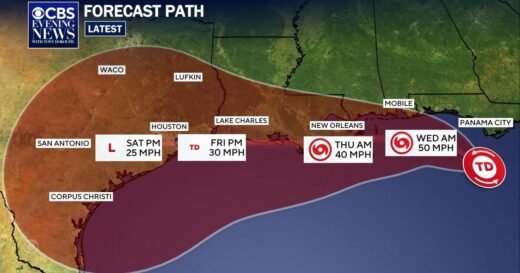
Tropical Storm Bertha targeting the Gulf Coast
new admin - Jul 21, 2026Tropical Storm Bertha targeting the Gulf Coast - CBS News Watch CBS News Tropical Storm Bertha is barreling down on…