


Homer Is Having a Resurgence—but Not in Higher Ed (opinion)

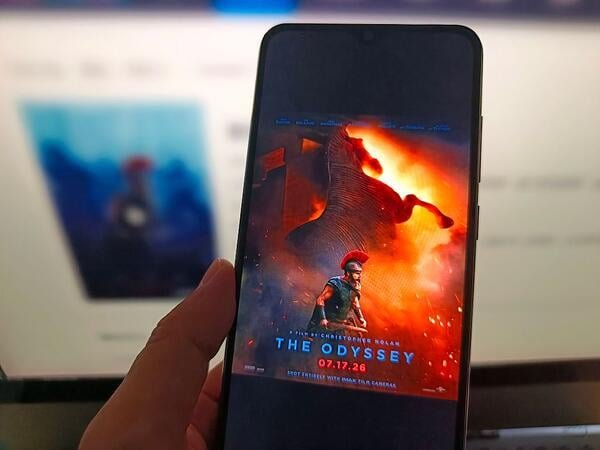
This year two American institutions held a referendum of sorts on Homer. The market spoke the loudest. In anticipation of the theatrical release of Christopher Nolan’s The Odyssey, sales of the epic poem were up 76 percent by mid-July of this year across every translation in print, according to Circana BookScan figures, and Emily Wilson’s version alone passed a million copies sold. Meanwhile, at Syracuse University, majors in classics and classical civilization were among the programs cut following an academic program review.
Customers are pounding on the front door of the shop. Management is in the back, bricking up the workroom.
That is the story behind Nolan’s The Odyssey, and it is a story about much more than a movie. The hunger is real, and for once it is measurable—a hunger for scale, for shared ritual, for the oldest homecoming story the West owns. The scandal is the supply side. The demand is being met by a $250 million spectacle, while the unglamorous machinery that carried the poem through every previous century—the departments, the translators, the teachers—is being dismantled, line by budget line, in the same news cycle.
Taken together, there seems to be a seriously strange contradiction on offer. An almost three-hour, R-rated film of an early Iron Age poem, with no franchise behind it, opened to $124.5 million in the U.S. and Canada. Half the audience was between 18 and 34. The generation that allegedly cannot attend to anything longer than a video clip and that we are told dislikes the humanities sat still for 172 minutes of wine-dark seafaring.
The money is the least of it. The behavior is the point. When IMAX 70-millimeter tickets went on sale last July—a full year before release, a first in the history of the business—95 percent of the seats sold inside an hour, and resale prices climbed from $400 toward $1,000 and beyond by opening week.
Variety sent a writer to a sold-out 2 a.m. screening and found a full house of strangers gathered to hear this story in the dark together. Recall the context: Pew reported this spring that barely half of American adults set foot in a movie theater in a year. Yet more than half of this film’s opening gross came from premium formats—people paying a stiff surcharge not for the story, which costs nothing and is everywhere, but for presence. The Odyssey began as a performance: a crowd, a fire, a voice, hours of it. It took the multiplex 27 centuries to stumble back into the poem’s original power.
And it matters which poem this is. Hollywood did not break records with a modern war epic. It broke them with the other one—the poem of the veteran who takes 10 years to get home and arrives to find that home has not waited; the poem whose central theme is not battle but recognition, the terror of being unknown in your own house. The Greeks had a word for the whole genre of getting back—nostos—and they considered it important enough to need a genre. An American audience in 2026, five years into its own arguments about who gets to call this nation their home and what we owe the places we left, did not need the term explained.
I have taught the poem, off and on, for two decades (mostly off of late), usually to first-year students who regard an assigned reading list the way their parents might regard jury duty. Every time, the same thing happens, usually at the same place: the old nurse washing the disguised stranger’s feet, finding the boar-hunt scar, and she knows her king in an instant. Every time, the same silence. Nobody in that room needs me to explain what it is to come back changed and hope somebody can still recognize you—that is a normal college student experience. That silence is the product. No studio manufactured it, and no studio can. It is an emotionally powerful tale as old as humankind.
The obvious objection deserves its due: All this is marketing. Nolan is a brand with his own gravitational field; the year-early ticket drop was scarcity engineering; the 70-millimeter prints are artisanal theater for people who own turntables. I concede every word of it. The machinery is real, and it worked. But this same decade is littered with franchises that had the same sort of machinery and died in empty auditoriums, because scarcity is a multiplier, not a motive. You cannot engineer a stampede toward something people do not already want. The marketing explains the movie’s opening weekend. It does not explain the million-plus paperbacks.
So, if the hunger is real, the interesting question is who feeds it between spectacles—and here the answer has been arranged in advance, by spreadsheet. For a generation, universities have applied enrollment logic to knowledge: every department a profit center, every major priced against its job placements. Classics fails that exam every time it is administered. The dismantling has been methodical rather than dramatic. In the space of a few months across 2020 and 2021, Howard University dissolved the only classics department at any historically Black university; the University of Vermont moved to abolish its classics department, Latin and Greek majors with it (it still offers a B.A. in classics through a program nested in its School of World Languages and Cultures); and Calvin University laid off a tenured classicist.
Since then, the cuts have moved quietly down the catalog. Miami University of Ohio included classical studies on a list of 18 programs proposed for cuts or consolidations in 2023 and recently completed the process of folding its classical studies major into a general world languages degree. This spring, the University of Iowa moved to terminate its classical languages B.A.—14 students enrolled—a closure its Board of Regents approved in April. And Loyola University Chicago made the decision this spring to eliminate two of its three classical studies majors, leaving what one of its own professors describes as a “skeleton crew.”
In March, the president of the Society for Classical Studies reported that at least four classics departments had come to the group over just the past six weeks because they were facing possible termination, reduction or reshuffling. The number of classical studies bachelor’s degrees granted has fallen by more than 40 percent since 2012.
None of this was a purge. It was routine maintenance of the higher education model. And here is the irony the spreadsheet cannot see: The film’s core audience, those 18- to 34-year-olds queuing at 2 a.m., consists precisely of those students who supposedly, we’re told, have little interest in the classical stories.
The success of the movie shows there is an audience and a hunger, that these stories still matter, but the bigger question is who will tell the story when all the lights go out for classical studies? Who will teach it to students who clearly sense a need to hear it?
Why are classics teachers needed? Because the poem (like most of classical studies) never survived on its own. It has no natural habitat. It crossed the Dark Age in the mouths of professional singers who worked for dinner; it crossed the Middle Ages in the ink of monks copying a language they barely read; it crossed the Atlantic in the satchels of underpaid schoolmasters; it crossed into the last century in seminar rooms staffed, increasingly, by adjuncts. Every link in that 2,700-year chain was a person on a payroll, trained professionally to teach these important texts. The blockbuster is a marvelous machine, but it is a flare, not a lamp; it goes up once a decade, if that, and burns out in a season. The carriers of this knowledge, the teachers, are the lamp.
This summer, America proved it still wants what they carry—in the very season its universities are laying off the porters, the cargo sold out. The universities, however, are not to blame. In the economic model that drives them, every program is measured by financial calculations and career outcomes. The high cost of college pushes students and their families to see it as a commodity and therefore expect an immediate financial payoff. Every college, as the readers here know, needs to watch expenses and invest in programs that are growing. University budgets are, after all, finite. Deans and provosts know this, and sometimes the decisions made sicken them, but for the health of the institution these decisions need to be made.
When college served both the common good and provided an economic boost for students, it was easier to keep Homer. Classics, after all, were foundational to early American higher education as a tool for civic education, producing good democratic citizens. Seeing college solely through vocational terms alone means we give up that which served the common good for 2,700 years. That is the current state in which higher education finds itself. The Odyssey shows that we have turned the civic lessons over to Hollywood, and we are poorer for it.
You may be interested

Duchess Sophie’s 'gorgeous' cowboy boots are an autumn must-have and they're in stock
new admin - Sep 14, 2026[ad_1] Sophie's repeat-wear boots prove a great Western style can carry an autumn wardrobe from casual denim to smarter countryside…
Stocks tumble after AI leaders warn that the industry should slow down
new admin - Sep 14, 2026[ad_1] Stock futures fell sharply Monday morning, led by tech stocks, after leading artificial intelligence CEOs called for a slowdown…

£5 OFF WHEN YOU SPEND £30 AT THE ENTERTAINER TOY SHOP
new admin - Sep 14, 2026Start your Christmas shopping early with this exclusive offer Source link