



Higher Ed Groups Push Back on Accreditation Overhaul

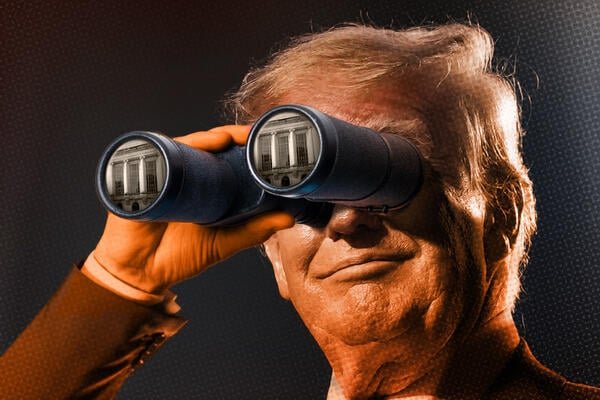
A number of accreditation agencies, student advocacy groups and university lobbyists say they see value in the underlying goals of President Trump’s proposed overhaul to accreditation policy, particularly the efforts to put more weight on student outcomes and cut back on red tape. But many doubt that rewriting higher ed’s quality-assurance regulations is the right vehicle to reach those goals.
“While [we] support and champion many of the proposed rulemaking’s goals, we believe the department should reexamine whether the accreditation process is the appropriate mechanism to achieve some of our shared priorities, especially in the context of … ED’s stated objective of Returning Education to the States,” the Association of Public and Land-grant Universities wrote in its public comment on the rule.
APLU was just one of thousands that weighed in on the proposal before the Sept. 21 deadline. Collectively, the commenters argue that parts of the proposal demonstrate executive overreach, set overly prescriptive standards and could actually increase operational costs—not reduce them. Some of the most vocal sentinels warn that the proposal threatens a core principle of American higher ed: academic freedom.
First released in August, the 354-page proposal would require accreditors to ensure colleges explain any credit-transfer denials, begin evaluating colleges’ intellectual diversity and the cost-benefit of their spending while also policing compliance with the First Amendment, among other changes. Some accreditors would have to rethink their traditional peer-review model. Trump officials have said the changes are aimed at promoting innovation and breaking up “entrenched accreditation monopolies.”
Colleges and universities have to be accredited by an Education Department–recognized accreditor in order to receive federal student aid, so any changes in this area could have significant impacts.
As of Monday afternoon, the Education Department had received more than 4,590 comments, but only 1,890 were posted publicly. The tone of comments aligned with a recent Inside Higher Ed survey that found that only 17 percent of college provosts believe the proposed accreditation rules will have a somewhat or strongly positive impact on higher education.
Before the rule is finalized, the department will have to review and respond to the comments. If it completes that process by Nov. 1, the rule would take effect July 1, 2027.
Several commenters did support provisions that flesh out how accreditors must evaluate student success, though some asked the department to reconsider the scope of its expected outcome standards. Under the proposal, accreditors would have to assess student outcomes based on at least one category and dataset outlined by the department, respondents say. Those include licensing and certification exam results, retention and completion rates, postcompletion employment and continued-education outcomes, and economic returns relative to cost.
But outlining such specific categories, they warn, could violate federal law. The Higher Education Act allows the government to require accreditors to have certain types of standards, but it limits the department’s ability to prescribe how those standards are determined or evaluated.
The provisions that received significant opposition were those that involve evaluating the intellectual diversity of faculty, that require institutions to enforce the First Amendment and civil rights law, and that could force accreditors to rethink their traditional peer-review model in order to stay “separate and independent” from related trade groups. Once again, commenters argued these standards violate the Higher Education Act and impede on accreditors’ independence.
Some organizations—including the Council for Higher Education Accreditation—urged the department to remove those sections entirely.
Others, including a group of 13 think tanks, student advocacy groups and academic unions, collectively referred to as the Protect Students and Taxpayers Coalition, said the proposal leaves potential opportunities for “political intrusion.”
“The [proposal] extends the federal government into matters … that fall outside the Department’s congressionally-circumscribed role,” the group’s comment says. “Our coalition offers recommendations on the proposed rule that would foster a contemporary accreditation system and shield it from government interference.”
The coalition more directly opposed provisions that make it easier for new accreditors to achieve federal recognition, fearing it could eliminate critical guardrails and start a race to the bottom that harms students.
Proponents of the rule—including conservative think tanks like the Defense of Freedom Institute and the America First Policy Institute—say the Trump administration is streamlining approvals of new accreditors and encouraging greater competition, which will benefit students. Over all, the regulations are a proper exercise of executive power and would focus accreditation on caliber, not alleged leftist ideology, they argued.
“For too long, accreditation has served the interests of a longstanding clique of agencies that have leveraged their Title IV gatekeeping authority to push woke criteria at the expense of academic quality,” DFI president and co-founder Bob Eitel said in a news release about the group’s public comment. (Title IV refers to federal financial aid.)
Representatives from DFI and AFPI served on the committee that reviewed the department’s proposal earlier this year. After two rounds of talks, the committee unanimously signed off.
Several groups, including APLU and the American Council on Education, noted in their public comments that they felt unrepresented on that committee. Often, rule-making committees include one seat at the table for each type of institution: two-year public institutions; four-year public institutions; private, nonprofit institutions; private, for-profit institutions; and sometimes minority-serving institutions. But this time around, institutional leaders had only three seats at the table.
And even organizations whose representatives served on the committee—including the Middle States Commission on Higher Education—made suggestions.
For instance, Middle States noted in its comment that while ED stressed during the negotiations that “it has no intentions to make accreditors the enforcement mechanism” on issues like civil rights law, “the actual language of the proposed regulations seemingly [does] just that.”
Others sought clarity on the proposal. The Council of Recognized Accrediting Commissions, for example, noted several places where the proposal’s preamble conflicts with the language in the regulation itself. The most notable example, C-RAC says, involved whose responsibility it is to “maintain academic freedom” and what the definition of academic freedom must be. In the preamble, the department says the accrediting agency would have that responsibility. C-RAC argues, “This is contrary to the proposed regulatory language,” which says the accreditor should evaluate whether the institution itself is properly maintaining academic freedom.
“A similar discrepancy between the proposed regulatory text and preamble exists … with respect to standards related to intellectual diversity and research misconduct,” the comment states.
All in all, many respondents warned that while the department may be trying to hold accreditors accountable, the proposal would dictate agencies’ standards and alter their historically independent peer-review model in a way that goes beyond Congress’s original intent.
The proposed rule would “establish new requirements that expand the federal role in accreditation, constrain accreditor independence, [and] limit the flexibility necessary to evaluate diverse institutions and programs based on institutional mission,” CHEA wrote. In some cases, the council adds, this will mean “significant operational and institutional burdens that increase the cost of accreditation and may ultimately be passed on to students.”
You may be interested

New 60 Minutes report on "third-country deporations"
new admin - Oct 24, 2026Within five days of being deported from the U.S., Moussa Diawara says Ghanaian officials forced him onto a flight to…

Dog trainer names 5 family-friendly breeds he'd trust around his grandchildren
new admin - Oct 24, 2026A dog trainer has shared the five best dog breeds for kids he'd most trust around his grandchildren. Source link

Meghan Markle responds as estranged father investigated for alleged child porn posession
new admin - Oct 24, 2026Meghan Markle, the Duchess of Sussex, said in a statement Friday that she's "deeply distressed" by reports that her father,…