



Heather Cox Richardson Hears the Public Scholar Music


Political historian Heather Cox Richardson was at home in Maine on Sept. 15, 2019, when she was stung by a yellow jacket. She’s allergic and had forgotten to refill her EpiPen prescription. Exasperated by her carelessness, her brother-in-law, who was there, told her, “If you don’t die, I’m going to kill you.” As she waited for the swelling to subside, she interrupted a six-week hiatus from Facebook and wrote a post contextualizing the political events of the day for her roughly 22,000 followers.
“Am back and ready to write, but now everything seems like such a dumpster fire it’s very hard to know where to start,” Richardson began. “So how about a general overview of how things at the White House look to me today …”
Feeling better hours later, the history professor drove from Maine to the campus of Boston College to teach. Upon arriving in her office, she found that thousands of readers had responded to the previous night’s post with questions. So, she answered back, with more historical context. Over the subsequent months, her following climbed to hundreds of thousands, and readers began asking her to start a newsletter.
“I literally said to my graduate students, ‘What the expletive is a newsletter?’” Richardson said.
Today, Richardson’s Substack, Letters From an American, has over three million subscribers. It draws on her academic training, and her voice is “sincere, humble, approachable and jargon-free,” according to The Nation. She writes nearly every day.
“The conceit of the entire project is that we, as human beings in the world in 2026, are all part of a conversation trying to ascertain what’s happening around us,” Richardson told Inside Higher Ed. The Public Scholar recently sat down with Richardson to talk about teaching as the secret to public scholarship, making mistakes in public and learning to hear the music. This conversation has been edited and condensed for clarity.
Q: Let’s cut to the chase: Letters From an American has over three million subscribers. That’s phenomenal. What secrets do you have for academics who want to share their expertise in a newsletter?
A: Virtually nobody emphasizes the degree to which my work comes from teaching. If you’re an academic who’s interested in doing what I do, lean into that idea that you’re teaching people. Teachers don’t get enough credit when we talk about communication. Those of us who have been in a classroom know how to do this.
My career started at MIT, where the students were brilliant, but many had not been exposed at all to American history. But whatever I was discussing mattered to their present lives. So, instead of saying, “Andrew Jackson did this” or “Andrew Jackson did that,” I looked at how Andrew Jackson explored the ways that everyday people should have a say in their government and the limits—or not—of presidential power.
Q: Go deeper with that public-scholarship-is-like-teaching idea. Is it like a 101 class? A small seminar? A lecture held in the likes of Madison Square Garden?
A: I’d say a small 101 class. When I was starting out, there was this idea that you had to imagine the Audience with a capital A—your editor, your publisher, the public, the whatever. And that seemed different than what I did in a classroom. But I frame things as: How would I explain this in a classroom?
When I write [my newsletter] every night, I imagine I’m writing to six of my friends. That’s it. Of course, millions of people now read me. But I think, “What would my college roommate want to know about this? And how would I tell it to her?”
Being a good [public] writer is really about good teaching. People comment; they criticize; they ask questions; they correct me—just like in a classroom. And all of that is great, because it helps people question their surroundings and make good decisions about it.
Q: You give readers context without talking down to them; you assume curiosity rather than expertise. How do you calibrate that?
A: If you read me, you know that I identify the president of the United States every night. Sometimes that frustrates people. But how many times have you been listening to something, and somebody refers to a name or an event, and you know it, but it’s not at the top of your mind? By the time you remember what that is, the sentence or paragraph has gone on, and you’re lost. I do the E. B. White method of making things simple, of saying, “I’ll give you all the information you need, so you can focus on what I’m talking about here.”
That’s really hard to do when you know stuff. You feel like, “If I put this down, it insults people.” But the truth is, people don’t know Reconstruction like I know Reconstruction, and there’s no reason for them to know that. You have to explain. Also, you have to lose some nuance. For an academic like me, that’s the hardest part. Every time I write a sentence, I am constantly thinking, “Wait a minute, here’s an exception.” That level of nuance is critical in what we do as academics. In a short, popular piece, it’s superfluous and distracting enough that you will lose your readers.
I can emphasize the Gettysburg Address in 150 different ways, and when I do one, I’m going to neglect another. For many people, it’s really hard to know that whatever you write, you are going to walk away with people complaining about it.
Q: Public scholarship means doing the work, and the mistakes, in public. Any lessons that might help an academic who’s thinking about sharing their expertise broadly?
A: I make mistakes every single night. They’re usually mistakes of grammar or spelling. Two last night were because I was tired. I wrote “Immigrations” and Customs Enforcement; I know it’s “Immigration.” In terms of things I have gotten wrong, there are not a lot of those, partly because I write as I figure it out myself. Or because I know it incredibly well. But also because I have the world’s best copy editor, who fact-checks me.
On occasion someone says to me, “You got that wrong, even though it’s not being reported,” or “It’s been reported incorrectly; this is what was really going on.” And I’m more than happy to correct those because I’m trying to provide a public record of what our political situation looks like in the United States at this moment.
Q: How do you maintain the stamina to send a newsletter nearly every night?
A: Before I started writing these letters, I was writing with a colleague, and we had an assignment. He just sat down and started writing. And I said to him, “How can you do this?” He looked at me like I had gone bonkers. He said, “Can’t you hear the music?” And I thought, “I can’t hear any music. What on earth do you mean?”
Now, I hear the music. As a craftsperson, maybe even an artist, that is a gift that I would never have had, had I not really been forced to put—excuse me—my ass in the chair every single night for now almost seven years and crank out at least 1,200 words, on average. As a human being, that is an extraordinary gift.
Q: Suppose a colleague shares a desire to start a newsletter. What would you tell them?
A: Sometimes I think of myself as somebody like Johnny Carson. People know that I am going to show up in whatever state I am—sick, on the road, whatever. They trust that I will be there. Like a teacher who has gotta be in the classroom, if you want to be a frequently consulted person in [public conversations], you must be there every night or at least five nights a week. You are one of the guardrails.
That being said, there are ways around making it as burdensome as it has been for me. There are people like Joyce White Vance [a law professor at the University of Alabama who writes the newsletter Civil Discourse] who has made her chickens part of the cast of characters in her newsletter. People like Liza Donnelly, a [New Yorker] cartoonist [who writes the newsletter Seeing Things]; I don’t know how she produces at the rate she does, but there are ways. Paul Krugman [who hosts the Paul Krugman Podcast: Notes on Economics and More and appears to] find it easier to record videos than it is to write every day. I find recording videos incredibly burdensome psychologically.
As a teacher, if you have something you want to get out there, the trick is just to say, “OK, I’m gonna do it.” Then be prepared when people say, “You’re the best thing since sliced bread” or “You are the devil incarnate.” We are not our words, and you just cannot take either of those things personally.
Sign up to the Public Scholar newsletter, sent once each month, for news of upcoming stories and more public scholarship insights.
You may be interested

Your rights to annual leave ‘refund’ if you get ill while off work
new admin - Jul 06, 2026People should not have to 'waste' their annual leave if they're ill (Image: Getty)Brits only get so many days to…
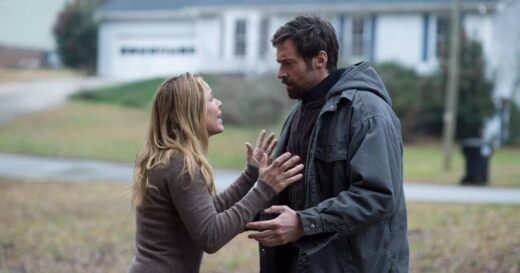
Dark ‘masterpiece’ thriller on Netflix will ‘send shivers down your spine’ | Films | Entertainment
new admin - Jul 06, 2026If you are searching for your next must-watch film, this gripping, dark thriller could be just the ticket. Prisoners, helmed…
Two Plus One Equals Four Minus One
new admin - Jul 06, 2026[ad_1] Math is full of life lessons. For example, mathematically speaking, subtracting a negative number has the same effect as…