

Healthy Eating Tips | Nutrition


Background
Good nutrition is about consistently choosing healthy foods and beverages. The Dietary Guidelines for Americans promote “Eat Real Food.” Healthy eating patterns can include foods and beverages that reflect personal preferences and budgetary considerations.
Healthy eating emphasizes protein, dairy (without added sugars), vegetables, fruits, healthy fats, and whole grains. Protein options include eggs, poultry, seafood, red meat, beans, peas, lentils, legumes, nuts, seeds, and soy.
Most people in the United States need to eat more nutrient-dense foods. At the same time, we need to limit highly processed foods, added sugars, added sodium, and refined carbohydrates.
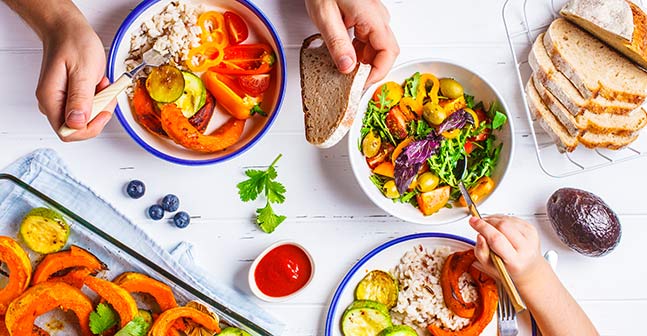
Aim for a variety of colors
A good practice is to aim for a variety of colors on your plate. Fruits and vegetables like oranges, tomatoes, and dark, leafy greens—and even fresh herbs—are loaded with vitamins, fiber, and minerals.
To get a variety of healthy foods, try this:
- Add fresh herbs to salads or meat dishes.
- Make a red sauce with fresh tomatoes, fresh herbs, and spices.
- Or start with canned tomatoes with no salt added.
- Add diced vegetables to stews and omelets to boost color and nutrients.
- Peppers, broccoli, and onions are great options.
- Top unsweetened yogurt with your favorite fruit.
Limit added sugars
Too much added sugar in your diet can contribute to weight gain, obesity, type 2 diabetes, and heart disease. Added sugars are sugars and syrups that are added to foods and drinks when they are processed or prepared.
Added sugars have many names, including cane sugar, corn syrup, dextrose, and fructose. Table sugar, maple syrup, and honey are also considered added sugars. Sugary drinks are a common source of added sugars.
To limit added sugars, try this:
- Drink water instead of sugary drinks.
- Add berries or slices of lime, lemon, or cucumber for more flavor.
- Add fruit to your whole grain cereal or yogurt for sweetness.
- Limit sugary snacks.
- Instead, snack on fruit and vegetable slices.
- At coffee shops, skip the flavored syrups.
- Or get back to basics with black coffee.
- Read nutrition labels.
- Choose foods with no or lower amounts of added sugars.

Cut back on sodium
Eating too much sodium can raise your risk of high blood pressure, heart attack, and stroke. More than 70% of the sodium Americans consume comes from packaged and prepared foods. While sodium has many forms, 90% of the sodium we consume is from salt. See the top sources of sodium.
To cut back on sodium, try this:
- Avoid highly processed foods that are high in sodium.
- Read the Nutrition Facts label to find foods low in sodium or lower sodium options.
- Buy unprocessed food to prepare at home.
- Good options include fresh or frozen vegetables.
Bump up fiber
Fiber helps maintain digestive health and helps us feel fuller longer. Fiber also helps control blood sugar and lowers cholesterol levels. Fruits and vegetables, whole grains, legumes, nuts, and seeds are good sources of fiber.
To bump up fiber, try this:
- Slice raw vegetables for quick snacks.
- Start your day with a whole-grain cereal, like oatmeal.
- Top your whole grain cereal with berries, pumpkin seeds, or almonds.
- Add a half-cup of beans or lentils to a salad to add texture and flavor.
- Enjoy fresh fruit with a meal or as dessert.
You may be interested

8/16/2026: A Psychedelic Journey; The Mardi Gras Indians; The Indomitable Margaret Atwood
new admin - Aug 17, 2026First, U.S. veterans with PTSD take a psychedelic journey in Mexico. Then, a look at the Mardi Gras Indians keeping…

U.S. veterans with PTSD take a psychedelic journey in Mexico | 60 Minutes
new admin - Aug 17, 2026U.S. veterans with PTSD take a psychedelic journey in Mexico | 60 Minutes - CBS News Watch CBS News 60…

New parents warned over strict 42-day rule that carries a £1,000 legal fine
new admin - Aug 17, 2026The government has issued an alert to new parents Source link