

HBCUs and the Uneven Legacy of Academic Freedom

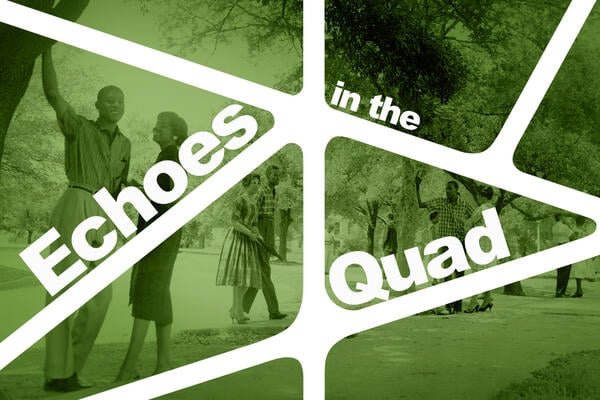
I only play a historian on television, so I thought it would be useful to include some of my lively chats with real-life historians in this column. Recently, I spoke with Eddie R. Cole, scholar of American higher education at the University of California, Los Angeles. Cole has written two award-winning books on U.S. higher education in the 20th century, one focused on the role of presidents in aiding or challenging the Civil Rights Movement and another on the history of Omega Psi Phi Fraternity, Inc. We discussed how he thinks about academic freedom, the role of historically Black colleges and universities in providing an (uneven) haven against political repression and the big issue in higher education policy he’s currently thinking about: accreditation.
This conversation has been edited and condensed for clarity.
Q: My column has looked at the Red Scares and explored what organizations and individual people working within institutions could do to push back against political repression. I’m curious, based on your expertise, what do you think of when you hear “academic freedom”?
A: I think about academic freedom often. I think about how it has never been evenly distributed in higher education. In a column I wrote for The Washington Post, I explained how academic freedom has always been of great value to American higher education, but as the faculty became more racially and gender diverse, academic freedom and its protections were skewed in particularly interesting ways. So, it’s always been academic freedom with an asterisk. Today’s talking points for defending academic freedom are similar to what Black scholars have been saying for quite some time, especially during the 1940s and 1950s.
Q: It’s like the axiom “when America catches a cold, Black folks catch pneumonia.” One of the things that I found so fascinating when I read No Ivory Tower and Jim Crow Campus was this piece around HBCUs. When you think about the ’40s and ’50s, what role do you think HBCUs played?
A: Between 1930 and 1943, universities conferred 317 Ph.D.s to Black people. And the majority of those Black people found employment in either the government or at HBCUs. Predominantly white institutions that granted those Ph.D.s would almost never hire their former students to join the faculty. So HBCUs become this important place because they are one of the primary employers of Black Ph.D.s and provide a safe environment for Black scholars challenging racism through research. The Harvards and the Stanfords and the Michigans, and nearly every other mainstream, white university, had people who were publishing research that perpetuates racism—IQ tests, eugenics, etc. HBCUs were the epicenter of scholars pushing back against racist ideas in the United States.
I think about a scholar like Martin Jenkins, who I write about in my first book. An eventual faculty member at Howard, his quantitative research studying IQ tests fundamentally changed how they are deployed in K–12 education and how we even define who’s an intelligent student.
Q: Given that we know HBCUs also wound up firing several people due to increased federal attention during the Red Scares, how do we make sense of those tensions?
A: HBCUs are indicative of Black life in the United States: It’s always been a mix of modeling the world you want to see and assessing when a situation becomes dangerous. A moment where the HBCU says, “We also need to sort of self-protect, because history tells us you [the state] won’t protect us.” Notably, so many HBCUs were founded by white missionary groups and private philanthropists and had white administrators and faculty. But history reminds us that, ultimately, just because someone worked at an HBCU doesn’t mean they truly believe in Black liberation.
At the same time, if you do support Black liberation and equality, that can upset the people who control the purse strings to these HBCUs. The history is a damned if you do, damned if you don’t. That’s the HBCU life.
Q: What’s the biggest higher education policy issue you’re thinking about right now?
A: Accreditation is, by far, the most important issue in higher education right now. Because everything else hinges on accreditation systems being in place.
If you look across history, the consistent thread in U.S. higher education, even in hostile states across the South: There was general support for a stand-alone accreditation agency that could hold institutions accountable to adhere to the law and operate free of political interference. In the archives, I’ve found a June 1963 telegram from the head of [the Southern Association of Colleges and Schools] to Alabama’s segregationist governor George Wallace, basically saying, “If you block Black students from enrolling, all the public institutions in your state will be held accountable. You’re not going to get federal support, and you’ll be cooked as a university.”
That is what history tells us. When I look at the conservative pushback on higher education right now, I’m convinced that they, too, read American higher education history and have learned the methods used to block an outright push to censor higher education. And so, if they can change or remove the mechanisms that block political interference, you’ve got nothing to stop that type of suppression from happening to American higher education.
By controlling accreditation, you can shape minds, you can shape agendas, you can shape research, for decades to come. If you are someone who cares about DEI offices, about race in admissions, about equal opportunity in hiring—all of this revolves around having the buffer of a strong system of accreditation that sets norms and standards for a set of colleges and universities that are uninfluenced by political motives. We’ve completely lost that. It’s amazing how few people are up in arms about this issue as opposed to smaller aspects of [attacks by the federal government] that we see unfolding in the headlines.
The quietest, yet biggest, monster in the room is the collapse of the accreditation system.
You may be interested

Brazil denies visa requests to U.S. officials ahead of upcoming elections
new admin - Jul 26, 2026Brazil's Foreign Ministry said on Saturday it denied visas to two U.S. State Department officials who sought to travel to…

How a California family’s battle for justice for slain teen has impacted victims’ rights
new admin - Jul 26, 2026This story originally aired on May 3, 2025.It shook the entire campus at the University of the Pacific. A freshman…
H&M, Morrisons, Decathlon and more announce closures
new admin - Jul 26, 2026H&M is one of a few retailers which has announced closures recently (Image: Getty)The decline of the British high street…