
Harvard Tallies How Many People Officials Enslaved

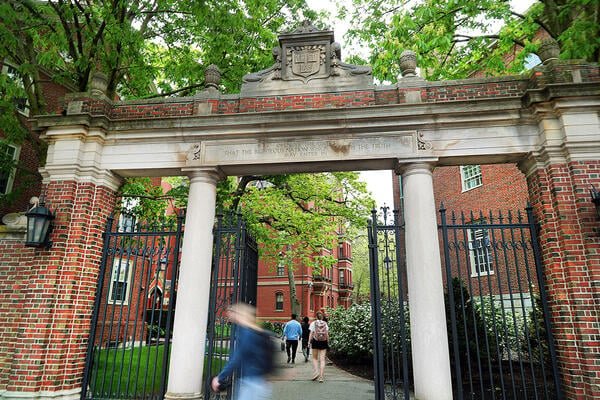
At least 259 Harvard officials enslaved more than 1,600 people over a 229-year period. Researchers expect both numbers to grow as they continue working to identify enslaved individuals.
John Tlumacki/The Boston Globe/Getty Images
Harvard officials enslaved more than 1,600 people from 1636 to 1865, new research released Tuesday shows.
Harvard University shared details in a new database about the people who were enslaved as well as those who owned them. Researchers with the Harvard & the Legacy of Slavery Initiative say they’ve found at least 259 Harvard university leaders, faculty, staff and board members who enslaved individuals.
The initiative, which began in 2022 as a way to identify the descendants of enslaved individuals, partnered with American Ancestors, a national genealogical nonprofit, on the project. Harvard officials said the database is expected to grow beyond the initial 1,613 people. In a 2022 report, the university identified 70 people who were enslaved.
“Harvard and our partners have approached this work thoughtfully, seriously, and with respect for those individuals we are able to identify and the family histories we can help recover,” said Sara Bleich, vice provost for special projects at Harvard and leader of the H&LS initiative, in a Harvard article about database. “To expand our research from just over 70 individuals to now 1,613 has taken genealogical expertise on the part of countless researchers. And, while our work is by no means done, this is a big step forward.”
Henry Louis Gates Jr., a Harvard professor who directs the Hutchins Center for African & African American Research and serves on the initiative’s advisory council, said in the university’s news article that he hopes Harvard will be a leader “in demonstrating institutional honesty and humility in confronting the complexities of our institutional past.
“Every chapter in history, every family tree, and every institution has its share of shadows and surprises,” Gates added. “The journey isn’t always neat and easy, but it’s a crucial part of self-knowledge—an experience both necessary and transformative.”
Other universities are also continuing to reckon with their ties to slavery. The Columbia University and Slavery seminar recently identified a living descendant of someone who was enslaved by one of the university’s families—a first for the research project, The Columbia Spectator reported.
You may be interested

Whisker’s AI-powered litter robot thinks my cats swapped bodies
new admin - Aug 17, 2026The greatest invention in pet tech in recent years is the litter robot. A machine that scoops your kitties’ poop…

Maestro College Discloses Private Student Information
new admin - Aug 17, 2026[ad_1] Before Maestro College lost accreditation last month, the for-profit institution touted itself as “AI University.” Photo illustration by Justin…

4 years after alleged murder-for-hire of Microsoft executive involving his ex-wife, suspect goes to trial in Florida
new admin - Aug 17, 2026A man charged with arranging the fatal ambush of a Microsoft design manager is headed to trial Monday in Florida,…