


GoFundMe CEO Tim Cadogan on healthcare, politics, AI, and making money

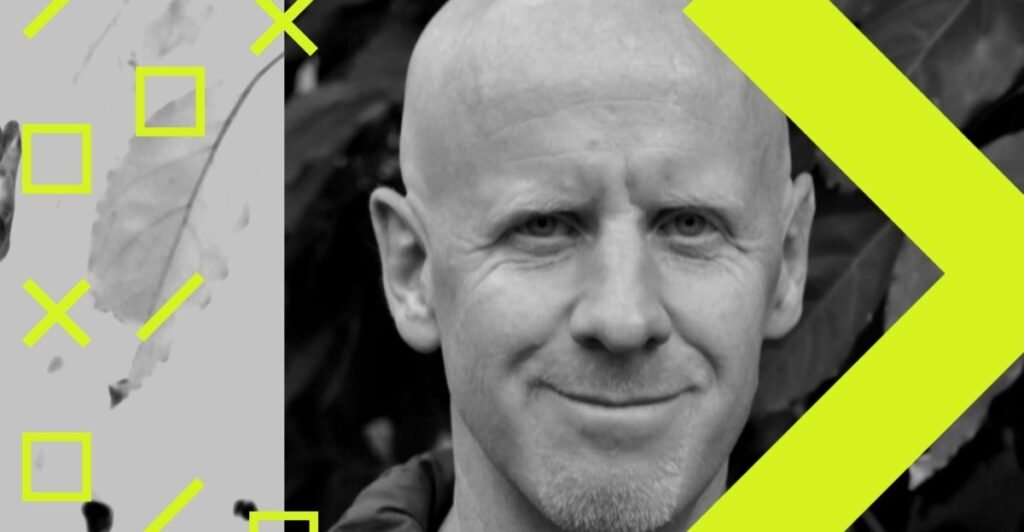
Today on Decoder, I’m talking with Tim Cadogan, the CEO of GoFundMe. You know GoFundMe — it’s a major fundraising platform where you can donate to help people with everything from medical expenses to little league uniforms to starting a new business.
Tim took over as CEO in March 2020 — a fascinating and chaotic moment in the United States, and the moment, you’ll hear me argue, I think GoFundMe became a load-bearing part of American culture.

Verge subscribers, don’t forget you get exclusive access to ad-free Decoder wherever you get your podcasts. Head here. Not a subscriber? You can sign up here.
It wasn’t just the pandemic that changed the nature of fundraising platforms like GoFundMe. 2020 was a major turning point in the history of political unrest in the US, and GoFundMe has become a central player in many contentious news events since — not just in the US, but all over the world.
The platform is also now a kind of proxy for the broken healthcare system — medical expenses are the most popular category of fundraising on GoFundMe. You might be surprised to hear Tim say this is not just in America, but in every market GoFundMe operates in.
All of this means GoFundMe sits inside a ton of big, messy ideas: wealth distribution, geopolitical conflict, the holes in the social safety net. And that’s also in direct tension with the platform being a for-profit company, collecting fees and tips and feeling the pressure to grow as a business.
So you can imagine I had a lot of questions for Tim: how he thinks about all this, and how he makes some very tough decisions about what money to make and what money not to make. To his credit, he was game to go there and talked about it all pretty openly.
Okay: Tim Cadogan, CEO of GoFundMe. Here we go.
This interview has been lightly edited for length and clarity.
Tim Cadogan, you’re the CEO of GoFundMe. Welcome to Decoder.
Hey, thank you very much for having me, Nilay.
I am very excited to talk to you. GoFundMe occupies an incredibly unique place, I think, in our culture, particularly in American culture and American society. It’s a for-profit company, and I have a lot of questions about how you think about its place in our culture and the need to grow and deliver returns.
I was also doing the research. You joined this company in the pandemic, in the heart of the pandemic, when it felt like everything changed. Now, we’re six years later; maybe things have settled, maybe they haven’t.
But I actually just want to start there. You became the CEO when the idea that the public health system — how we think about healthcare in America — got flipped upside down. I know that healthcare expenses are, I think, the single biggest category on GoFundMe. How do you think about the platform, and how do you think about that path from 2020 to now?
Well, yes, there’s a lot in there. So I started on March the 2nd, 2020, which was about a week before it became very clear in the US that the pandemic was going to have major implications, but it was already becoming clear in other parts of the world.
We operate in 20 countries, and we did back then. For instance, Italy is an important country for us, and that was probably the first European country that experienced a big impact. So it was just becoming evident; in fact, by the end of the first week, we went remote. Things came at us, all of us in the world, very quickly. It certainly came very quickly for me, trying to figure out a new company, a new space, and all this stuff happening.
The root of what we do is extremely simple. We help people help each other. And we are there to help people in whatever situation they need help. Sometimes those are the most consequential, the most significant thing that is happening in someone’s life and has ever happened in their life. And sometimes they’re very lighthearted and fun and forward-looking, like going to college or sending your kids’ sports team on tour because they’ve made the state championships, you name it. Everything in between: if someone thinks they need help, we’re here to help them mobilize support from friends, family, and networks.
So when you talk about the pandemic, that is a time when millions of people needed a lot of help. In some cases, for medical situations and everything related to that, some cases because they weren’t able to work anymore. Or we had a phenomenon that was not expected — and we could not have anticipated this — when hundreds of thousands of small businesses were shutting down: restaurants, bars, music venues. They were all having to shut down for a while and didn’t know how long they had to furlough employees.
We had tens of thousands of fundraisers that were often being set up by really loyal customers who said, “I love my local restaurant. I really feel bad for the wait staff and the kitchen staff. I want to set up a GoFundMe for them.” And we had so many of those, and it was such a different use case that it was a struggle to figure out how we handle the volume.
For example, when you raise money into a fundraiser, to take the money out, you have to go through a [know your customer] process to verify that you’re the right person. If you’re a business, you have to go through a KYB process. And that’s different and more complicated. It means you need paperwork. And if people are no longer at their place of business, how do you get the paperwork?
So, we and our payment processors who we work with — all money goes through our third-party payment processors, not through us — had to figure out how to get through this huge amount of new fundraisers to navigate the situation. Those are a couple of examples of this kind of thing, but it goes back to helping people help each other in whatever situation they’re dealing with.
I think the reason I wanted to start there, and you can disagree with me on this, is because that feels, to me, like the moment when GoFundMe became a load-bearing part of American culture in very specific ways. The same way that Zoom maybe became a load-bearing part of American business for five minutes.
Everything changed, and what are the resources, what is the infrastructure, and what are the tools? And GoFundMe emerged as one of those things. Obviously, you were the new CEO at the moment, so maybe you just had to react and put one foot in front of the other. But I’m wondering if you feel the same way about what GoFundMe has become after that time.
Yeah. I think your phrase there, which I haven’t heard before, but I think is a really interesting part of it, is [calling GoFundMe] load-bearing. We definitely were used by more people. Awareness was already reasonably high, but it has increased. To give you a sense, our unaided awareness was sort of in the mid-30s. It’s now about 70 percent. Aided awareness is in the low 90s.
So almost everyone has heard of GoFundMe. And yes, I do think that along with a lot of digital services in that time period, the awareness and usage elevated and has continued to grow since then. I think, well, more than a third of American adults have used GoFundMe now.
Also, I think it’s not just America, though. So we’re in 20 other countries: the UK, Ireland, Italy, France, all the European countries, Australia, Canada. A similar thing has happened there, where doing a GoFundMe has become an expression in the vernacular. And it’s become something that people definitely relate to. It’s like, that is a way that I can do something.
I’ll give you a personal example. I was telling your producer before we got on. We were talking about where we are in the country. I’m in Altadena, as I mentioned. In January last year, our town burned down: 6,000 homes, and about two-thirds of the population displaced. GoFundMe was an incredibly important part of the response. The response involved many things: national agencies, local agencies, and nonprofit organizations. GoFundMe was the way that over 10,000 families here in the Palisades could mobilize support and love from friends and family immediately. That’s one part of the response.
As I mentioned, there are many parts, but the thing that I think maybe people don’t realize until you’re doing a GoFundMe is that it is actually about a lot more than the money. The money is obviously important, critical, but what comes with that is the expression of support. So when you’re dealing with a tough situation, many times people feel alone.
When you do a fundraiser, or someone does one on your behalf, suddenly you start to see, here are all these people, some of whom I know really well, some of them are friends I might not have seen for a few years, who are like, “Hang on a minute. I want to help. I’m thinking of you, Nilay. Here’s $50, but more importantly, I’m thinking of you, and I’m hoping you get through that.” So it’s that — the sense that a GoFundMe can be the catalyst for that. Yes, you are right. That has become much more significant.
I’m curious about that dynamic. I think there are a lot of different ways I want to come at it through the course of this conversation. But just to make the comparison to Zoom, for example, another service that sort of exploded in use during that time and became a phenomenon. Zoom is business software. The idea that a bunch of businesses needed to use Zoom so that everybody could talk to each other. And then that became consumer software because we’re, I don’t know, going to run elementary schools over Zoom.
The idea that Zoom is a for-profit business that expanded its market and then that changed, that feels simple in one specific way. This is enterprise software for businesses that people are going to use in different ways, and they’re going to charge you money too. The thing you’re describing with GoFundMe is far more cultural. It echoes deep into how society is structured.
How should our communities help one another? What is the expression of that help? How should you feel about asking for that help? That echoes differently through time, through situations, through our politics.
You’ve mentioned several times that GoFundMe operates in different countries. Different countries have different social safety nets. They have different cultures. They have different attitudes toward asking and receiving help from the government, and from one another. How has that changed? Because that feels like maybe the most important part of a for-profit service where you’re taking fees from people who are sending money to one another, but the mission you’re describing is more of a social good mission.
I mean, look, there are a couple of things. One, help is part of what makes us human. We are a social species. We’ve always lived together in groups, starting with little villages and on up. Anything great that we create, we do it together. So the help is timeless; it’s inherent. To your point, it’s universal.
So what I have found — I’ve been to 10 or more of our countries, a bunch of them even just over the last year — is the patterns. What’s fascinating is that every country you go to, whether it’s Australia, Italy, Germany, Canada, or the UK, everyone asks, “What’s different about us?” And also, you go within those countries to diaspora populations. It can be Nepalis in Australia or the Turkish community in Germany, or you name it. And everyone’s like, “The similarities are actually a lot stronger than the differences.” One, everyone finds it hard to ask for help. I haven’t met anyone yet who said, “That was easy for me to ask for help.” The paradox is that help is so powerful, but it’s difficult and takes courage to open the door. And I want to come back to that.
But you’re asking me about what it means to do this work, but to do it as a business? So a couple of things. One, how does the business work? We’ve thought very carefully about this. Our goal is to get as much help to the recipient as possible. So how do we structure the business? When you give money, the only fees that we take are the transaction processing fees, which in the US for our consumer fundraiser are 2.9 percent, 30 cents per transaction.
That’s the same as when you use a credit card or a debit card anywhere in the world, pumping gas, going to the supermarket. All of those businesses have those fees. That’s it. We have to do that because we have to use third-party payment processors to make sure that money flows in the right way, as verified, and so on.
After that, we ask the donor if they want to give us a voluntary contribution, a tip. Totally up to them. Make a suggestion; people change it. A good chunk of people do give us a tip, a good chunk of donors. I think last year, 15 to 20 million people didn’t give us anything, which is fine because the donor is the person in this equation who’s bringing the financial resources. And we want to leave it up to them whether they want to compensate us for the service or not. That’s it.
So we feel that that’s very well aligned. Now, the reason that we ask for a contribution is that we have 850 people here working extremely hard. They’re running servers, building the websites, doing the marketing, doing the trust and safety, running the company, running the organization that enabled 80 million people last year to donate and has generated over $40 billion of help over the last 10 to 15 years.
That takes real work. Those people need to be compensated, and the third-party services that we use, whether it be AWS and so on, OpenAI, those cost money. And we need that, but we make it, and I think it’s very unusual; we give people the choice of how much they want to pay us. It’s really powerful.
Is that a stable line of revenue? It’s a for-profit company. I imagine at some point you have to go in front of a board of directors and say the revenue line is going up. Are voluntary donations a stable line of revenue? Is it growing?
Yeah, it’s highly variable at the individual level. But at the scale that we’re talking about, tens of millions of donations, it aggregates to a fairly steady average. And our growth comes from helping more people help each other. Everything we focus on is: how do we generate more help in the world?
I mean, it’s literally my True North objective. I start every meeting with that. It’s like if we’re making a decision, the first dimension of making that decision is: Will this thing that we’re thinking about doing help more people help each other? If it does, let’s lean into it. If it doesn’t, probably not as important as something that does.
Can I just sit in the idea that it aggregates out to a pretty steady percentage across the tens of millions of people? That is a huge insight. On the individual level, it varies. I’m sure most people listening to this have participated in GoFundMe and decided whether or not to donate, and whether to click the box or not.
To everyone listening who has, thank you for the help. And if you’ve contributed to us, thank you for that.
There’s a part of that where you’re saying, if you can get to tens of millions of people, there will be a steady state of donations, and there will be an amount of revenue that will track linearly with the growth of the platform overall. We can come to how the platform might grow in the future, but you’re saying that there’s something predictable there that lets you grow and generate profit in return.
What is the mechanism that goes from an individual decision to donate or not, to “in the aggregate it’s steady”? Because that feels like a big insight, almost like a bet — that the company would’ve had to make at some point, that it would aggregate over time at scale — which doesn’t seem intuitive to me, at least.
I mean, it’s the aggregate average behavior. You can see that as more and more people use any feature, your ability to predict how that feature will be used gets more precise. Essentially, your path to statistical significance gets improved. This is the same for anything about what we design that more and more people use.
As you get more people, you run more people in the experiment, you start to see, okay, the volatility of usage is going down, and we can now see that we think it’s going to settle in here even though there are large variations. So it’s really a law of large numbers.
What is the average donation that people give when they participate in the platform?
So today I was looking at that, and it’s between $80 and $100. I say that because it’s moved in interesting ways over the last year. It varies a lot based on the category, and it varies a bit by country as well. But somewhere in the $80 to $100 range. For personal fundraising, it varies a little bit more.
Another side of our business is called GoFundMe Pro. We offer fundraising software to nonprofit organizations. These are folks like World Central Kitchen, Salvation Army, the Mayo Clinic, Cleveland Clinic, and so on. And there are two different kinds of donations. There’s a one-time donation, which is somewhat similar, sometimes higher. And there’s a recurring donation, which is much lower. That’s someone committing to give monthly.
That’s a very important source of revenue to nonprofits, one that we’re spending a lot of time investing in because it gives those nonprofits predictable revenue. And that’s more in the sort of $25 to $30 range. But if you think personal fundraising, roughly $80 to $100 is what people are contributing.
Are they contributing to one another or contributing to GoFundMe?
Oh, I’m sorry. This is a donation to the person or cause that they’re helping.
I’m curious about that too. That’s a fascinating number. I’m asking more specifically when they choose to pay GoFundMe for the services. “Please pay us.” How much are they paying you?
It’s just a few dollars typically, if they’re choosing. And a lot of people are choosing not to. That’s fine. For the folks that are, it’d be a few bucks, depending.
The law of large numbers part is really interesting to me. I look at other big services that take percentages of payments over time. I’ll just pick on Candy Crush because I love picking on Candy Crush.
Apple makes a lot of service revenue, and probably some huge amount of it is from Candy Crush whales. People who spend tens of thousands of dollars buying loot boxes in Candy Crush, and Apple just collects 30 percent. There’s a long tail of the rest of us who understand that it’s a 30 percent fee to do an app purchase, and maybe we do one or two a month, and that’s it. There’s some enormous disparity between who generates the bulk of the fees and the sort of long tail. Do you have that same disparity?
Is there a class of people that pays more money?
No, no. Ours is much more in the center of the bell curve because most donations sit in that area. And unsurprisingly, when people are donating more, if they choose to contribute to us to tip us, they do much less as a percentage. So people are definitely looking at that and saying, “Hey, what’s a reasonable number to give to GoFundMe?” They’re making those choices.
I’m guessing there’s a lot of software design in there. You can dark-pattern yourself into getting more money if you wanted to. You could write more heart-pulling copy to say, “GoFundMe won’t survive unless you pay us some money along the way.”
What’s the pull there? I mean, it seems that if you want to optimize a business result, there are a lot of levers to pull around the check-box that says give us some money.
Well, we’ve gone in exactly the opposite direction from anything like that. When I came in, the tipping experience was a stepper. It’s like a little thing saying, “Here’s the suggestion.” And if you wanted to change it, it was a couple of clicks. I was like, “I want us to be far more transparent than that.” So we tested our way into what we now use, which is the slider. It’s right there; it has a suggested amount, and it just went “boom.”
Obviously, people are mostly doing it on their phones. You can move [the slider] without any clicks, in less than two seconds. It’s right there, and it’s called out. It’s called out in the main experience. It’s called out as you’re checking out. It’s called out in your receipt. Multiple ways to do it. So it’s super clear, super transparent, and that gives people choice and control.
I’m asking about the revenue side and the ability to optimize that revenue because these are the pressures every for-profit company faces. The number has to go up. And the idea that you can layer in dark patterns, you can do what my friend Corey Doctorow calls enshitfification and collect more fees along the way. That pull exists when you are a for-profit company.
Why be structured that way and have all of those bad incentives exist as opposed to being a nonprofit, a B Corp, or any of these other kinds of structures that might reduce that pressure?
Because as a company, we can invest a lot more, very simply. We work for some very significant nonprofits, some of the biggest in the world, but the biggest doesn’t have a technology team of more than about 50 or 60 people. And to do what we are doing, at the scale we’re doing it in a big chunk of the world, you need more technology, you need more people, and you need the capacity to be able to innovate, which is what we have done.
To do that, you need to be able to run as a company. It’s really hard to do that as a nonprofit. So that’s the biggest reason. And it is elegant in the sense that our objective is 100 percent aligned with what our customers are trying to achieve. We are trying to make it easier for more people to ask for help and then more people to come in response to that help.
That takes a lot of thought, a lot of innovation, a lot of software development. We’ll talk about the [AI] coach and the things that we’re doing there. And therefore, it is us who have done this. We invented this thing. We have scaled it. We have helped now many, many tens of millions of people, actually hundreds of millions of people, to help each other, and we’re continuing to do that. So it is working. The way we think about growth is directly linked to how to help more people mobilize support for each other right now.
Customer is a really interesting word there. You’ve kind of brought me to the Decoder questions quite naturally. Well done. But I want to just ask about customers. I understand that on the pro side, the customers are big nonprofits, and that probably feels more like a traditional SaaS business in some way. But on the consumer side and the individual side, who’s the customer? Is it the person raising the funds? Is the person paying the money? How do you evaluate that?
Both. They are both our customers. We start with the person asking for help because they are the source of everything. The paradox of help is that it’s really hard to ask for help. And helping feels great. So I do a thing when I’m talking at a conference; sometimes I’ll ask a little question. I’ll say, “Hey, who in the room likes helping? Everyone’s hand gets up.” I say, “Who here likes asking for help?” And usually less than 10 percent of the room put their hand up. Then I say, “That’s awesome. Who of you likes asking for help in public?” Most of those people put their hands down.
We don’t like it. This is not a cultural thing. It’s a human thing. We don’t like asking for help, but the paradox is that for help to flow, someone has to ask. Because we’ve also been in that situation where we think our friend needs some help — or a relative, or a child, heaven forbid — and say, “I want to help you with this,” but they haven’t asked. Often it doesn’t work. It’s awkward. It can be resisted.
But when someone has asked for help and had the courage to do that, they open this door, and then the goodness flows in, and then the experience flows. So we start with: how do we help people? We know there are so many people who are considering asking for help, but they are inhibited by many emotional and societal factors. The sense of, like, “Can I do this? How would I do this? I’ve never done this before. What will my friends think of me?” All of these different things.
A lot of our work and the software, the smart fundraising coach, is geared to help with those problems. So that’s the first set of things. And then it’s like, okay, how do we give them a great experience? Then, how do we give the people who want to come in and help a great experience of helping their friend, their family member, or their local nonprofit? And then also give them other experiences on top, like, “Hey, you did a great thing here, and that felt great. Would you like to do more? How do we connect you into other experiences where maybe the friend of a friend, or maybe there’s another local nonprofit or fundraiser in your area that you would like to help with?” Doing more on that. So we think of both as customers.
I’m curious about that. I want to push on the sort of redistribution aspect that you’re describing. There might be more people to help. That’s a fascinating concept. You mentioned that GoFundMe has 850 people. How is that structured?
Yeah. So as I mentioned, we have one mission, two approaches. We are here to help people fundraise successfully and get help. We do that for consumers, and we do that for nonprofit organizations. The latter is called Pro. Our company is organized, largely, functionally. So about half the company is in product technology, design, and data science. That’s the biggest chunk.
Then the rest of the company is focused on how we support the people using our platform. So that’s customer care, trust and safety, risk and compliance, making sure the money is moving in the right way. And then operations. Of course, we have our go-to-market team, which is our relatively small sales team reaching out to nonprofits, and marketing. And a really important part for us is our communications team. Because a lot of what we do, which is very unusual, is that we invest heavily in taking our customers’ stories and getting them attention in the local, national, and international media.
That’s a very important part of the service we provide to them. And it also builds awareness of GoFundMe because what we’re trying to do is show more and more people that you can do this too. That help works, and this is a powerful way to do it in the digital world. So that’s roughly how we’re structured.
That communications piece is really interesting to me. It sort of tracks intuitively that if you start a GoFundMe, you want a lot of people to see it. There’s some fractional percentage of all the people who have ever seen your GoFundMe who will donate. If you just increase the total number, you’re going to get a larger number in the end.
That communications piece, there’s an element that is curated by you. You’re going to pick the ones that are the most heartwarming that might play in the local media the best. Then there’s a sort of platform aspect to it. You can write a GoFundMe that’s going to go the most viral on Facebook. Somewhere in there is your AI coach.
The new tool. I was playing with it today. I almost just started a GoFundMe for the fun of it today. I was right at the end, about to click on the last button. But the tool writes you a GoFundMe campaign. You say, “I’m starting whatever, a shelter for puppies. Help me write the copy for the GoFundMe,” and it will just do it for you.
There’s something about AI in that context and then having a human comms team in the other context that seems like the same idea, pointing at the same goal. But the AI might, because it is sort of the average of every successful GoFundMe, pull everyone in the same direction, while your human comms team is trying to show how different everything is. Does that track? There’s something in there that I find particularly interesting.
Yeah, so the most important thing about creating and running a GoFundMe is that you can’t just put it on the platform and expect people to come to it. You, as the fundraiser, have to tell people about it.
So on our coach, we’re doing two things. We break it into two main chunks. There is creating the fundraiser, which is what you just went through, and then there is managing it. So, when creating it, there are a lot of big decisions when you create a GoFundMe. First, am I going to do this a lot? Second, how exactly do I want to write my story? What do I want the title of that story to be? What do I want the pictures to be, particularly the hero image? What do I want the goal to be? Every one of those decisions is a point at which people drop off because I’ve written my story, but not the title.
You’re a journalist, right? Title writing is hard. That’s why media organizations have title writing departments. So we identified all of these very difficult blockers. We think, “How do we make that easier?” The way we started a couple of years ago is helping with those components. We would say, “Okay, we see the people are getting stuck with titles. Let’s take what they’ve created and suggest three titles. If they like them, pick one, modify one, run with it.” It turns out a lot of people use that. In fact, we’ve had over 90 million uses of these different components. The same is true of goals.
Where we moved to this year… Earlier this year, we launched Smart Fundraising Coach, which said, “Actually, you can choose to have an agentic experience, a chat experience of creating your GoFundMe that’s going to do all of those things with you holistically in the creation process.” The key is that it’s you, your story, that we’re helping you put together.
Let me give you an example. We do a lot of checking people’s experience and looking at sample flow. We had a lady whose close friend’s son had passed away, and she wanted to create a GoFundMe for her. She was so emotionally affected that, in the interaction, she was struggling to string together coherent sentences and was just talking about how stressed she was. And the coach could interact with her to take the substance of what she was trying to say in this very difficult time, put it together, and explain what she felt about her friend, about the son, what he’d been about, what they were trying to do; it was this very particular difficult situation. And she was able, with the assistance of the coach, to create that. That’s what we’re talking about.
For a GoFundMe to work, it has to be you. It has to be your situation because most people that you fundraise from are your friends and family. Over 80 percent of the donors are people who know you, first-degree connections. And then yes, there are friends of friends and so on. So people know that GoFundMe is a coherent point for that.
So the coach is helping people get through these steps. Another example would be picking the goal. Most people haven’t ever fundraised before. Do I pick a big number, a little number? Do I start low? Does it grow over time? So those are the kinds of choices. And then you get to manage, which is the part that you’re asking about, communications.
A lot of that is like, how do you share? Who do you share with? When do you share? How often? So, for example, we know that the most effective way is to reach out to people one-on-one. Text them or WhatsApp them. One-on-one, not groups, because it’s easier to sort of go quiet in the group. Much harder not to engage. If you text me, “Tim, I was inspired. I set up the GoFundMe that I was talking about.” You’re texting me directly, and I’m going to say, “Okay.” Whereas if you text a group, it’s like, “Ah, someone else will do that.”
But that coaching will create prompts based on your fundraiser: “Here’s a quick little snippet. Here’s the URL that’s done for you.” You can modify it and send it to your 10 best friends first, get momentum, and then start reaching out and then start posting on social media.
So the model we have now is sort of a daily plan. It’s a program: “Okay. It’s day one. Here’s what you do. Find 10 people, get it going, get momentum. Day two, you got three donations. Great. Follow it with the other seven. Do this, do this, do this, and we’ll do pieces for you.” And then our comms is a sort of umbrella on top of that. But the most important thing is to empower and enable the thousands of people starting every day to have a successful fundraiser.
I want to ask the other Decoder question here because I think it’s going to flow into everything else. You have a lot of decisions to make. Those decisions can go in a lot of different directions with a platform like this. How do you make decisions? What’s your framework?
I love the fact that you used the word framework because there are two really important things that I focus on. The first is that before we make a decision, we try to frame the decision. This is so critical because what we’re trying to do — what any of the tech companies you’re talking to are trying to do — is create a future that doesn’t exist, by definition.
I think a lot of them are just trying to make money, but I’ll grant you that. Fair enough.
In our case, we’re trying to help people do something that is ancient, but do it in a new way and have more people do it. And that doesn’t exist right now. So that’s what I’m trying to do.
When you’re trying to innovate and create something new, the questions from the future are murky. It isn’t like in business school where you can say, “Hey, there was this challenge.” You have to think very carefully to distill what the question is.
For example, should we deploy a more sophisticated recurring giving program on our personal fundraisers? That’s a clear question with an answer. So part one is to frame the question because what I find is that when we don’t frame the question, and it’s sort of like we’re talking about a topic, you get mushy decision-making because you have a mushy question or no question at all. That’s one. Two, how do we make decisions? First thing, will this generate more help in the world?
When you say help, does that mean money? I just want to be very clear about that.
Yes. I focus on help because help is the thing that we’re doing, and there is so much more around the experience than the money. Yes, we count it by looking at the money. It’s a simple, easy way, but the implications of that — the emotional and societal consequences — are far bigger.
I’ll give you an example. I went to Liverpool in the UK because they were the most generous city in the UK. About two years ago, there were a bunch of riots in reaction to a murder, and there were riots around immigration, and so on. A bunch of things in Liverpool were destroyed. One was a local library called Spellow Lane, and it was ransacked, burned, severely damaged, and left unusable. A local woman, a local mom, named Alex McCormick set up a fundraiser: “I just want to do something. I want to raise £500.”
Well, it took off; she raised £250,000. The local council got that library rebuilt in less than a year. I went and met the mayor, met Alex, and went to see that. I met the community full of books, full of kids, and people using the workstations to get jobs because it’s a dual-purpose place. Yeah, you could say that was about the £250,000, but it’s not. It’s about a lot more than that. It’s about the community saying, “No, this is not right. We’re going to do something.” It’s about the country coming together. You have Matt Hay, the author, and the queen donating books. It’s just a lot bigger.
But yes, we count through the [gross donation volume], but that’s why I focus on help. So will it generate more help? That’s number one. And then pulling in the right people to pressure-test the logic of, okay, how are we going to go about it? But that is the essence. Frame the key questions, make the decisions, and keep the eye on the singular objective that we exist to do.
We have no other businesses. We don’t do advertising. We don’t sell data. We don’t do any of those other things. We exist to help individuals organize and mobilize more support for what they need.
What strikes me about your answer is that there’s a very important values component to what you’re describing here.
If the target is just money, there are a lot of ways for you to make more money. You could do algorithmic discovery on the GoFundMe platform, and you would probably generate more money because you would have the most heartwarming pictures of puppy shelters possible right on the front page, but that’s not there. There’s very little of that going on.
You’re saying that the fundraisers are on their own and you’re going to help them raise money. There are many, many other things you could do to make money. You’re also saying that your values, the company’s values inside of decisions, prevent you from doing those things.
I just want to push on this a little bit more, and then I want to bring it more practically to some of the areas that you raise a lot of money in. Are the values enough to keep you from the pressures of having to make money? Because that seems like where most businesses are failing, at least in America in 2026. There are things they said they wouldn’t do. I’ll point to the AI companies. They all said they wouldn’t do military and defense work, and the money showed up, and now they’re all doing military and defense work.
Are the values at GoFundMe so enshrined, so inbuilt, that they will prevent you from saying, actually, the dollar should be the target? Because when I talk to our audience about your platform, that’s the thing they worry about the most.
Well, so far it’s worked. We only focus on help, which we count through a measure called GDV, which is gross donation volume. That is the amount of money that people are giving to one another and to organizations. And that is the thing. We talk about it every meeting, at every company meeting. We tell stories like the ones I’ve just shared with you about how that is.
I’ve been here six and a half years; we haven’t gotten into other areas. The thing we have added is that we bought a company that did fundraising for nonprofits because we said, “Hey, look, we’re doing well at helping individuals, and we want to continue to grow that, but we know that a lot of the consumers that are giving to our individual fundraiser are also helping nonprofits.” So that seems like a natural extension. But every opportunity we think about is like, how do we do more of this?
One of the things I love about being here is that singularity of purpose and clarity. I’ve never felt pulled into a different direction because this is why we are here. This is it. This is the whole point of this organization. There are a lot of other organizations doing a lot of other things, but we are, I think, put on this world to do this one thing.
Let’s put this into practice. I want to start with healthcare because I think GoFundMe’s relationship to the healthcare system in America is fascinating. As you have said, you operate in many different countries with many different versions of healthcare systems.
When I say many different versions of healthcare systems, what I specifically mean is that they almost all have nationalized healthcare. The United States is a particular outlier in not having that. Maybe that’s going to change, maybe it won’t, but that is the state of affairs in America today. In 2024, GoFundMe said medical expenses are the most common fundraising category. Is that still true today?
It raises the largest amount. Here’s what’s interesting and may surprise you. It’s actually the number one category in terms of fundraising dollars in every country we operate in. I mean, obviously I’m British originally. I’m familiar with that system. There are a lot of different systems, hybrids, and so on, but it’s actually number one everywhere.
So, why is that? There are a couple of reasons. One, when a significant medical issue occurs, we face our mortality. When we’re facing our mortality or that of a loved one, whether that be a friend or a relative, that’s the biggest thing. That is the moment when, more than any other moment, people want to support and show their love for someone more than anything else. And when you think about it that way, maybe that’s not surprising. The second thing is that there is no medical system on earth that takes care of everything.
Now, even though there are systems in other countries that take care of the medical costs, none of those systems take care of all of the different things that happen when someone is dealing with a major health issue. I’ll give you an example. When a parent has to go for cancer treatment, they have to travel. They can no longer work. They may be looking after their kids or looking after their older parents, and they may no longer be able to do that.
So there are a lot of other expenses that come along with a health situation, and those are the moments when folks want to pitch in. And so quite often it will be a friend or relative who does the fundraiser. I’m looking to help to make sure all these other things are taken care of. Because they are hugely consequential moments in our lives. I say our lives; it is true for all of us. We are human. We are mortal. All of us will go through this cycle at one point or another. And it’s the moment when people most want to help.
The third thing is when your aunt or your best friend is going through something in a health-related area; there’s actually not much we can do. We’re not doctors. We’re not cancer researchers. And we feel a bit helpless. What can I do? How often do you hear that? Or do you say that when you see that happening and say, “Well, how can I help?” This is a way that you can help. You can set up a fundraiser, or you can give to a fundraiser. You can mobilize; you can follow up. It builds community.
Can I give you another example? I know I’m telling you, but I just want to make it real because it’s very, very real. I recently got to know a young girl named Harlow who’s about five years old — she might just have turned six — and her mom, Daphne. Harlow has a very, very rare genetic disease. Her parents figured out how to get treatment through an amazing foundation based in San Diego called the n-Lorem Foundation.
That foundation would cover the medical treatment, but that medical treatment had to be done at a hospital. There were a lot of administrative costs related to the hospital, and those weren’t covered. It’s about $120,000. They also lived in a different state. So Daphne, who’s Harlow’s mom, set up a fundraiser with a lot of hesitation. It actually worked amazingly well. In four days, they raised the funds they needed, and a whole community of people, including her Peloton moms group, made it happen.
I got to meet Harlow in June. She came to one of our company events, actually one of our hackathons. She’s doing so much better, and she’s got a little stroller, and was zooming around the stage, and I was trying to make sure she wouldn’t fall off the edge. But for people with, for example, ultra-rare or nano-rare diseases, a GoFundMe can be a really important part of supplementing what is already happening, and it’s life-changing. Absolutely.
Harlow has received a unique gene therapy, and it is helping, and it’s life-changing for her and her family. And so I could tell you many, many stories like that. But I think overall, because we’re human, those moments matter more than anything else. No system is perfect, and we can supplement that. It gives people a way to come together that is different from an institution supporting you. An institution can do a lot. The NHS can do a lot. Medicare in Australia can do a lot, but it’s not coming with love, right?
This is very interesting. I’m very curious about that aspect of it. “It’s not coming with love” is fascinating to me. Maybe it’s because I’m American and I exist in this cultural context and have mostly existed in this cultural context, and you have a much broader context. But I would say, broadly, Americans do not trust the government.
It feels like a thing I can say. It’s a claim I can make, and you can disagree about how much we should trust the government or not. But I think, broadly, in 2026, trust in our government is very low. And even if you could provide a great healthcare service, Medicare for All, whatever form that takes, you’re saying there’s something else the government cannot provide for you.
At the same time, I’m just listening to what you’re describing in these individual stories that are very powerful, and I’m thinking about them in the abstract. In the abstract, all we’re doing is redistributing money. The Peloton moms group has some capital that they can allocate to this problem, and they’re going to allocate it to this problem, and that person’s going to feel great and be taken care of. And that is what our government should be doing.
That is actually the function of all of this: to redistribute resources across the society in some way that makes sense for everyone. Some governments do it well, some governments do it poorly. And somewhere in there is GoFundMe, creating a different redistribution structure and process. It works so well that some people, in aggregate, give you enough money to have 850 people, most of whom work in product.
Something about that in relation to healthcare specifically strikes me, at least, as absurd. And maybe that’s just the American context where we’ve gotten it so wrong for so long. I just look at healthcare, and I think about how wealthy the healthcare companies are, how people feel about pharmaceutical profits, and the fact that they can’t get care. And there are studies saying the vast majority of people who have donated to a crowdfunding campaign in America did it because of healthcare expenses.
There’s a University of Washington study that I’m looking at here, with over half a million medical expense campaigns, that found that 30 percent of them raised $0. And the more medical debt a state has, the less money the campaigns in those states raise. So it’s not actually equalized. There’s actually a great disparity in the average outcome of the medical campaigns.
That is what government spending and tax policy should accomplish — a more equitable policy. I’m just asking how you feel about GoFundMe’s role in that. Because as a business that has to make money, any change to that structure, at least in the United States, would have an outsized impact on your business. There’s some relationship between how broken the United States healthcare system is and your profits. And I can’t quite bring those together. I’m wondering how you think about it.
I would love for people to be taken care of more in whatever way works. So I think you’re making some connections that I agree with. But I think there’s a dimension here that I’ll just reiterate, which is that I think you’re being very rational about it in the sense that the thing I have learned — and I’ve shared these stories because I’ve met so many people now who’ve used GoFundMe to help them in their lives — is how it makes them feel and how it makes the people who contribute feel. Our business and our platform are about emotion.
When we help each other, we do not do it in expectation of return. It’s not a product or a service. You’re not buying anything. You are helping because you care and, in many cases, because you love someone else. I think that is intrinsic and permanent. I think it will be valid on top of whatever system we have because I think that is something that a big system can’t inherently provide. It’s just different.
So yes, I would love for more people to have more access. And I would also… I’m very hopeful… My big hope for AI, actually, is that the first thing is medical breakthroughs. That more people like Harlow — and there are a lot of other people dealing with similar situations — have better pathways to earlier identification and cures.
I think we have something that can help people come together, support each other, and realize there are stronger communities. I have seen it shifting away from medical. I’ve seen it in crisis now in my own town. Pretty much everyone I meet has had a GoFundMe. They’ve lost their home. And it’s not enough to replace your home. You need insurance, and you need support for that. But it was enough to get that first month’s rent in the place that you had to stay. And God, it made people feel better. Well, we’re not alone.
I’m pushing on this because you have brought up the values of the company and your values and your resistance to profit several times now. And so I’m going to —
I wouldn’t say resistance. I think profit is derivative.
Our job, as I’ve hopefully made pretty clear, is people help each other. And then if we do that well, they will be more successful, and more people will think I can do that too. That means we’ll be able to, and hopefully the laws of scale that I mentioned in terms of people contributing to us will continue.
But about the thing you just said — we’ve interviewed many, many politicians on this show. In some way, what you’ve just described is what every politician hopes tax policy will do. We’re going to help more people with better education; they’re going to make more money, and tax revenue will go up. Whether you think taxes should go up or down to do that, that is the goal. I’m just wondering if you see the connection. It’s fascinating.
Yeah. I had not. I mean, I do now that you mentioned it. I’d never thought of it quite that way. But it’s just a personal perspective, and people are very different. For me, being able to run the company in a disciplined way such that we can make investments and continue — that’s an important financial discipline. But the purpose is this big purpose. It’s the same purpose, and it is consistent. I feel incredibly lucky to be able to work at an organization where I can do CEO-type stuff and work on really interesting tech things, but do it for this purpose.
Let me push on that just one more time, on healthcare, and then I want to talk about platform moderation with you just to wrap this up. I appreciate that you’re saying the platform is more emotional and I’m operating in this very abstract, aggregate way. Being rational, as you keep saying.
I’m looking at a study here from a bunch of economists that found that whenever there’s ACA Medicaid expansion, there’s a significantly meaningful effect in reducing health-related GoFundMe campaigns. So if a state expands Medicaid, the number of GoFundMe campaigns in the state goes down.
This suggests the demand for crowdfunding campaigns is actually driven by gaps in insurance coverage. And so maybe there’s the emotional component and all the stuff around you’ve lost a job, you just need living expenses. But there’s also just a statistically meaningful connection to healthcare costs on their face. This, again, suggests to me that if there is more Medicaid expansion, you will have some impact on your revenue.
Is that a problem? Is that something you think about? Do you lobby against it?
How do you approach that?
No, we definitely don’t lobby against that.
We’ve had people on this show lobby against things that would harm their business; that’s why I wanted to ask.
If that’s going to help people, that is great. We think there are a lot of ways that people want to help each other. And we are constantly focused on helping people become aware of all the different things that you can use GoFundMe for. So no, if that’s the case and people are getting more care and they’re… well, that’s awesome.
Again, the thing that I’m pushing on here, as you’ve described, even in your decision-making process, is a value-based approach that another CEO might say, “Actually, I need to lobby against tax reform,” which is a real thing that has happened on the show. It’s a real conversation I’ve had before.
You’re saying somewhere embedded in the company is something that will prevent you from maximizing profit. Not making profit, but maximizing profit.
And it obviously seems like that’s very important to you. Is there pressure to change that? Because that’s the one that I look at. Where, okay, ACA expansion would reduce the biggest bucket of dollars that comes through the platform. A more craven capitalist would take a hard look at that in a different way.
No. I mean, I’ll give you a different example from during COVID: rent. There were some government programs to support people with rent, and we tried to make people aware — those who were using our [platform] — that they could avail themselves of these services. Because a lot of times with programs that are there, folks just don’t know that they’re eligible for them, or may not know how to access them. So we have tried to tell people that other programs are available.
Similarly, we will sometimes work with some of our nonprofits who are providing services, with a lot of them being medical nonprofits, homelessness-focused, or food insecurity, and so on. And so we’ll work with them. There are services that are available to you if you have these needs, because we want to make sure that we can direct people to those services if they’re available.
This brings me, I think, to platform moderation. GoFundMe is a platform. Every platform CEO has to make big moderation decisions. You mentioned you have a sizable trust and safety team. If the theme of this conversation is, what are the things you won’t do? There’s actually a long list of things GoFundMe won’t let you raise money for. Tell me about that list: what’s on it, what’s off it, and how you make those decisions.
So we have a set of terms of service, which it sounds like you checked them out. They’re actually readable. We put a lot of work into writing them in English that anyone can read. And they’re pretty practical. There’s a bunch of things, frankly, most of them are illegal, that if you do a fundraiser for, you want to spend it on drugs or guns, you can’t do that. A lot of these also are a representation of our payment processor’s terms as well, so those are reflected there.
We think they’re a common-sense set of guardrails, which is, “Hey, we fundraise for everybody. We want anybody to be able to come here, fundraise for help for themselves, a friend, or an organization. And here are some simple, we think they’re very pragmatic, guardrails.” They’re like, “Hey, just stay within the guardrails. You’re good to go.” That’s it. Now, those have served us really well. And fortunately, I don’t really get very involved in decisions around that because they’re clear, the team’s well set up, and off we go.
Clear in the context of content moderation is simple for the CEO to say. And I would suspect if you go ask your trust and safety team, it’s much more complicated.
That’s why they’re the great professionals they are.
You have a rule against funding defenses of people who are alleged to commit violent crimes.
Yes. We don’t allow fundraising for the legal defense of violent and financial crimes. So murder, fraud, a list of a bunch of nasty things. Yes, we decided that no, we’re not going to play in that particular area for the betterment of the community.
And that’s a values-based decision, right? That’s just GoFundMe’s decision.
It is GoFundMe’s decision, yes. And just to be clear, it doesn’t reflect on the innocence or guilt of people in those situations. It’s just like, “Hey, look, that gets very complicated. It’s just better for us to… For fundraising purposes on GoFundMe, it doesn’t make sense for us.”
Right next to that, there has been ongoing controversy since 2023 — The Verge has covered it — around the freezing of payments and an alleged disproportionate rejection of fundraisers for humanitarian causes in Gaza, in Palestine. Again, we’ve covered that these things have just gotten frozen, and that people are complaining about it. Is that a values-based decision at GoFundMe? Is that something else?
Not at all. I mean, it’s just trying to find the right line in terms of the policy. So we, through individual fundraising and fundraising for nonprofits, have enabled over half a billion dollars of support to go into the Israel-Gaza conflict, which is a very large amount of help.
But we are also working, and again, I want to stress this, we work together with the payment processors to make sure that we’re adhering to national and international regulations and laws. And in some cases, some of those fundraisers didn’t meet the criteria to allow them to proceed, and that is a shame, but we have to adhere to them. It’s the right thing to do to adhere to those, but in no way does it reflect a policy of we don’t want to enable people to help. It just has to be legitimate.
So, of course, what you hear is people bringing it up when things were frozen. You don’t hear from all of the stuff that is actually happening. But they’re important decisions; they have to be made. We have to do that in a way that upholds our commitments, keeps the platform safe and secure, and follows laws and regulations. So that’s the case.
One of the themes that comes up in every conversation I have with a platform CEO when it comes to trust and safety is the payment processor. In some cases, the payment processors are a much more shadowy figure in the scheme of content moderation. In your case, you’re talking with them quite openly. You’re saying, “Well, we accept a lot of payments. We move a lot of money. Their rules are important.” What is that dynamic like? Do you push back on their rules?
We work with Adyen, Stripe, and PayPal Giving Fund. And actually, all funds to personal fundraisers go through our payment processors. We never actually touch the money. And that’s important because it creates another layer of checks and balances.
If you think about a fundraising journey, we do a bunch of steps to validate that the fundraiser is legitimate. We’re doing risk assessment of donations coming in, and then when the time comes for someone to verify that they are the beneficiary — and that can often be someone different than the person who’s fundraising — they go through the [know your customer] process. I talked about it in the context of small businesses during COVID, in the first part of the interview.
They have to be verified. And then the processor can unlock funds and begin to disperse those funds. So they’re an important part of our infrastructure and the design of the system to ensure that it’s as safe and secure as possible.
There’s a pattern that plays out with every platform that has tight moderation rules — another platform shows up with looser moderation rules. Twitch bans a streamer; they go to Kick, YouTube, or Rumble. With GoFundMe, it’s other platforms. There’s GiveSendGo, and they will allow all the things you don’t allow.
In the context of, well, this has become infrastructure, and there are things you won’t do. And then you have competitors who will do all kinds of things. Do you think about the dynamic, or does the payment processor set a floor and you’re just interpreting based on your values?
No. I mean, there are terms of service. We’re obviously looking at what makes sense in the world of money movement, but they are ours, and we take full ownership of those. And we’re head and shoulders ahead of where anyone else is.
We tend to have smaller companies that offer a service a bit like ours in every country we operate in. But we focus on what the right thing is for legitimate customers. And how do we craft a coherent, sensible, easy-to-understand set of rules that are rules of the road for everybody? And we go from there.
Every platform, including yours, is now caught in the dynamic of wanting to help regular people make better things with AI, with an AI coach that helps you get through the process of starting a fundraiser, marketing it, and then being flooded with enormous amounts of slop.
In your case, the enormous amounts of AI slop might be scams. It might be people trying to raise money through fake fundraisers or fake people. How do you balance that? Because that seems like the hardest problem for every kind of platform to solve right now.
I would say we have not seen that as much as maybe some other platforms, because the process of setting up a fundraiser has to be so authentic. It doesn’t work. So people call it crowdfunding. I don’t like that term because a crowd implies a large group of strangers. It wouldn’t work as well, but it’s more like friends and family fundraising.
Fundraisers that don’t resonate with your network, your community, or your friends and family don’t work. It’s very hard to get a fundraiser to go viral unless it has some initial momentum. And that initial momentum comes from the people who know you, know your situation, want to help, and create that. So maybe it’s just a bit of a different dynamic.
Are you on guard against it? Are you seeing it pop up?
Oh yeah, we’re absolutely on guard against it. But in terms of massive spikes in fundraiser starts, we haven’t seen crazy spikes like that. We are very much on guard against that. We are certainly using AI in our tooling to help our folks make the right judgments and so on. So we’re doing those things.
Not to continue to just be ruthlessly rational about your platform, but if I look at it, and if you have more fundraisers, that will lead to more outcomes. You got in a little bit of trouble recently on the nonprofit side.
You set up pages for nonprofits that had not signed up for GoFundMe. A bunch of state attorneys general had accused you of plagiarizing the charity pages and setting up nonprofits. You apologized; you took them down. There’s a class action lawsuit.
That, to me, looks like we need to increase the number of inputs. Yelp ran into the same thing. If you’re going to be the platform for all charitable giving, you need to have all the charities. For Yelp, it was: you need to have all the businesses. We’re just going to set up the listings and go. What led to that decision?
So it’s a classic: you have your overarching principle, which is, hey, we want to mobilize more help in the world. Our thought process was that we have more than a hundred million people coming to GoFundMe a month. Many of them are helping something directly.
But we also know that a lot of those people are interested in supporting local and national charities. So why don’t we make it a little bit easier for them to find those organizations? Because we know those organizations want more supporters and are trying to work through an increasingly fragmented digital environment. We’re a place that people are coming to help. Wouldn’t it be great to just give more people that opportunity?
Now, classic tech company thing, we moved a little bit too quickly. We didn’t think carefully enough about how to bring people into that and give them control. And we got that reaction, and we’re like, you know what? You’re right. We did go too quickly. We made a couple of mistakes. We are sorry for that. That’s not our intent. Our intent is to get more people supporting your organizations. But let’s take a beat, change our approach — which we have — and lean into that, because if you don’t like it, it’s not working.
I just want to connect that to the AI piece. I understand there’s a lawsuit there, and that’s probably all I can get out of you on that one. But let me connect that to the AI piece.
It’s a classic tech company move: “We see demand.” What you’re describing is that GoFundMe is an aggregator. You have the demand, the same way that Google has demand or Instagram has demand.
We have a lot of people coming who want to help.
People who want to help, and then you can redistribute the demand. That’s an aggregator move. The response on the other platforms has been, “Oh, we’re going to put more stuff here. I’m going to use AI, and I’m going to make 500 YouTube videos a day to try to capture pieces of that demand.”
You can see it happening on the web and Google Search in a thousand different ways. You can also see it happening on Instagram. I know people who have fully automated their Instagram accounts to post hundreds of reels a day using Claude and MCP connectors. Why hasn’t that happened to you if you’re the aggregator of demand?
So if you’re talking about nonprofits, well, we have-
Well, the connection I’m making more specifically is that you saw the demand to give to nonprofits and, in a very manual way, you set up a bunch of pages for them. And maybe that was the right thing or the wrong thing to do, and that will come to whatever regulatory conclusion it’s going to come to. But that was the response: to see the demand and then do something about it.
On every other platform, AI has stepped into the middle of that cycle, and the response is, “Oh, we’re going to overfill the demand because the cost of production is so low.” I can just say, “Go make five million YouTube clips of this episode and just fire them into the algorithm all day and all night and let’s see what happens.” You can just see it happening all over the place on all of those platforms.
Here you have demand. If I were an unscrupulous actor, I would say, “Boy, there’s a bunch of demand for people who want to give help and give money on that platform. I will use AI to go get it, in whatever way that occurs. I’m going to go get literal money, not clicks, but actual money. I’m going to find a way to get it.”
What is keeping that happening right now? You’re saying it’s not happening. And what might prevent it from happening? Because that strikes me as a pretty huge risk.
I think probably the reason that that’s maybe not happening is that when you give, you have to have an emotional connection. That comes from some sense of relationship. Either a relationship with a person who’s fundraising or a relationship with a cause or an organization that resonates with you.
That really can’t be manufactured. People feel it, and it has to be real, and it’s fundamentally human. And I just think it’s a lot harder to maybe try and synthesize that versus just having it stay real. So that’s the way we use AI for the folks who are fundraising, who are asking for help, is to assist them in telling their story, their way to their people. And it just has to be completely real and genuine for it to work.
I’m curious how that goes over time. I’m reliably told that AI can be your girlfriend. So we’re going to find out. Again, we’ve had CEOs on the show tell me that you can marry an AI. That emotional connection is coming in one way or another. We’ll see how it goes. Thank you so much for all this time.
I’ll just leave you with this. The more powerful the technology, the more significant and unknown the implications. So I’m sure some of those guys are right.
That is a big question. I don’t think we have nearly enough time to dive into it. Tim, thank you so much. What’s next for GoFundMe? What should people be looking for?
We are focused very heavily on evolving the coach. Just to give you a sense, very quickly, it’s helped people be more successful. We thought it would help raise about $125 million more this year, but it’s on track to double that to a quarter of a billion, so that’s a lot more help.
It’s making people feel better. Two-thirds of the folks who are using it feel less stressed, more confident, and critically less alone. So from a consumer point of view, we are leaning very heavily into that. And we hope over time to be able to show more people that we will help them take the brave step, ask for help, and unlock the support that will come out. So that’s a big focus for us.
We’ll have to have you back soon to see how all of these things go. Tim, thank you so much. This has been great.
I would love to. Great conversation. Good, really searching questions. Thank you for that.
Questions or comments? Hit us up at decoder@theverge.com. We really do read every email!
Decoder with Nilay Patel
A podcast from The Verge about big ideas and other problems.
You may be interested

Festivals Remove Reggie Watts, ‘Comedy Bang! Bang!’ Drops Theme Song
new admin - Aug 24, 2026[ad_1] Comedy Bang! Bang! has quietly removed its Reggie Watts-created theme song as upcoming music festivals have removed Watts’ name…
Netflix reportedly considers opening its app to other streamers
new admin - Aug 24, 2026Netflix executives have considered making third-party streaming services available within its app, according to a report from The New York…

Scientists explain what dogs actually learn when sniffing each other's pee
new admin - Aug 24, 2026Scientists have suggested there could be much more going on when dogs investigate each other's scents. Source link