




Gas prices approach highest level this year weeks before midterms


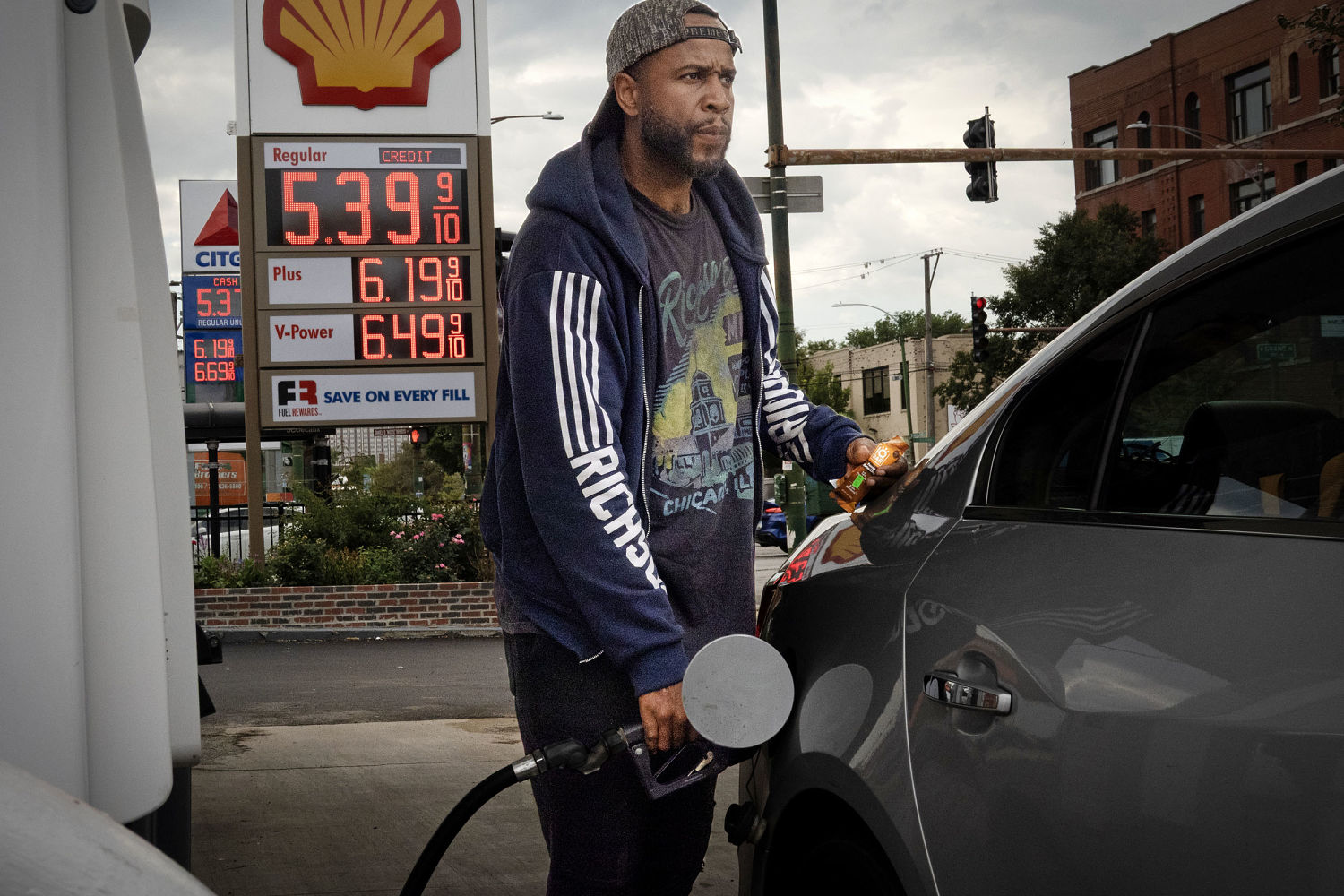
Rising diesel prices can translate into higher costs for consumers by raising the wholesale cost of getting goods to retailers and grocery stores. The global shipping, rail and trucking industries all rely on diesel.
A political crisis
For months, the Trump administration has claimed that fuel prices will drop sharply as soon as the war is over.
But more recently, the president has begun conceding that it may take much longer than that for global energy costs to come back down.
“Right after the election, oil prices are going to be tumbling downward,” President Donald Trump said on Sept. 9.
With less than 8 weeks left before the U.S. midterm elections, frustration over prices is building among consumers. The University of Michigan consumer sentiment survey recently dropped sharply on inflation concerns.
And on some parts of social media, Americans — even some who claim to have supported Trump — are sharing their frustration with high gas prices.
Trump has also claimed that his administration will be able to push gas prices below $2 per gallon. Unleaded gas has not fallen below $2 since the 2020 COVID-19 pandemic, which brought the global economy to a near standstill for months.
Experts have cast serious doubts on the president’s claims. For months, commodities analysts have predicted that the longer the Iran war drags on, the higher oil and gas prices will climb and the longer it will take for them to come back down.
“If diplomacy fails and Hormuz flows stay near current levels, inventories could draw toward operational lows and Brent could rise” to around $120 per barrel, HSBC analysts wrote on Sept. 8.
Goldman Sachs also raised its price forecast for Brent crude oil to more than $120 per barrel in the event that Persian Gulf oil flows remained low — which they have.
Bank of America analysts went a step further, assessing in early September that a “broader conflict resulting in major energy infrastructure damage may spike prices as high as $150” per barrel.
These price forecasts are already close to becoming reality. On Friday morning, Brent crude oil approached $105 per barrel. U.S. crude oil traded just above $103 per barrel.
No progress on Iran
As the war in Iran nears its seventh month, there are few signs that the critical Strait of Hormuz off Iran’s southwestern coast will return to pre-war traffic levels anytime soon.
Not only have daily transits fallen to a fraction of their pre-war totals, but insurance costs have soared for tankers seeking to pass through a waterway in which both Iranian and U.S. forces continue to conduct military strikes.
Iran has repeatedly attacked oil tankers and regional energy infrastructure, disrupting energy supply routes and refining capabilities across the Middle East.
Last Thursday, Saudi Arabia was forced to shut a critical east-west oil pipeline after “multiple attacks.” As of Friday morning, it was not clear when the pipeline would resume operations, although there were signs that the Kingdom was building a new length of pipeline to circumvent the damaged sections.
The Russian angle
Far from the Middle East, recent developments in Russia’s years long invasion of Ukraine are also helping to send global fuel prices higher.
Russia has extended a monthslong ban on the export of diesel fuel through at least the end of September, after Ukrainian drone strikes damaged energy assets in the country.
As high diesel prices dominate U.S. headlines, Trump has made little secret of his anger with Ukrainian President Volodymyr Zelenskyy over the strikes.
“Mr. Zelenskyy has to do one thing. He has to stop knocking out diesel fuel in Russia,” Trump told reporters on Sunday.
“Let him go after targets, but not diesel fuel, because he’s causing a shortage of diesel fuel,” said Trump. “Don’t hit diesel fuel because that’s hurting the world. We don’t want him to hit diesel fuel.”
Zelenskyy said his country will stop targeting Russian energy assets only if the Kremlin agrees to halt strikes on Ukrainian critical infrastructure.
On Thursday, Ukraine said it had conducted strikes on Russia’s Yaroslavl oil refinery, which reportedly halted crude oil processing the same day.
Governments around the world are acutely aware of the problems that higher oil and gas prices are causing, especially as temperatures drop and demand for heating oil is set to spike.
On Friday, French President Emmanuel Macron called for a G-7 leaders meeting focused on energy costs. Attendees would “consider options for potential releases from strategic reserves or the lifting of restrictions, as we did a few months ago,” he said.
In March of this year, dozens of countries agreed to release 400 million barrels of oil to try to slow rising prices.
But six months later, the U.S. Strategic Petroleum Reserve and many other stockpiles around the world are at their lowest level in decades, making it all but impossible to repeat the earlier oil stockpile release.
You may be interested

New shocking claims from Princess Diana’s brother
new admin - Sep 18, 2026The brother of the late Princess Diana claims in his upcoming book that then Prince Charles sounded upbeat after his…

This cartridge-playing Game Boy clone is smaller and cheaper than Analogue’s Pocket
new admin - Sep 18, 2026FunnyPlaying, a Chinese company known for its Game Boy and GBA upgrade kits, has announced a new handheld that plays…

Animal rescue so overcrowded they're throwing dog on street in next few hours
new admin - Sep 18, 2026A dog is in desperate need of a new home within the next few hours as an overcrowded shelter said…