



Fixed Costs Are Leaving Nothing Behind

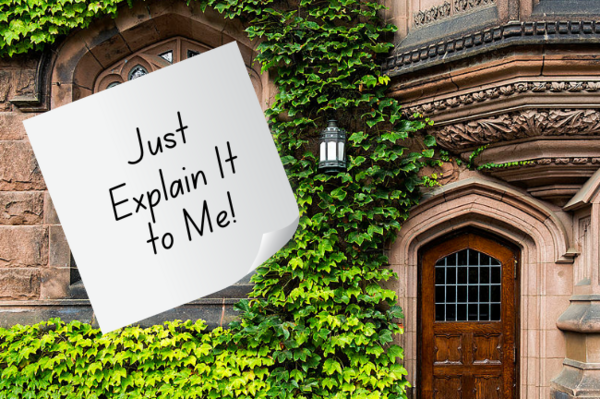
Like overgrazing livestock denuding a pasture, rising fixed costs stunt institutional growth, severely damage the balance between expenses and revenue, and erode the financial equilibrium important to making education affordable. Rising costs to do business outpace revenue (primarily tuition, fees and room and board). Utilities, insurance, food services, maintenance and construction represent major expenses in the budgets of all residential colleges and universities. These costs are not controlled writ large by the institution.
For example, U.S. institutional electricity rates tracked closely with residential rates, which increased 30 to 35 percent from 2014 to 2024 according to the U.S. Energy Information Administration’s Electric Power Annual 2024. Along with price volatility (particularly during 2021–2023), it created significant budget pressures at higher education institutions. KFF’s annual Employer Health Benefits Survey reports health insurance premiums for employer-sponsored coverage have increased approximately 50 to 60 percent over the past decade. For colleges and universities, some health plan premiums have risen more steeply.
Property and casualty insurance for higher education campuses has also increased sharply since 2020. Insurance companies are among the largest providers of employer-sponsored group insurance to higher education institutions, and many major campuses rely on insurance for student health plans, property and coverage, and directors’ and officers’ liability. Further, food commodity prices rose sharply from 2021 to 2023, exceeding 20 percent in some categories, as reported by the U.S. International Trade Commission’s 2021 Commodity Price Surge report. University dining operations saw a 15 to 25 percent cost increase from 2021 to 2023 according to the National Association of College and University Food Services.
Meanwhile, the profits and revenue of these industries tell the story of enormous prosperity. According to the National Association of Insurance Commissioners’ U.S. Health Insurance Industry 2024 Annual Results and its U.S. Life and A & H Insurance Industry 2024 Annual Results, property and casualty insurers wrote $463 billion in premiums in the first half of 2024 alone, up 11 percent from the same period in 2023. Verisk and the American Property Casualty Insurance Association reported estimated gains of $95 billion for the U.S. insurance industry in the first half of 2024, as reported by Insurance Business magazine reporter Kenneth Araullo in a September 2024 article. Adjusting for over $50 billion in capital gains realized by a single insurer, the estimated industry gains for the first half of 2024 were approximately $45 billion.
The construction sector physically builds higher education—campus construction and renovation represent a major segment of institutional capital spending. While construction costs have increased, U.S. construction corporate pretax profits reached $197.4 billion in 2024, up from $170.6 billion in 2023 and $165.1 billion in 2022, according to the U.S. Bureau of Economic Analysis by Federal Reserve Bank of St. Louis Corporate Profits Before/After Tax: Construction. While some major construction firms (e.g., Turner Construction, Gilbane, Skanska) develop ongoing relationships with engineering, architecture and construction management programs at universities, their impact is mostly felt by large research and technical institutions, is not widespread in the sector, and doesn’t offset actual construction, maintenance or general operations in any significant manner.
In the near term (particularly 2020 to 2024), utilities, health insurance and food costs have risen faster than published tuition increases at nonprofit colleges and universities. From 2014 to 2024, average tuition and fees at public four-year colleges increased approximately 27 percent (see National Center for Education Statistics Table 330-10). In inflation-adjusted (real) terms, average tuition and fees decreased by approximately 11 percent between the 2019–20 and 2024–25 academic years, due to tuition freezes and increases below the Consumer Price Index, notes the College Board.
The College Board’s 2024 Pricing and Student Aid Report showed that average published tuition and fees increased less than the rate of general inflation for 2022–23 and 2023–24. Tuition increases have been restrained by enrollment pressures, political constraints and tuition freezes across more than 20 states. This is creating a major financial challenge for institutions, as operating costs are inflating faster than the primary source of revenue.
The response to the rising cost of doing business in higher education is frequently met with accusations about the sticker price of education: What happened to all the money collected through tuition, room and board? But the fact is that not all students (and in some cases, not even a majority) pay the full price. In 2020, the National Association of College and University Business Officers surveyed 361 private, nonprofit colleges and universities and found that tuition was discounted an average of 53.9 percent for first-time, full-time, first-year students in 2020–21. Meaning: A tuition sticker price of $50,000 is an average of $26,950 per student after discounts (scholarships). The purpose of a discount rate is to net the budgeted revenue and yield the number of students an institution can accommodate and make sure each student is willing and able to continue for all four years.
Institutional scholarships reduce tuition costs (or discount them) to varying degrees. Some students pay full price because they can afford it and really want to attend. Some students who can pay full price and are highly qualified may receive a scholarship as an incentive, since they have other choices. For students seeking assistance, financial aid packages are created to increase the likelihood that students will accept the offer. Scholarships come from various sources: restricted donor funds that may be used only for scholarships and budgeted institutional scholarships, often called unfunded scholarships, which do not include state and federal grants, federal loans or private loans. (More information about understanding discount rates here.)
Higher education doesn’t benefit from increasing costs to students, nor do institutions control fixed costs that make rising tuition and room and board necessary—the government and industries do. Like overgrazing, rising fixed costs, declining governmental support for controlling and funding fixed costs, and a lack of public information about higher education’s fragile ecosystem are eroding higher education’s position in society, akin to the Dust Bowl of the Great Depression.
Reporter Josh Moody for Inside Higher Ed explained, in his 2024 article “Report Finds the Higher Ed Sector Shrank by 2%,” the alarming rate of closures: “Data shared separately with Inside Higher Ed by the U.S. Department of Education show that 161 institutions either closed, merged, or otherwise lost Title IV status.”
What the Dust Bowl taught us is that unchecked expansion and greed lead to disastrous consequences. To mitigate the possibility of it happening again, the nation and the government developed a multipronged approach that led to the USDA Natural Resources Conservation Service, the Great Plains Shelter project and federal environmental policies. As a nation, are we willing to devastate the engine that drives democracy and economic success—higher education—in service of the utilities, insurance, food and construction industries’ profits? Higher education leaders, the public and legislators must say, “Hell, no.”
You may be interested

4 arrested after world champion boxer Zolani Tete shot dead, woman injured in South Africa
new admin - Aug 24, 2026South African police said Monday they arrested four people in connection with the murder of two-time boxing world champion Zolani…

De-Googled GrapheneOS is coming to Motorola’s foldables next year
new admin - Aug 24, 2026GrapheneOS, an open source version of Android that prioritizes security and privacy, has detailed its plans for supporting Motorola smartphones.…
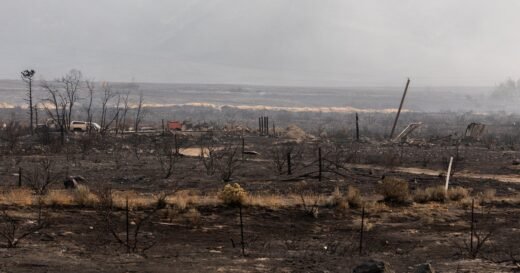
Out-of-control Hawk Fire in Reno, Nevada keeping tens of thousands evacuated
new admin - Aug 24, 2026An out-of-control wildfire that jumped over fire trucks and made it difficult for crews to reach hot spots destroyed homes…