



Financial Aid Admins Raise Alarms Over OBBBA Time Crunch

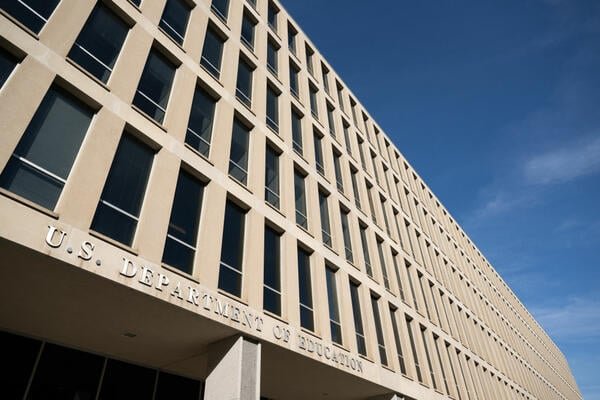
NASFAA sent a letter to the Department of Education expressing its concerns Monday.
Saul Loeb/AFP via Getty Images
As colleges and universities race to implement the largest overhaul to federal student aid policy in more than a decade, financial aid administrators don’t want to be penalized by the Education Department if they get something wrong.
The changes take effect in less than two months, and some key elements haven’t been finalized yet, leaving institutions without clear guidance on how to carry out the overhaul.
Administrators are worried the quick turnaround could lead to unintentional errors in how institutions award financial aid. Because of those errors, colleges could be dinged on program reviews, which could lead to other penalties. So aid staffers are asking for a bit of wiggle room in upcoming compliance audits.
“ED has asked institutions for patience and grace as the Department fine-tunes the details of these sweeping changes and crafts final regulations,” the National Association of Student Financial Aid Administrators wrote to Education Under Secretary Nicholas Kent Monday. Now, “we ask that ED grant the same grace to institutions and provide for explicit flexibility in consideration of the exceptionally short time frame provided for implementation.”
The changes, outlined in Congress’s One Big Beautiful Bill Act, limit the number of options borrowers will have for student loan repayment, cap the amount graduate students can borrow, expand Pell Grant eligibility to students enrolled in short-term job training programs and introduce a new accountability metric that tracks graduates’ earnings. All provisions are slated to take effect July 1, but only regulations for the loan limits and consolidated repayment plans have been finalized.
Without final rules for all the changes, aid officers are preparing to implement these policies with limited guidance that has often proven “inconsistent and unreliable,” NASFAA says.
As an example, the association pointed to a last-minute change regarding lifetime loan limits that was announced just days before the final regulations for that policy were released, saying it is “destabilizing financial aid administration and putting students at risk.”
But Ellen Keast, press secretary for higher education, described the letter as “wholly inaccurate” that “calls into question the credibility of NASFAA’s leadership.”
“The department has moved with intentionality to implement some of the most transformative higher education reforms in decades including lowering the cost of college, bridging the gap between education and the workforce, and ushering in a new era of accountability,” she told Inside Higher Ed. “We understand that these reforms are coming at a rapid pace, and we will continue to support financial aid administrators and other stakeholders directly as we have done since the bill passed nearly a year ago.”
Still, NASFAA argues that flexibility in the audit process—the extent of which it did not define—would ensure that aid administrators operating in good faith are not penalized for the decisions they make with limited information, the letter explains.
The time crunch is particularly challenging for what are known as “summer headers,” or colleges and degree programs that treat the summer term rather than the fall as the start of their new academic year. For those institutions, new classes and new aid packages that count toward the 2026–27 award year begin as soon as late May and must comply with the July 1 regulations.
As a result, at least one college said it’s having to estimate its aid offers for students rather than providing concrete offers.
“We are already packaging students for summer, because we’re out of school and [students] need to know what they’re going to get,” Heidi Carl, assistant vice provost and executive director of the division of financial aid at Purdue University, said in a NASFAA news article. “We’ve already pretty much been told by our software provider that we won’t have information soon enough to figure out how to program this. So [aid professionals] are going to have to figure this out themselves.”
NASFFA says 180 days of flexibility on all of the new provisions is warranted, but specifically members want leeway on the three key changes:
- Applying the lifetime loan limit
- Adjusting loans to be proportional for students enrolled less than full-time
- Calculating the amount of time students who were grandfathered into the old Grad PLUS loan, which has no cap and can cover up to the full cost of attendance, have to complete their degree before they are subject to the new caps.
“Colleges and universities are used to complexity. Financial aid administrators navigate some of the most intricate federal regulations in higher education, translating policy into practice so students can access the funding they need,” the letter states. “But even the most seasoned professionals cannot implement rules on short notice and in the absence of subregulatory guidance to clarify areas of regulatory ambiguity.”
You may be interested

Google Gemini is getting a dedicated student hub
new admin - Aug 19, 2026As we’re gearing up for back-to-school season, Google is rolling out a new dedicated student hub in Gemini. It’s a…

Biggest wins, losses and upsets in key primary races
new admin - Aug 19, 2026CBS News political director Fin Gómez and congressional correspondent Nikole Killion break down the results of major primary races, from…

Tyler, the Creator, Steve Lacy, Turnstile
new admin - Aug 19, 2026[ad_1] Tyler, the Creator‘s annual music event Camp Flog Gnaw Carnival will return to Dodger Stadium in Los Angeles with…