

Even More Higher Ed Names in the Epstein Files

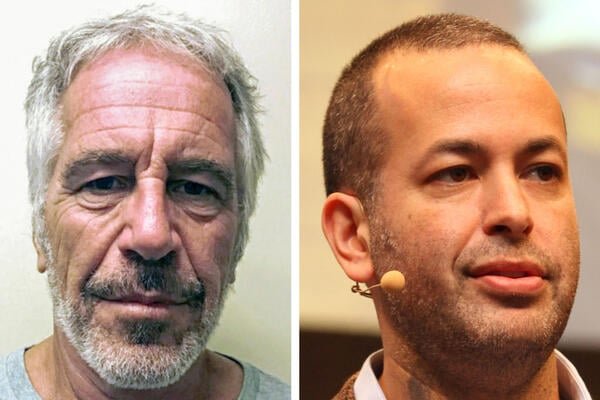
Deep dives into the Department of Justice’s latest trove of Epstein File documents have revealed the names of more academics who corresponded with Jeffrey Epstein, the late financier charged with soliciting prostitution of a minor in 2008 and who was arrested again 11 years later for sex trafficking minors.
Some professors’ emails with Epstein were infrequent and largely impersonal, but others reveal years-long friendships with the sex offender, which sometimes included stays at his properties, visits to his private island and regular chatter about scholarly research. None of the higher education figures included here have been implicated in any of Epstein’s criminal activities, but they did maintain correspondence with him after his 2008 conviction.
Inside Higher Ed analyzed more of the correspondence of frequently mentioned higher education figures in the latest Epstein file drop. All quotes are reproduced verbatim.
Martin Nowak
A search for Martin Nowak, math and biology professor at Harvard University, returns more than 4,000 documents in the Justice Department database. His association with Epstein was already well known; in 2021, Harvard sanctioned Nowak for his relationship with Epstein. Those sanctions were lifted in 2023. Nowak emailed frequently with Epstein for many years and stayed several times at his apartment in New York City. In a 2009 email, Epstein’s long-time assistant Lesley Groff confirmed Nowak’s trip to visit Epstein in late July. “Jeffrey said your dates work great and that you may have use of an available apartment of his as well as the Jaguar,” Groff wrote.
Other emails also appeared in a search for Nowak’s name, including a 2002 message to Epstein’s former girlfriend and accomplice, Ghislaine Maxwell, in which Nowak wrote: “dear ghislaine, many thanks again for your amazing hospitality. i am so very sorry i caused you so much worry and that i spoilt this day. i am so happy that i did not kill anybody. my perspective of life has changed somehow … lots of love, martin.” In a message to Epstein in 2014, Nowak wrote: “our spy was captured after completing her mission,” to which Epstein responded “did you torture her.”
Nowack did not respond to Inside Higher Ed’s request for comment.
Nathan Wolfe
Nathan Wolfe, a former professor of virology at Stanford University, wrote to Epstein between 2008 and 2013, and in one instance described interns’ physical attractiveness to the sex offender, The Stanford Daily reported.
In 2010, Wolfe invited Epstein to a dinner he was holding. “Doing what should be a fun dinner Sat eve w Erez Kalir (brilliant guy who you’d enjoy), a couple of hottie interns from WEF, etc. Would be great to have you – I’m free some other times too if that doesn’t work,” Wolfe wrote.
Wolfe told Epstein in 2011 that he’d co-created a study of undergraduates to test their “horny virus hypothesis” which looked at the link between sexual behavior and microbial diversity, and asked Epstein if his funding for the study was a “go/no go.” In another note, he told Epstein about his research on developing “female viagra,” a topic Epstein talked to multiple other scientists about.
Wolfe did not respond to Inside Higher Ed’s request for comment.
Corina Tarnita
Princeton University ecology and theoretical biology professor Corina Tarnita first met Epstein when she was a graduate student working under Nowak at Harvard, and the two remained in contact for several years, meeting occasionally, the Justice Department documents show. She sent Epstein ‘happy birthday’ and ‘happy New Years’ messages and asked Epstein for professional advice.
“jeffrey, thank you for being a great friend. talking to you always makes me feel better,” Tarnita wrote to Epstein in 2011. In at least one email, Epstein alluded to his 2008 guilty plea.
“newsweek is doing a story , on me and will want to talk to you both„ their focus is on why do so many people want to talk to me and seem to ignore – their words – my crime,” he wrote to Tarnita and Nowak. Nine days later, Tarnita wrote to Epstein: “publicity can be terrible … but only if you don’t have any. (right?) i love the photo of you now in the newspapers — excellent choice. if you want some distraction, come by ped and let’s do science.”
In another email chain, Tarnita helped facilitate a $10,000 wire transfer from Epstein’s estate to “a girl from Romania,” as well as a $5,000 wire transfer to another undisclosed recipient in California. It’s unclear in the emails who the recipients are or what the money was for, but Tarnita told The Daily Princetonian that the money went to two early-career women in mathematics at a Romanian university who Epstein was interested in supporting anonymously.
“Like most people who knew Epstein in his capacity as a donor to scientific research, I am revolted by his depravity and regret having met him,” Tarnita wrote in a statement shared with Inside Higher Ed. She said her in-person meetings with Epstein always included other “senior, prominent scientists” and that her communication with Epstein ended when she began working at Princeton.
Mark Tramo
Mark Tramo, an associate adjunct professor of neurology at University of California, Los Angeles, corresponded with Epstein semi-regularly between 2010 and 2019, the Daily Bruin reported. In 2010, Tramo passed along notes to Epstein from two students looking to get more involved in Tramo’s research. Epstein asked: “are either of these cute,” and Tramo replied “we’ll see! (you’re terrible!)” In 2017, Tramo received a $100,000 check from Epstein’s charity, according the Daily Bruin.
Bloomberg reported that Tramo reached out to one of Epstein’s assistants in 2007 as Epstein was preparing a guilty plea. “I read the newspapers early this morning,” Tramo wrote. “Please remind him that boys from The Bronx (even if they end up at Harvard) have long memories, know all about cops, and stay true to their friends through thick and thin (no less peccadilloes).”
In September 2025, Tramo told The Harvard Crimson he wasn’t aware of the extent of Epstein’s crimes.
“I, like several of my Harvard and MIT colleagues at the time, had no knowledge of his horrible crimes! I never asked or read about what had happened in 2006-7. I had been duped to believe he had committed some minor offense and that he was being harassed by police,” Tramo wrote his statement to The Crimson. “I never visited Epstein’s island, never flew on his planes, and never saw him with young girls … I had no idea he was a pervert!”
Jack Horner
Retired Montana State University professor and paleontologist Jack Horner—and the inspiration for Jurassic Park’s Alan Grant—was mentioned in more than 450 documents in the latest Epstein Files trove. After he visited Epstein’s ranch in 2012, Horner sent him a note thanking him and inviting him to a Montana dinosaur site.
“it was a lot of fun, and although we didn’t find any dinosaur fossils, we did discover that he has ocean front property, a nice beach with loads of shellfish, potential for marine reptiles, and a really cool old railway,” Horner wrote. “Jeffrey and the girls were very gracious hosts as were Brice and [redacted]. And, of course, the food was incredible!!”
Horner did not respond to Inside Higher Ed’s request for comment.
Antonio Damasio
Antonio Damasio, a psychology and neurology professor at the University of Southern California, asked Epstein in 2013 to fund his research about the cellular science of emotions and feelings. The two met in New York to discuss the proposal.
Damasio told USC Annenberg Media that the meeting was “routine private contact” that scientists often make with wealthy philanthropists. He also said if he had known of Epstein’s crimes, he would not have solicited him for funding. Epstein did not end up funding the research.
“I was looking for a prestigious philanthropist, not a criminal,” Damasio told Annenberg Media.
Epstein Sought to Bring More Into His Orbit
Other academics’ names appear in the files in part because Epstein was so interested in connecting with scientists, and was often introduced to them through his other academic connections. For example, Epstein attempted to arrange a meeting with Albert-László Barabási, a professor of network science at Northeastern University, for years, but no meeting ever took place, Barabási said.
“As the newly released documents show, and to my surprise, Epstein attempted over several years (2012–2014) to make contact with me by corresponding with multiple intermediaries. I only became aware of these efforts after the documents were released at the end of January 2026,” he told Inside Higher Ed in an email. “I unequivocally condemn Epstein’s crimes. His case has cast a shadow over the careers of many scientists whom he successfully drew into his orbit, many of whom were not aware at the time of his activities.”
You may be interested

JLab’s new Bluetooth speaker doubles as supersized headphones
new admin - Feb 05, 2026JLab, a brand best known for its budget-friendly but well-featured wireless earbuds, has announced a new pair of headphones that…
£60 necklace reminds us of Duchess Sophie’s | Royal | News
new admin - Feb 05, 2026[ad_1] The Duchess of Edinburgh has quietly mastered the art of understated elegance, and her latest jewellery choice was a…
Ukraine’s president says 55,000 troops killed so far
new admin - Feb 05, 2026More than 50,000 Ukrainian soldiers have been killed fighting Russian troops, President Volodymyr Zelenskyy said, acknowledging the conflict's devastating toll,…