


Earnings Test Gets Mixed Reviews in Public Comments

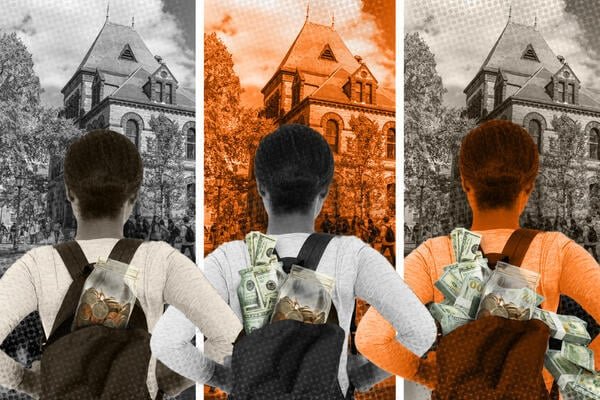
Religious colleges warned the Education Department that its proposed new accountability metric, which essentially sets a minimum earnings requirement for graduates, could devastate them, in part because their core programs would fail.
About 9 percent of undergraduate religious studies programs and 6 percent of graduate ones would fail the test that compares students’ earnings after they graduate to those with only a high school diploma, according to department data. Several commenters, responding to the agency’s proposal in the public comment period, said the impact could be far higher than those numbers show.
The Association for Biblical Higher Education Commission on Accreditation shared ED data in its comment showing that 53 percent of religious studies bachelor’s programs and 89 percent of religious studies master’s programs would fail the metric. Programs that fail the earnings test in two consecutive years could lose access to federal student loans, and some could eventually be cut off from the Pell Grant as well under the department’s proposal.
“It appears that the proposed earnings test will have a disproportionate, negative effect on faith-based higher education,” ABHE wrote. “When specialized institutions offer only religious/ministry studies programs, there is increased risk that institutions might be placed on provisional status or lose access to [federal student aid] altogether, simply as a function of institutional mission. Consequently, the proposed accountability measure goes beyond managing loan repayment risk for taxpayers and puts student access to religious/biblical studies and ministry programs at significant risk.”
The concerns from advocates of faith-based institutions were just some of those raised in public comments submitted to the department. Other commenters suggested changes to the test and argued that the measure unfairly penalizes certain industries. Over all, the department received more than 8,500 comments in the comment period, which ended last week. Officials will have to review and respond to the comments before finalizing the rule, which is set to take effect July 1.
Congress passed the earnings test as part of the One Big Beautiful Bill Act as a way to hold institutions accountable and ensure that higher ed pays off for students. The Education Department said in a news release last month that the accountability framework “will break the cycle of low return on investment for students and taxpayers.”
Since 2010, the federal government has sought to hold some colleges accountable based on what their students earn, though none of those efforts have taken full effect thanks to court challenges and changes in administration. Previous iterations of the rule known as gainful employment only applied to nondegree programs and for-profit colleges, but the proposed earnings test would apply to institutions of all types—a shift that several commenters applauded.
Yet, religious colleges argued for an exemption. Friends University noted in its comment that federal law prohibits ED from administering federal student aid programs “in ways that exert control over institutional curriculum and programs of instruction.” Because of how the test affects religious programs, the university argued the proposed rule exerts control over institutional programs.
“Given the burden on religious liberty, the department should accommodate faith-based institutions and programs,” Friends University wrote. “Religious programs offered by faith-based institutions should be exempt from the earnings test.”
The Defense of Freedom Institute for Policy Studies, a conservative think tank that largely supports the department’s proposal, also urged the agency to rethink how it treats religious programs at faith-based institutions.
“The Department’s proposed regulations would have a devastating and unintended impact on religious programs and institutions,” DFI’s comment states. “DFI does not believe that Congress intended the … accountability metric to shatter religious and rabbinical programs and schools or improperly reduce the educational value of those programs to short-term earnings metrics.”
DFI added the proposal “raises very serious constitutional concerns” because of the impact to religious institutions and ministry and rabbinical programs.
“Where a regulation effectively penalizes religious educational models because they prioritize spiritual formation and service over income maximization, the federal government must rethink its approach and recognize the dangerously unconstitutional grounds that it treads upon,” DFI said.
Only 78 of the public comments specifically mention concerns about the impact to religious programs or faith-based institutions. The vast majority focused on how the rule could affect beauty schools or cosmetology programs. The department estimates that more than 90 percent of cosmetology programs would fail.
Representatives of cosmetology schools argued that the earnings test doesn’t reflect how careers in the industry develop or take into account unreported income such as tips. They also noted that industry could cease to exist if a large swath of programs lose access to federal student aid.
“We are not asking for special treatment. We are asking for a fair measurement that reflects the structure of this industry,” wrote Josh Johnson from the Nova Academy of Cosmetology. “Cosmetology and esthetics are skilled professions with real long-term opportunity, but they do not follow the same early earning trajectory as traditional four-year degree paths. Evaluating them under the same standard does not provide an accurate picture.”
However, several commenters argued that the accountability measure is much needed.
“Too many programs leave students with little to no earnings premium for their tuition, and these regulations will enact statutory provisions such that fewer students attend low-earning programs and fewer taxpayer dollars keep those programs running,” wrote Third Way, a left-of-center think tank.
Concerns Over Debt-to-Earnings
Several commenters worried that the department’s proposal would still put students at risk and saddled with debt that they can’t afford to pay off. That’s in part because the department nixed a test in the current gainful-employment rule that measured whether graduates earn enough to pay off their student loans. Democratic lawmakers and other advocates argued in the comments that the department should bring back that debt-to-earnings test, saying that students won’t be fully protected without it.
Third Way argued that the Education Department could still post how programs fare on the debt-to-earnings test, even if there’s no enforcement purpose.
“Debt-to-earnings rates fulfill a different and important data transparency function by measuring whether graduates can afford to repay their student loans based on what they earn, protecting students from high-debt, low-wage programs,” the Third Way comment stated. “This information remains useful for prospective and current students as well as for institutions.”
Similar to past comments on earnings-based accountability measures, representatives from institutions argued that they can’t control what students make after graduating, so using their earnings is unfair. Others said comparing undergraduate students’ earnings four years after completing a program was too soon to gauge whether a program paid off, particularly when comparing them to older adults with a high school diploma.
While the earnings test didn’t receive that much support in the public comments, several associations and commenters appreciated the department’s plan to require colleges to report more program-level data, saying that it will offer better insights into how students fare. That information will then be displayed on a public information site run by the department.
Dispute Over Certificates
Another key issue in the comments was whether undergraduate certificates should be subject to the earnings test. Congress didn’t specifically include them in the law; at the time, those certificate programs were subject to the gainful-employment rule. The Education Department ultimately proposed including them.
Officials wrote in the proposed rule that exempting undergraduate certificates “would not be in the best interest of students or taxpayers.” About 29 percent of undergraduate certificates would fail the earnings test, according to department data presented earlier this year.
Career Education Colleges and Universities, a trade group representing for-profit institutions, argued in its comment that including certificates “ignores the commands of Congress” and that the agency doesn’t have the authority to make such a change. But if the department moves forward with requiring certificates to pass the earnings, CECU and the American Council on Education, a key higher ed lobbying group, say those programs shouldn’t be held to the same threshold as bachelor’s degrees.
“Because the age range for certificate holders is decreasing—academic year 2023–24 marks the first time that certificate completers aged 24 and younger outnumbered those 25 and older—a more valid comparison group for students with undergraduate certificates would be those aged 20–24 years old with a high school diploma,” ACE wrote in its comment.
Other comments, including from the left-leaning think tank New America, urged the department to stick with its proposal regarding certificate programs.
“Regardless of credential length, students should be able to trust that a federally aided program will improve their economic prospects,” the New America comment states. “Including certificate programs in the earnings accountability framework provides consistent protection for students and taxpayers and ensures that federal dollars do not subsidize programs that routinely leave students with debt they cannot repay and wages too low to justify enrollment.”
You may be interested

Voters head to the polls for primary races in Arizona
new admin - Jul 22, 2026Voters head to the polls for primary races in Arizona - CBS News Watch CBS News Voters went to the…

FitFlop shoppers snap up sandals that are so ‘comfortable’
new admin - Jul 22, 2026[ad_1] Sandal season is here. Shoppers on the hunt for comfortable shoes they can walk in and get lots of…

Urgent recall issued for allergy tablets with ‘life threatening’ side effects
new admin - Jul 22, 2026The antihistamine has been recalled by the pharmaceutical company due to risk of contamination.New Jersey-based pharmaceutical company Rising Pharma Holdings…