

Cynthia Plaster Caster Made Statues of Penises. This Is Her Story

F
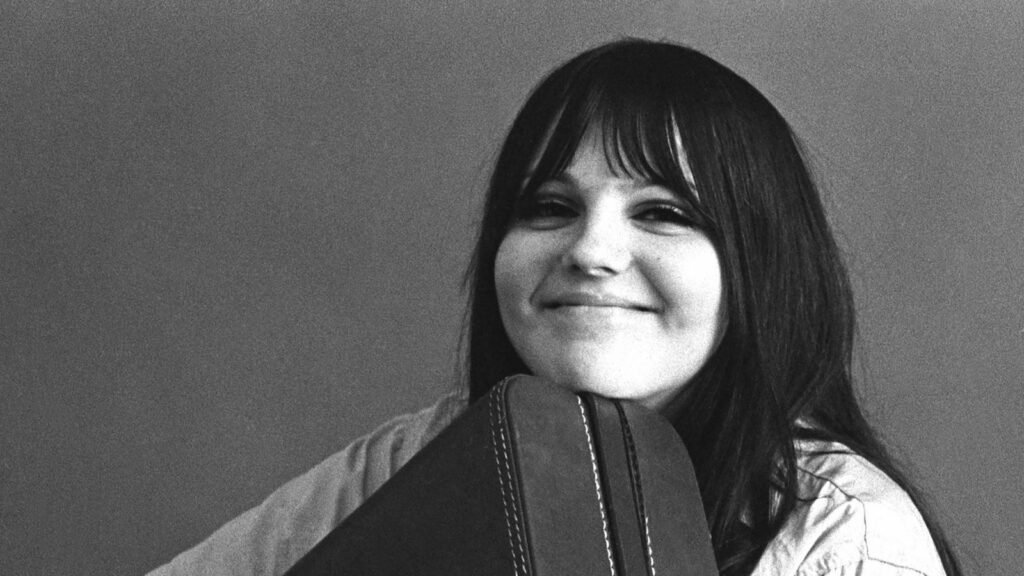
eb. 25, 1968. The Conrad Hilton Hotel in Chicago, Room 1628. Jimi Hendrix’s pants are on the floor, and Cynthia Albritton is ready. Along with her friend and helper, Marilyn, she carefully measures equal parts dental alginate powder and 70-degree water. Their friend Dianne, the “plater” — the young woman designated with arousing the subject — is going down on Hendrix, trying to get him to the edge.
When Albritton, Marilyn, and Dianne arrived downtown that afternoon, they weren’t sure they’d make it inside his suite, much less take off the 25-year-old guitar idol’s skintight bell-bottoms. They’d followed Hendrix and his band, the Experience, from the Civic Opera House, where they’d just played, to the Hilton, where they were staying. When Hendrix pulled up, they introduced themselves and flashed him a suitcase with their groupie collective’s name emblazoned in a white oval: The Plaster Casters of Chicago. They were there to immortalize his penis or “Hampton Wick” (a committed Anglophile, Albritton used Cockney slang whenever she could).
“He got out of the limo and said, ‘Yeah, man, I heard about you in the cosmos,’” Albritton would later recall. “‘Come on up to my room.’”
The plan was simple: Get the subject erect, have him thrust into the alginates, then when the mold was clear, fill it with plaster to preserve the moment. When Dianne had accomplished her objective and Hendrix was hard, Albritton got on her knees in front of him and he pushed his “rig” — penis — into the can of pink goo. They’d planned out every move, but the timing was tricky — the alginate had to be at exactly the right stage of setting when the penis went in, while the member’s owner had to stay hard enough to get a detailed likeness, and on an erect penis, 70 degrees felt freezing.
It had taken Albritton extensive research to find the right casting process. Inspiration came from a friend who suggested dental alginate, the rubbery, algae-derived substance used to make impressions of teeth. For two years, she’d been trying to get the formula right. In the weeks leading up to the Experience’s visit, thanks to some brave male friends, she’d finally gotten some acceptable results. But that evening, in their excitement, Dianne didn’t apply enough Vaseline. So after the alginate solidified, Hendrix sat patiently as Albritton gently pulled his pubic hairs out of the molding material. “He actually enjoyed it,” she wrote in her notes from the session, adding that it seemed like he “balled” — fucked — the mold, even as she worked. “In fact, I believe the reason we couldn’t get his rig out was that it wouldn’t get soft!”
When Hendrix’s penis finally came out, Albritton carefully removed the alginate mold from its container. She poured a plaster mixture into the mold, but, anxious to see the result, peeled the alginate off before the plaster had time to fully set, and the cast crumbled. She took it home and let it dry a little more, and was eventually able to craft it into one piece. “A little Elmer’s glue and we had our plaster cast,” she wrote. “A little on the Venus de Milo side but it’s a real beauty.”
Hendrix’s penis was labeled #004. By the time Albritton’s career as an artist came to an end decades later, she would have roughly 60 casts — plus 10 sets of breasts she made of female musicians. But Hendrix’s model would be her most famous and set the tone for a career as an artist that would earn her cult status, from references in Jim Croce’s 1972 song “Five Short Minutes” to the 1977 Kiss single “Plaster Caster” to the 2024 film Drive-Away Dolls.

Cynthia Albritton and friend Dianne called themselves “the Plaster Casters of Chicago.”
© The Baron Alan Wolman Collection, Rock & Roll Hall of Fame
Albritton had long talked about writing a memoir but never got past the first chapter. After she died in 2022 at the age of 74, some of her friends got in touch with the Kinsey Institute at Indiana University, Bloomington. Founded in 1947, the organization tasked with studying sex and relationships at the deepest level appreciated both the humor and the history in Albritton’s work. They looked past the titillating shtick and saw how, whether or not she intended to at first, her art had flipped the dynamic of rock-star groupie on its head and reclaimed power from those who might seek to take it from her. Kinsey gladly accepted her papers — years of diaries, casting notes, bindings of clippings, and a carefully packaged collection of penis-themed memorabilia — as well as more than a hundred penis casts, some in plaster, others in bronze, and all of the material she used to make them.
In April 2024, Kinsey’s curator, Rebecca Fasman, invited Rolling Stone to go through it all in detail; in the years since, I have read and reread the diaries, pored through endless archival interviews, and spoken to almost two dozen of Albritton’s friends, from those she knew back in the heady Chicago days to the person holding her hand when she died. “She just thought this was going to be a great way to meet musicians. And at some point, sex would ensue. She wasn’t really looking at it from anything bigger than that,” says Iva Turner, Albritton’s close friend since their early twenties. “And it was obvious — it was much more than what she had anticipated.”
The Artist As a Young Woman
Growing up in the early 1960s in Chicago’s South Shore, Albritton was drawn to music and art, sketching in her diary and serving as an art editor on her school paper. In high school, she added boys to her list of obsessions, flirting with them at choir and in the cafeteria of the Art Institute of Chicago, where she took classes. She’d started out drawing fashion designs, but shifted into delicate portrait work, often of her favorite bands. “People that don’t know her don’t know this: She was a really, really good artist,” says Joe Shanahan, who owns the Metro, a club she often went to in her later years. “Her portraits are incredible.”
Albritton was raised by a single mother, Dorothy, whom she would refer to throughout her life as the Warden. “She had a mother who would undermine her at every possible opportunity,” says Turner, who first met Albritton in 1969. The Warden wanted Albritton to be a teacher, stick around the South Side, knock off the boys and the music and the teenage shenanigans. “I wasn’t raised to think about what I wanted to do in life because my mother told me what I’d be doing: taking care of her,” Albritton later said.
When Albritton was little, her mom split with her father, Curley, likely over his drinking. Curley, a postal worker, stayed in his daughter’s life, taking her to the new shopping mall or to the racetrack, often slipping her spending money. She loved when he’d come pick her up to go on an adventure, even if sometimes he was drunk. (His postal shirt would later become her casting uniform.)
“We were probably the most notorious groupies out of Chicago.”
Throughout 1964, her junior year of high school, Albritton told her diary about her crush, a boy she’d nicknamed Goolie. But by early 1964, there were only four men she cared about. “Remember how much you heard about Goolie for the longest time, dear diary?” she wrote the day after the Beatles’ Ed Sullivan Show performance. “Well, I won’t be writin’ about him too much cause my latest and permanent infatuation is for the Beatles — especially Paul and George!”
Albritton adored all the bands of the budding British Invasion — and like many teen girls of the time, she and her friends were intent on meeting them. When groups came through town, they’d call around to hotels in order to catch a glimpse. “[We] would do it just because we could,” says Sherri Kodner, a North Sider who met Albritton when they were teens. “I don’t know how we got all this information, but we always knew.”
When the Rolling Stones were in town that June, Albritton called up the Water Tower Hotel and asked if there was a guest by the name of Bill Wyman — asking for a less-famous member of the band, she’d learned, wouldn’t arouse suspicion. When that was confirmed, she and her friend Kathy shot up to Michigan Avenue. On the street, they spotted some men they knew must be with the band. “Oh, you’re a Stone!” Albritton shouted to them. A man with a blond shag and a sharp style responded “Yes,” in a British accent. “Would you give me an American welcome?” He stuck his cheek out, and she kissed it. When she asked for one back, he kissed her on the lips, then nibbled her neck. She was entranced by his sexuality and the scotch on his breath. He wasn’t a Rolling Stone, Kathy would later inform her, but Andrew Loog Oldham, the band’s 20-year-old manager, a rising star in his own right. Either way, she was hooked.
Simply showing up got them pretty close to the Rolling Stones, but the Beatles offered stiffer competition. At their concert, she sat many rows back, and though she was thrilled to see the objects of her desire in person, seeing them onstage was a lot like watching them on TV. “Oh, Lord, I didn’t meet them an’ now I just feel no feeling at all,” she wrote. “This day was too disappointing ’cos they wouldn’t let me near my Beatles.” The next morning, she sat in bed, under her Beatles poster, and cried.
By 1966, Albritton, though still a virgin, had established herself as a groupie in the local scene. She was a natural beauty, but had a baby face and a curvy body that made her self-conscious — she often visited doctors for help with her dieting. Still, she had great style, even once getting chased down the street by some other girls who wanted to compliment her on a John Lennon-esque hat she’d re-created. She’d graduated high school and was attending the University of Illinois Chicago, studying art and cavorting with bands as much as she could. She was friends with a local outfit called the Flock, and had an on-off relationship with one of their members, but wasn’t interested in being tied down.

Albritton’s early sketches of Beatles George Harrison, Paul McCartney, and Ringo Starr
James Brosher/Indiana University
She’d had a lost weekend with Jeff Beck when the Yardbirds played Chicago in December 1965 — best as can be gleaned from her diaries, there was a makeout, a hand job, and possibly even a visit to her house to listen to records. (Beck died in 2023.) Despite the affair’s brevity, it left her shook. “I can’t study or think about almost anything but … Jeff,” she wrote. She was crushed when she saw him at a Yardbirds show a month later and he didn’t acknowledge her.
At the heart of her group-chasing, though, was a deep love of music. Between stories of tracking down bands and family struggles, her diaries are full of reviews of the records of the day, gushing over Bob Dylan’s “Rainy Day Women #12 & 35,” the Stones’ “19th Nervous Breakdown,” and everything the Beatles put out.
She was also digging art school. In April 1966, she was given an assignment: Make a plaster cast of something stiff that would retain its shape. Her mind immediately jumped to an erect penis. For the assignment, she casted produce — either a zucchini or a banana, she later couldn’t remember — but the idea stuck. Back in high school, she’d given a friend running for class president some advice: If you want to be noticed, you need to stand out. She decided to apply that to her efforts to meet groups.
Albritton’s best friend and constant companion in those days was a girl she called Pest, a knockout who also loved the thrill of the chase. Together, they’d learned the basics of Cockney slang from a visiting band, and realized they could use it to get other British boys’ attention. (Through a friend, Dianne declined to be interviewed for this story.)

In the 2000s, Albritton used molds to make copies of her art to fund a nonprofit for struggling artists.(Photo by James Brosher/Indiana University)
James Brosher/Indiana University
When the Hollies were in town from Manchester, England, that April, Albritton and Pest weren’t satisfied being part of the general rabble. Pest called the hotel room of lead guitarist Tony Hicks and introduced them as “two Barclays bankers of Chicago.” The hint at their intentions (the phrase was Cockney for a hand job) gave Hicks enough of a laugh that he invited them to come by. They both ended up with what kids then called “scenes” — makeouts, maybe a little more — with members of the band, and at some point that weekend, Albritton made a crack about her new art project. The band eagerly agreed. “They all want us to cast their rig in plaster,” Albritton wrote. It never ended up happening, but Albritton didn’t give up on her idea.
A couple of days later, Paul Revere and the Raiders were in town. Albritton adored their singer, Mark Lindsay, so she and Pest used their new Plaster Casters line to work their way into their hotel room. It was a success, and that weekend, she lost her virginity to Lindsay at the Chicago Hilton. “Oh, what a bod,” she wrote. They planned to “plaster cast his rig” the next day.
That cast also never happened, but her success at bedding Lindsay proved how viable the shtick could be. “It was very competitive, because there’d be a lot of girls going after the same guy,” explains Kodner, adding that Albritton’s ability to track down bands was “like an art.” In September, Albritton picked up a stack of calling cards she’d had made. “We are the Plaster Casters, and we want to plaster cast your Hampton Wick,” they read.
“For two years, we were probably the most notorious groupies out of Chicago,” she’d later say. “Without ever having made a cast.”
Making a Name for Herself
It was a quiet Monday night in late-October 1967, and Albritton was at home, writing in her diary. Just that month she’d had a scene with the Animals’ John Weider, and she was taken as much by his mind as his body. “Johnny is quite an articulate thinker, to say the least,” she later wrote.
Albritton reconnected with the Yardbirds around that time, and though Beck was no longer a member, a Brit named Jimmy Page had taken his place. As she sat writing in her diary, the phone rang. “It’s Jimmy Page of the Yardbirds,” the voice said on the other end. “Let’s make a plaster cast.” She and Dianne shot uptown, but when they got there, the band had cold feet. “Jimmy locked himself in the bedroom, claiming to be on the phone,” Albritton wrote.

The original Plaster Casters of Chicago suitcase that Cynthia made in the 1960s is now housed in the Kinsey Institute archives in Indiana. (Photo by James Brosher/Indiana University)
James Brosher/Indiana University
A couple of days later, Procol Harum were playing, and Albritton and Dianne met them backstage. “Everyone seemed overwhelmed that here was the ‘original plaster-casters,’” Albritton wrote, thrilled they knew who she was. After the show, singer Gary Brooker complimented a medallion she was wearing, embossed with a penis, so she put it around his neck. He told her he’d like to give her something in return. She responded that maybe he could give her his rig. Later that night, Albritton and Dianne went back to their hotel room. “This was really it,” Albritton wrote. “We wanted to do it to Gary, and Gary wanted to do it.”
Albritton prepared the alginates, but the first batch came out a “lumpy pink jello substance.” She tried again, but it came out the same mess. Since they couldn’t insert his rig into the container, they tried instead piling the substance up against his penis and pressing it in. “It just fell off in lumps,” she wrote. “Gary groaned in disappointment and the others were disgusted. They called us a failure.”
Still, she had monumental sex with Brooker. When she and Dianne made it out of the band’s room the next morning, their eyes dark from the late night, their skirts splattered with pink alginates, they ran into three girls on their way to try to get autographs.
The Plaster Casters of Chicago didn’t give up hope. Four months later, they’d find themselves in the Hilton with Hendrix, and this time, the alginates would hold. “It’s such an iconic thing,” says Tim Tuten, who, along with his wife, Katie, co-owned the Chicago venue the Hideout since 1996, where Albritton had a dedicated seat. “She literally was a young woman, and she’s in the room, and she’s like, ‘No, I’m leaving here with your dick in my hands, and I’m gonna own it.’”
About a month after the Hendrix cast, Albritton was back at the Hilton, this time with the Experience’s bassist, Noel Redding. “Noel’s was the first cast to come out twisted,” she later told a friend. “That happens when they … start to lose their erection; instead of going straight down it twists around and the pressure of the alginates pushes it down further.” Still, Albritton had a grand time. “One of the best days of my life,” she said. “It even said in my horoscope, ‘You rarely get what you want in life, but today will be an exception.’ Holy fucking shit … I got to fuck Noel and I got the souvenir deluxe.”
Now that her casting work had become more consistent, she began building her collection. She displayed the final products in her room, but dreamed of someday showing her “babies” in a more formal setting — a gallery or even a museum. And the casts were quickly adding up: After Redding came Don Ogilvie, the road manager of the Canadian band the Mandala, then Bob Pridden, road manager of the Who. Managers and roadies were often easier to persuade than group members themselves, she would find, and proximity to a great band was still proximity to a great band.

Albritton came up with the concept of making intimate casts out of dental alginate — and it became her calling card for years.
© The Baron Alan Wolman Collection, Rock & Roll Hall of Fame
The biggest turning point in Albritton’s professional life, however, came when she met Frank Zappa. Back in April 1968, Albritton and Dianne had talked their way into Cream’s room to ask guitarist Eric Clapton if he’d like to be casted. He said he’d have to think about it, but introduced them to Zappa, the singer of the opening act, the Mothers of Invention. Though Zappa declined their offer, they ended up talking for several hours. “[Zappa] wasn’t scary … and loud the way I thought he’d be,” she later said. “He was intelligent, respectful, and very curious, and he seemed interested in my idea about having a rock-cock museum.”
Albritton stayed in touch with Zappa, who helmed a record label called Bizarre out in Los Angeles, and took her work seriously. “It was Frank Zappa who told me it was an art form,” she recalled. “I said, ‘You are telling me it’s an art form, so it must be an art form.’ ” She lent him her 1966 diary — he was fascinated by groupies, and wanted to help her develop it into a screenplay — and a few weeks later he introduced her via phone to the GTOs, an all-groupie band helmed by Pamela Des Barres. (Her 1987 memoir, I’m With the Band, would go on to immortalize groupie culture; her 2007 book, Let’s Spend the Night Together, would tell the story of other groupies, including Albritton.) The two young women struck up a deep friendship, and in early 1969, Albritton took an “extended visit” to Los Angeles, with Zappa as her patron. “He thought our ideas were hysterical,” Des Barres says. “He wanted to save what he felt were important sociological elements in the world.”
Bizarre would pay Albritton’s rent as well as a salary of $65 a week — about $575 in 2026 money — enough for her to buy records, clothes, and the occasional meal. She packed up her belongings, including her beloved records — 400 pounds in all — and shipped them out west.
On April 11, 1969, Albritton touched down in California. Aside from the few short trips, this was the first time the 21-year-old was leaving home. Des Barres picked her up from the airport, and Albritton was overwhelmed by the “tremendous valleys and gigantic palm trees” of Beverly Hills. They pulled up to Zappa’s Wilshire Boulevard headquarters, where she picked up her first check, and went along to the Hollywood apartment that had been secured for her. Then it was off to meet Alice Cooper, head to the Lindy Opera House to watch the Mothers of Invention rehearse, over to singer Lowell George’s house for a little mescaline and weed, then off to Whisky a Go Go for a Flying Burrito Brothers show.

Pamela Des Barres and Albritton attend a movie premiere in 2002.
Chris Polk/FilmMagic
The next couple of weeks were a similar whirlwind, which she dutifully recorded in her diary. She spent time with Zappa and his wife, Gail, and their 18-month-old daughter, Moon. She hung out with Cooper and his girlfriend, famed groupie Catherine James (“THE Cathy Starfucker I’ve been looking forward to meeting!”). She met Jim Morrison at the Whisky and Zal Yanovsky from the Lovin’ Spoonful right there on Sunset Boulevard. She smoked opium with Warren Zevon and was fawned over by Tim Buckley (“He dropped a little dead over the fact that I’m a plaster caster”). She spent countless nights at the Tropicana Motel, crashing on the floor of rooms occupied by stars straight out of her record collection. There were flirtations, scenes, and three-ways. She witnessed supergroups form onstage for fleeting moments, and she saw the dreamy British singer-songwriter Dave Mason everywhere. She was pretty sure he kept looking at her, even though they never exchanged more than a couple of words.
The locals took to her Midwestern shyness, clever wit, and risqué art. “I found [Albritton] so beautiful,” says Turner, who was then go-go dancing on the Sunset Strip. Now 77, one of her fondest memories is acting as the plater when Albritton cast Anthony Newley, a Broadway star. “The whole thing was thrilling to me. I thought, ‘It’s one thing for Michaelangelo to make the statue of a guy, and it’s another thing to cast a dick.’ I loved it.”
Yet for all of the exciting experiences, there were times it was not entirely comfortable to be a Plaster Caster. Albritton wasn’t as glamorous as the other groupies, and could feel that in her interactions. “I don’t consider myself a participant amongst the L.A. groupie battling — I just can’t make it out here with groups,” she wrote. Worse, some bands scoffed at her, or insulted her to her face. Sometimes they’d see it as an invitation to take advantage of her, as was the case when she met Led Zeppelin.
Albritton had spent time with the Yardbirds, and had a good time with Jeff Beck and Jimmy Page. But in late 1968, on a trip to Detroit, she had what she would describe as an “awful experience” with Led Zeppelin drummer John Bonham. Bonham, who died in 1980, was violent when he drank, and had a reputation for getting rough with groupies. Journalist Ellen Sander — who, coincidentally, profiled Albritton in the late 1960s — later accused Bonham of attacking her. Even though she’d seen this erratic behavior, she felt protected by her status as a reporter on assignment. Perhaps Albritton felt the same way — her position in the community and history with other members of the band gave her a shield.

Albritton displays some of her artwork in her apartment in Chicago, where she spent most of her life.
Jim Newberry
Without giving details, Albritton referred to her night with Led Zeppelin as “that wretched scene-massacre on me in Detroit.” In a 1990 Rolling Stone interview, the band’s singer, Robert Plant, seemed to confirm the incident, though maintained he hadn’t been directly involved: “Shoving the Plaster Casters’ cast of Jimi Hendrix’s penis up of one of the girls in Detroit was … quite fun, actually. I don’t remember who did it, but I remember I was in the hotel at the time. It was … free love.”
There was another run-in the spring of 1969 in Los Angeles. Albritton found herself at Thee Experience, watching Led Zeppelin jam onstage. John “Upsy” Downing, a legendary road manager then working with Hendrix, invited Albritton and her friend and fellow groupie Harlow, who’d become her main plater, to a party at Zeppelin’s Chateau Marmont bungalow. At first she declined, alluding to Detroit, but Downing promised to protect her.
Things turned awful almost immediately. According to her diary, she saw Bonham and other members of the entourage take another groupie into a room and begin having rough sex with her, inserting a champagne bottle inside of her. Though she wrote that the groupie apparently “dug it,” Albritton tried to leave. Bonham ordered her to make him a cup of tea; when she went to the kitchen to oblige, she wrote, she felt “trapped.” She “conceded” to give him oral sex. He then “dragged” her outside to the pool, where, she wrote, he tried to rape her. She managed to push him off, writing that he “made me go down on him again,” but after a crowd formed and she tried to stop, he tossed her in the pool, fully clothed. Once the coast was clear, she staggered to the hotel lobby, soaking wet, and asked the desk clerk to call her a cab. A few hours later, Harlow arrived at her door. She’d been whipped by one of their managers.
“Led Zeppelin didn’t like us at all,” Harlow said in the 1970 documentary Groupies. “Richard Cole, he took this leather strap, he started beating me. And I didn’t even know him!” (Cole died in 2021.)
Albritton didn’t discuss this chapter very often. “It just made me realize I couldn’t go into any band’s hotel room without researching them first,” she would later say. Her friends remember her tensing up around the subject. “It was like this visceral reaction she had when she started to talk about it,” says Chloe F. Orwell, a Chicago musician and longtime friend of Albritton. “And yet she still loved the band.”
Over decades, Cynthia Albritton casted dozens of men.
Here are some highlights

JIMI HENDRIX
YEAR CAST: 1968
Albritton had been trying to get a replica of a rock-star penis for two years. When she heard Jimi Hendrix was coming to town, she knew she had to perfect it. “I practiced on a buddy from school and a male groupie I knew, and all within a month I learned how to mix dental mold,” she said. Decades later, it remained her most famous.

NOEL REDDING
YEAR CAST: 1969
Jimi Hendrix’s bassist, Noel Redding, was the object of Albritton’s affection long before his cast became part of her collection. Though the cast itself came out “twisted like a worm,” she bedded him after, starting an occasional romance that would last a decade.

WAYNE KRAMER
YEAR CAST: 1969
MC5 guitarist Wayne Kramer insisted on being cast at the band’s home in Ann Arbor, Michigan, alongside drummer Dennis Thompson (“I guess they’re insecure,” Albritton figured). Casting two at a time was a challenge for her — it took a lot just to get the timing right for both.

ANTHONY NEWLEY
YEAR CAST: 1969
Albritton was raised on musicals, so when Anthony Newley — who’d played the Artful Dodger in the 1948 film adaptation of Oliver Twist, and would go on to write “The Candy Man” for Willy Wonka — expressed interest in being cast, she jumped at the chance. So did Iva Turner, a friend of Albritton’s, who was the “plater.”

PETE SHELLEY
YEAR CAST: 1991
After a decade-long hiatus, Albritton was pulled back into casting by the burgeoning punk scene, and Pete Shelley’s band, Buzzcocks, was a favorite. She acted as both the plater and the caster for him — which turned out to be a bad idea, since trying to balance both duties ended in the cast being “a failure,” per her notes.
James Andanson/Sygma/Getty Images; Andrew Maclear/Redferns/getty images; Michael Ochs Archives/Getty Images; “Evening Standard”/Hulton Archive/Getty Images; Fin Costello/Redferns/Getty Image
The Scene Changes
Albritton carved out a life for herself in Los Angeles, running around with legendary scenesters Kim Fowley and Rodney Bingenheimer and the GTOs, hanging out at Zappa’s house or on the Strip, chasing Redding when he was in town. (That crush, as well as one on the Kinks’ Ray Davies, would define much of her young life.)
She continued casting, scoring likenesses of Eddie Brigati, singer of the Rascals, and Keef Hartley, less than a month after he played Woodstock. She made 17 casts in 1969, according to her notes, her most prolific year.
She talked to Zappa about developing a screenplay with her and Des Barres. He was convinced they could get Peter Fonda to play Mark Lindsay in the screen version of “the Groupie Papers,” as they called it, but despite hours spent going through her old diaries, and even completing a handful of illustrations to go with it, she didn’t seem to have it in her to sit down and write.

Rock musician and composer Frank Zappa and his wife Gail pose for a portrait in 1967.
Alice Ochs/Michael Ochs Archive/Getty Images
Still, her reputation was growing — and there was a new interest in groupies. In February 1969, Albritton had appeared alongside Des Barres in a special section dedicated to them in the fledgling magazine Rolling Stone. “A groupie is a person who regularly chases groups,” Albritton told the reporter. “It doesn’t matter the approach or purpose — to get autographs, to go to bed with them, to get to know them. Most of my friends are groupies.”
One night that June, she came home to find that her apartment had been burgled. Though her records and record player were gone, her art was unscathed; nevertheless, she decided to give her casts to Herb Cohen, Bizarre’s business manager, for safe keeping.
She pushed through the rest of 1969, casting as much as she could and developing a heavy flirtation with Zappa that she kept largely hidden. His wife, Gail, was fine with his groupies being around, but there were boundaries she expected them not to cross. Albritton crossed them, and then some. When she went by the office to grab her checks, Zappa would kiss her head or playfully tweak her nipple (“I drop of death whenever I confront his soft brown eyes,” she wrote). More than once they found themselves in bed together. “She said that romantically, the only one she truly loved was Frank Zappa,” says John Kaminski, a longtime friend in Chicago.
In the early Seventies, things in the casting business were slowing down. Bands were not as excited as they had once been, and Zappa, it seemed, was getting impatient with Albritton’s output. But one day, she called Dee, the receptionist at Bizarre. “You’re in for a surprise,” Dee said. “Better get your passport!” Zappa was working on 200 Motels, a feature film that fell somewhere between a music video and a fever dream, starring Ringo Starr as Frank Zappa, and shooting outside of London.
But once she got to England, she felt pushed out by the group. “It seems apparent that there’s no room for me in the film,” she wrote. “This is a repeat of my first year in L.A.” She flew home to California, but things continued to decline. As the casting dried up, Bizarre cut her off. She was forced to get a regular job at the telephone company.
As for the casts she’d left with Cohen, the business manager held on to them, and told her to sit tight. “He’s not going to do anything with them now, cos the rock scene is in an unpleasant way,” she wrote in her diary. In a few years, they figured, demand would return. “With superstars dying, shitty music, and groups getting married and shunning groupies … Well he’s perfectly right, and besides, if people forget about plaster-casting, the shock of seeing ’em after all these years should be effective.”
“It’s one thing for Michaelangelo to make the statue of a guy, and it’s another thing to cast a dick.”
Fighting for Her Art
By the early 1970s, groupie life was losing its luster for Albritton. Though she still loved the thrill of trying to meet her favorite artists — calling David Bowie’s hotel room, staking out the lobby of the hotel where Pink Floyd were staying — there was a “new breed” of girls to compete with. When she got her start, the guys she and her friends were bedding were just a couple of years older than them. Now, there were 14-year-olds being passed around by men twice their age.
Back in Chicago, Albritton settled into a new apartment and life as a typesetter, and kept up appearances — going backstage at a Comiskey Park Aerosmith concert, running around with the Kinks when they were in town — but her casting had largely dried up.
By the end of the decade, though, the city’s music scene was changing, and she was drawn to this new sound, dubbed punk. In January 1978, she saw the Ramones and the Runaways and was blown away by their energy.
“I managed to shake off at least two pounds,” she wrote. She loved Buzzcocks, Stranglers, the Jam, Gang of Four, and the Sex Pistols. She loved the British flair, the sneers, the wild abandon. And they loved her back.
“With the new scene, there were groups wanting to embrace her as the Sixties icon, as the ultimate fan,” says Giulietta Karras, who was taken under Albritton’s wing as a teenage punk in the late 1970s. “That kind of welcoming and affection [from] these groups got her mojo back, her confidence back. And I think that was a kind of a revival in her career.”
In October 1980, Albritton met Smutty Smiff from the rockabilly band the Rockats — at 21, he was about a dozen years her junior — when he was on tour in Chicago. “She said, ‘I’m Cynthia Plaster Caster, and I haven’t done this for a long time, but I really want to make a cast of your cock,’” he remembers.
The casting — her first since 1971 — took place at the Tropicana Hotel in Chicago. Smiff can still picture that night: her Spock haircut, an apron tied around her waist, her frantically trying to get everything just right. “She looked like a little Italian lady making pasta,” he tells me. “I kept waiting for this other girl to show up to get me aroused. And some guy walks in. She goes, ‘Oh, this is Sammy. I thought Sam would be perfect for you to give you a blow job.’ And I said to her, ‘Cynthia, I’m not gay!’”
“These things aren’t just pieces of plaster to me — they’re like my children.”
Embarrassed at her presumption, Albritton offered to plate him herself. “I gave his dick a few feeble licks,” she wrote. “[The cast] didn’t come out exactly how she wanted,” Smiff says.
Albritton may have started out with the hope that her group-chasing could lead to a relationship, but by 1980, her focus had shifted. “She didn’t do it as a motivation to date the guy,” Smiff says. Though in a twist of fate, that encounter sparked a sexual relationship between them. “I didn’t feel like I was being lured to Cynthia’s to fuck her,” he says. “She just wanted to make the cast, but then I thought, well, I want to fuck her.” The two continued a relationship of sorts for several years. Not exactly dating, Smiff says. “It was like mutual sex and enjoying it.”
In September 1988 — with six new casts completed, including one of Dead Kennedys singer Jello Biafra — Albritton decided it was time to get her artwork back from Herb Cohen. “But whenever I brought up the subject of returning the casts to me, he got very vague,” she later said. “When I learned there was going to be a problem, I was sick to my stomach.”
One night, Albritton met Santiago Durango, a recent law-school graduate and former guitarist for punk bands Naked Raygun and Big Black. In 1991, he filed a lawsuit on Albritton’s behalf against Cohen, demanding he return the 25 casts. The likenesses of Jimi Hendrix, Harvey Mandel, and Anthony Newley were in there, as was her precious Noel Redding.
Cohen wasn’t going to back down easily. She’d asked for $1 million in her suit; Cohen filed a countersuit for $2 million. She said she considered Cohen a friend at the time and had simply given him the casts to keep them secure; he claimed the contract for the Groupie Papers also entitled him to the works of art. Worse, he disclosed that the statues she’d made didn’t even exist anymore — around 1971, he’d had them cast in bronze and silver, and the originals were “lost, stolen, or destroyed.”
In April 1993, the case went to trial, making headlines around the country. The casts were legendary by then, but had never been publicly displayed. Photographers showed up every day, hoping they would be introduced as evidence — but since it was a bench trial, the judge simply inspected them behind closed doors. Amid this mystery, interest only grew, and Albritton leaned into the publicity. “What’s going on here isn’t just a fight over art,” Albritton told the L.A. Times. “It’s more like a child-custody battle. These things aren’t just pieces of plaster to me — they’re like my children.” The judge sided with Albritton, awarding her the statues and $10,000 in damages. (“I don’t think she ever got the money,” Des Barres tells me now.)
“When she got her casts back, it was a big, joyous event,” says Aneta Freeman, who had been in law school with Durango and became friends with Albritton during the legal battle. “Then, after that, there was a long period of time when it was like, ‘OK, you got the casts back. What are you going to do now?’”

Later in her career, Albritton casted the breasts of female musicians.
Richard Bellia
Her Final Chapter
Since the 1970s, Albritton had lived in the same building in Lincoln Park, Chicago. Penis-themed art and ephemera covered the walls, along with posters of bands she loved. She displayed her casts on a table and kept a small garden on her back porch.
By the 1990s, she was something of an elder stateswoman in Chicago — almost any day of the week, you could find her at a local club, often dressed in pigtails and a band T-shirt, sipping red wine through a straw, so as not to disturb her pristine red lipstick. “I always looked at that as that was her performance art,” says Tuten. “It’s like she was playing the part of the teenage girl.”
She became a fixture at the Metro, the city’s most famous indie-rock hub, where the owner, Shanahan, saw her presence at a show as “the Cynthia stamp of approval. Her taste was impeccable,” he says. “She really knew music. She really knew her bands.”
She was also beginning to be recognized by the art community for her work. In 2000, she had her first gallery show, in New York, and the following year, an indie documentary about her life and work, Plaster Caster, premiered at the Chicago Underground Film Festival. She booked speaking gigs — including at the Art Institute of Chicago, where she’d taken classes in her teen years — and was honored by the post-conceptual artist Rob Pruitt at a Guggenheim gala in 2009. “That was validating because they’re artists,” Karras says. “They got her humor, and they didn’t see her as a gimmick.”
In the early 2000s, Albritton branched into breasts, capturing L7’s Suzie Gardner, Peaches, and Karen O of Yeah Yeah Yeahs. (“Boobs don’t push back like an erect cock does,” notes Sally Timms of the Mekons, whose chest Albritton casted. “You could see pores, and the nipples are really clear, but the shape — one’s squished one way, and one squished the other. So it’s not particularly symmetrical.”) In 2002, Albritton launched a nonprofit, the Cynthia P. Caster Foundation, selling reproductions of her casts — as well as T-shirts, aprons, and prints of her drawings — with the plan to give 25 percent of the proceeds to the subjects while putting the rest in a fund for struggling artists and musicians. But the demand wasn’t there. “Sadly, we’ve gotten more applications for grants than we’ve had people buying stuff,” she told the Chicago Reader a few months after the launch.
Albritton’s dad had died in the 1990s, but she stayed close with her mother, bringing her Chinese takeout for dinner a couple of times a month. In 2008, Dorothy died at 94, still not knowing about her daughter’s artwork. “I was tempted to tell her on her deathbed, but I thought otherwise,” Albritton said later. “It wouldn’t have made her happy.”
After Dorothy’s death, Albritton was more public about her work. In 2010, she ran for mayor of Chicago, more performance art than legitimate political ambition. (Her campaign promise was to be “Hard on Crime.”) In 2011, she launched a Kickstarter campaign, trying to earn $5,000, enough supplemental income so she could finally sit down and finish her memoir, which she was then calling Plaster of Paradise.
“She says, ‘they’re not to be looked at as sex. they’re art,’” says Albritton’s friend Chris Kellner.
A 2016 episode of Andrew Dice Clay’s HBO show, Dice, a fictionalized version of his life, imagines what her career could have been had things gone differently. In it, Clay is a VIP guest at a huge Las Vegas retrospective of her collection, which in that reality included the biggest names in entertainment, including his own. “You’re talking about Cynthia Plaster Caster,” he tells a friend who questions her medium. “One of the most famous artists in the world. Her stuff is shown in museums across the planet.” (She has a cameo in the episode as a photographer.) For friends like Bryan Wendorf, who’d known her since the late 1980s, it was a glimpse into a better timeline. “It’s like the weird parallel universe where Cynthia actually became the art star that she should have [been],” he says.
But in the real world, she struggled to get by. She hadn’t worked in years, and relied on friends for financial assistance, sometimes selling the odd cast or items from her vast collection of rock ephemera. Her health was slowly failing, and by 2021, she was found to have degenerative circulatory issues, and moved into a nursing home. Her friends who helped clean out her apartment had to decide what might happen to her art. “She said she didn’t want it to ever go to a sex museum,” says her friend Chris Kellner, who was given power of attorney. “She says, ‘They’re not to be looked at as sex. They’re art.’”
On April 21, 2022, Cynthia Albritton died of cerebrovascular disease. Terry Nelson, her friend since the 1960s, was holding her hand. She was 74. Her friends gave her collection — casts, diaries, boxes of penis-themed tchotchkes she collected throughout her life — to the Kinsey Institute, where curator Rebecca Fasman began the difficult task of cataloging thousands of items. “The [diaries] almost read like fan fiction, like erotica, except it’s real,” Fasman says. She hopes to mount a retrospective museum show of Albritton’s work.
In July 2022, Albritton’s friends threw a memorial show at the Metro, dubbed “Thanks, Doll: A Celebration of Cynthia Plaster Caster.” The Mekons’ Jon Langford and Sally Timms, L7’s Suzi Gardner, and a slew of other local legends showed up to send her off. They played a mix of her favorite original songs of theirs, as well as covers of the artists she’d grown up with, like the Kinks, George Harrison, and Frank Zappa. “We all picked songs that we knew from artists that she loved,” says Orwell, whose band, the Handcuffs, was on the bill. “It was joyful, and it was bittersweet. She would have loved it.”
In the end, Albritton was unapologetically herself. “She is the most authentic woman I met” while covering the rock & roll scene, says Sander, the journalist. “She was who she said she was. She did what she said she did, and she did it well.” Moreover, she proved groupies could wrestle some ownership from their objects of obsession. They had been derided for trying to have as much agency as the men they pursued, and brushed off as promiscuous. In that context, what Albritton did was an act of defiance.
“I don’t think that she thought of it as a feminist act back then, but it kind of turned into one,” says Orwell. “She evolved into realizing what power she actually had, and what it meant for the next generation of women who would take that power back.” That was the reasoning, Orwell believes, behind casting women’s breasts. “I think that was also her way of saying, ‘Look, I don’t just like the boys. I love music.’”
You may be interested

Google Search lets creators know more about their reach
new admin - Jul 07, 2026Google is going to give content creators and website owners a better idea of how people find their social media…

Vet urges owners to stop letting dogs drink from 1 risky place
new admin - Jul 07, 2026As the hot weather continues to sweep the UK this week, many compassionate shop and pub owners are likely to…
France’s right-wing leader Marine Le Pen cleared to run in 2027 election, but under conditions she’s rejected
new admin - Jul 07, 2026Marine Le Pen has been cleared to stand in the French presidency in the 2027 election, despite an appeals court…