




Conservative Group Used to Target Media. Now It Hunts DEI.


Accuracy in Media likes the spotlight.
It has plastered the names and faces of what it calls Hamas-supporting faculty and students on mobile billboards, under the banner “Leading Antisemites.” These “doxing trucks,” as critics call them, also single out university presidents and employees for other statements AIM opposes. Since fall 2022, it’s sent these trucks to campuses—and sometimes even the homes—of students and employees at wealthy private institutions such as Columbia, Harvard and Princeton Universities, as well as large publics including Ohio State and the Universities of California, Berkeley, and Colorado at Boulder, plus the City University of New York and Seattle Central College.
AIM has released edited undercover videos targeting roughly 40 universities across a dozen states in the last two years. The organization says these stings capture public university employees admitting to circumventing bans on diversity, equity and inclusion, either by breaking laws or policies or by exploiting loopholes. It’s even targeted employees at a couple of private universities in Texas for still supporting DEI.
In response, institutions have launched investigations into staff that appear in the videos; some of those workers are no longer employed. AIM released hidden videos of speakers at the American Psychological Association’s conference last year supporting DEI and antiracism. And Adam Guillette, AIM’s president, frequently speaks out publicly against DEI and transgender women playing women’s sports. Last week, on the Sinclair TV network’s National News Desk program, he said midterm voters should remember where Democrats stand on transgender rights.
AIM’s focus on DEI and antisemitism in education suggests a departure from its roots as an anti-communist organization calling out what it judged to be dishonest media coverage of the Vietnam War and other topics. Guillette’s arrival seven years ago marked a shift in AIM’s agenda and style. Guillette is an alum of Project Veritas, a controversial right-wing outlet that relies heavily on gotcha-style undercover videos to “expose … misconduct in both public and private institutions.”
Guillette didn’t provide an interview to Inside Higher Ed, but in an emailed statement he said, “In the past few years AIM’s work has resulted in universal school choice legislation, higher education reform, the resignation of more than a half dozen university presidents, and multiple investigations from the U.S. and state Departments of Justice.”
AIM didn’t offer any evidence to support Guillette’s claims. When asked for more information, Guillette told Inside Higher Ed in an email that “if you would like AIM to do the research for this story, we would like to be listed as a contributor and receive a shared byline credit.” The U.S. Justice Department did cite in June “recent viral videos” in announcing an investigation into Arizona State University—one institution AIM repeatedly targeted with undercover recordings. An ASU spokesperson said the department was “presumably” referring to the AIM videos.
The organization is also tight-lipped about its financial backers. In its most recent public IRS report, AIM didn’t list its funders. Guillette told Inside Higher Ed, “We don’t know of very many organization[s] which dox their own list of private donors.”
Project Veritas Connections
Guillette isn’t AIM’s only Veritas connection. Since April 2022, AIM’s IRS filing reports show it has paid hundreds of thousands of dollars to companies managed by either Robert “Joe” Halderman or both him and his wife. Halderman is a former executive producer at Veritas and former CBS News producer who spent four months in jail in 2010 for attempting to blackmail David Letterman about sexual relationships with his employees. AIM didn’t answer Inside Higher Ed’s questions about Halderman’s work and whether the partnership continues, but Guillette said Halderman’s wife has no affiliation with the organization.
AIM’s latest IRS report available online, covering 2024, shows a $119,200 payment to Been Traveling LLC, for services described as “journalist.” According to the filings, that company is located at Halderman’s home address in Connecticut, but a spokesperson for the Connecticut secretary of state said their office wasn’t able to find records of the entity on its registry.
Halderman responded to Inside Higher Ed’s requests for comment last week—but only to say not to contact him or his wife again. He hung up on this reporter.
Veritas’s IRS form from 2019 lists both Guillette and Halderman among the group’s top-paid employees, with Halderman making roughly $200,000 and Guillette $132,000. AIM’s filings show Guillette made $200,000 in 2024.
“Adam left Project Veritas seven years ago and he is focused on running AIM now,” an AIM spokesperson said in an email to Inside Higher Ed. Veritas’s 2020 filing still listed Halderman among its top-paid employees, but he is absent from the roster after that year.
Reed Irvine, who founded AIM, died in 2004. His son, Don Irvine, told Inside Higher Ed he was removed from the board in mid-2017 and left the organization completely in 2022, after 40 years. He said, “It’s really kind of a misnomer now to call it ‘Accuracy in Media.’
“The people in charge now, they have a different vision and mentality and they have no ties to my father or my family, so there’s not going to be any loyalty there,” Irvine said. “And I don’t really blame them for that.”
He said he doesn’t think the current AIM is doing anything wrong or misleading “per se,” but said it’s become “like another version of Project Veritas, which I was never fond of in the beginning anyway.”
“I’m a little saddened by the fact that that’s what my father’s organization has become,” Irvine said.
From Fighting Marxism to Exposing ‘Activism’ in Education
Guillette, however, does see a connection between AIM’s past and present missions.
“AIM was created by a group of patriotic Americans who were worried about Marxist influence into our nation,” he said in his emailed statements. “In the 60’s and 70’s that meant exposing dishonest media coverage of the Vietnam War. Today it means delivering accountability to anti-American activists in K-12 and higher education.”
He said the organization’s mission to “combat Marxist influence and protect mainstream American values” has not changed since its founding. “[Retired editor] Doug Lederman was a founder of Inside Higher Ed yet no longer works for the organization. Will the title of the publication be changing?”
But A.J. Bauer, a University of Alabama assistant journalism professor, told Inside Higher Ed, “The current iteration of Accuracy in Media is kind of a zombie form of the original.” His book Making the Liberal Media: How Conservatives Built a Movement Against the Press (Columbia University Press), published this year, recounts AIM’s history.
Reed Irvine and others launched AIM in 1969, saying it would “function as a watchdog or ombudsman for the public with respect to accuracy of news reporting,” Bauer reported in his book. According to Bauer, AIM arose out of a Washington, D.C., anticommunist luncheon group and the Council Against Communist Aggression, and it supported the Vietnam War. But Irvine and AIM’s interests extended beyond geopolitics to other topics, including education and young people.
“A prolific writer of letters to newspaper editors, [Reed] Irvine routinely expressed bewilderment and fear at what he understood to be growing social and cultural disorder in the United States,” Bauer wrote. “He wrote letters against liberalizing drug laws and sex education curriculum. He was an especially keen proponent of the use of policing powers to return the country to a state of ‘domestic tranquility’ … Irvine’s letters and [book] reviews tended to understand the threats facing the United States as resultant from a spoiled and ill-informed younger generation.”
Bauer told Inside Higher Ed AIM grew rapidly in the ’70s, garnering funding “from typical conservative donors and benefactors.” Its activities targeted The New York Times, The Washington Post and major TV news networks. AIM used shareholder activism and publicity campaigns—but not undercover tactics like today, he said. For instance, the elder Irvine spearheaded the Can Dan campaign to fire CBS News anchor Dan Rather.
But in the ’80s and ’90s, the conservative media criticism field became “really saturated,” Bauer noted. There are now not just many conservative critics of mainstream media, but conservative news organizations that themselves criticize the mainstream media.
“AIM used to be the only game in town, [saying], ‘We’re the ones who are holding the media accountable,’” Bauer said. “Now you’ve got hundreds of podcasts.”
AIM seems to have become “basically a Project Veritas with a new name, and they’re borrowing a legacy name within conservative media criticism,” Bauer said. Project Veritas, meanwhile, is still posting on X, though it hasn’t published a new story on its website front page since December 2025. In early 2023, founder James O’Keefe announced that the board had removed him from leadership, and another chief executive officer left at the end of that year.
Don Irvine today runs an organization called Accuracy in Academia, which his father founded separately in 1985. According to its website, Accuracy in Academia “documents and publicizes political bias in education.” But Irvine said the group isn’t as active in criticizing academe as AIM is. Guillette, with what he learned at Veritas, “built a new, successful, model in how to keep [AIM] running,” Irvine said.
The new version of AIM may be more relevant for a digital information age where blogs and social media lessen the need for media critics, Irvine said. He used to produce a print-only AIM newsletter for donors, but the new version of AIM is “churning out” shorter, “more consumable” articles, he said.
“It just became a little more sound bite—looking for things that would attract attention,” Irvine said. But after seeing how TV networks can deceive through editing interviews, he said recording undercover videos is “not my style of journalism, and so I don’t really support it.
“I’m just skeptical of undercover video,” Irvine said.
AIM’s videos have also grabbed the attention of other conservative outlets. Jennifer Kabbany, editor in chief of the College Fix, told Inside Higher Ed, “We cover probably about 85 percent of the [AIM DEI videos] that are focused on higher ed.
“We’ve asked Adam Guillette about the nature of what his organization is doing, and his response is this is the only way to catch them telling the truth,” Kabbany said. She says she tells her student journalists covering the videos to seek statements from the university and person targeted to add context.
“I think Adam does have a point that—what about what the people are saying?” Kabbany said. “Is it true? Is DEI still going on at these universities, despite these laws? And, if so, is that illegal? And, if so, should lawmakers pay attention?”
You may be interested
Can AI help solve the COBOL code crisis?
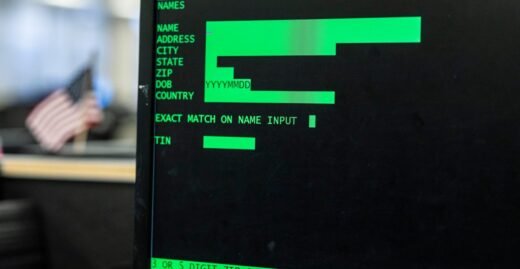
new admin - Oct 26, 2026What do the IRS, banks, airlines, and government infrastructure around the world have in common? They’re all running on systems…

Duchess Meghan confronted dad over child sexual abuse allegations with 2025 letter delivered to hospital bed
new admin - Oct 26, 2026London — Meghan, the Duchess of Sussex, confronted her estranged father last year about child sexual abuse allegations leveled against him,…

Mondays With Beyoncé in My New USC Marshall M.B.A. Course
new admin - Oct 26, 2026[ad_1] Every Monday next semester will be B’Day at the University of Southern California. I am indescribably excited to teach The…