


College CBOs Sick of Just Plugging Holes


Colleges and universities have faced a series of financial shocks for the better part of two decades, from the Great Recession to the pandemic to the volatile federal funding environment under Trump 2.0. In every storm, chief business officers have helped keep their institutions upright. But now—even as many express short-term financial optimism, according to the Inside Higher Ed/Hanover Research 2026 Survey of College and University Chief Business Officers—CBOs want the kind of structural change that might help their institutions withstand not just another crisis but the sustained disruption ahead.
More on the Survey
Inside Higher Ed’s 16th annual Survey of College and University Chief Business Officers was conducted with Hanover Research. The survey included 213 CBOs from public and mostly private nonprofit institutions for a margin of error of six percentage points. A copy of the free report can be downloaded here.
On Wednesday, Aug. 12, at 2 p.m. Eastern, Inside Higher Ed will present a free webcast with expert panelists to discuss the survey findings and financial leadership in today’s rapidly shifting postsecondary landscape. Register for that conversation here, even if you can’t attend live.
This independent editorial survey was made possible by support from TIAA and Strata Decision Technology.
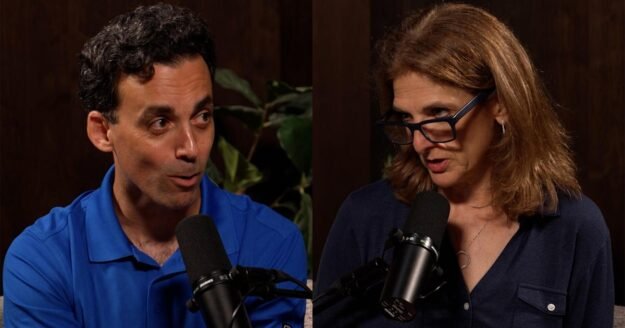
“We’re going to experience a decade and a half of decline,” said strategist Rebeka Mazzone, founder of the consultancy FuturED Finance. “We’ve got a lot of market shifts that are happening at the same time.” And given how long course changes take in higher education, she added (think teach-out plans for sunsetting academic programs), CBOs and their institutions don’t have time to waste.
On the immediate horizon, 62 percent of all CBOs expect their institution to be better off financially a year from now—a jump of nearly 20 percentage points from last year’s survey. Some 83 percent expect financial stability for their institution five years out. Endowments also grew at 83 percent of institutions represented (N=213). And 72 percent of CBOs say they’re at least moderately confident in their college’s cash position over the next five years.
Strong endowment performance is attributable to the generally good stock market. CBOs’ jump in near-term financial optimism may also reflect their increased understanding of the White House’s full agenda for higher education and its impact on their institutional bottom line. But some of these numbers are “way too confident,” said Mazzone, noting that a plurality of CBOs (31 percent) also report that their institution still relies primarily on annual budgeting, without multiyear projections: “They’re not doing five-year projections, so they don’t actually understand what is about to happen in the marketplace.”
Still, CBOs’ confidence dips, to 70 percent, for the 10-year financial outlook. Seven in 10 also say their institution has too many academic programs given current enrollment, up from 59 percent in 2025. The sentiment is similar for academic majors and departments. Relatedly, CBOs are most likely to cite academics as the greatest source of cost-revenue misalignment at their institution (48 percent), ahead of options such as athletics (39 percent) and even financial aid/tuition discounting (30 percent of CBOs over all are worried about this, though the rate increases to 41 percent among private nonprofit CBOs).
Concern about portfolio sprawl didn’t surprise KJ Fagan, assistant vice president for strategic innovation at Pomona College. “When enrollment softens, the instinct is often to add programs to attract new students,” she said—even if the better “but unquestionably more difficult” answer is to cut.
Higher education hasn’t had “to reinvent itself the way other mature industries have to survive smaller markets and more competition,” Fagan said. Yet, institutions that “focus on their real strengths and invest there tend to come out with a stronger reputation and a better competitive position.”
Fagan doesn’t have a CBO background, but she’s one of a growing number of in-house administrative strategists helping institutions prepare for what’s ahead. Someone “needs to be scanning the environment and thinking about where the institution is headed, full-time,” she said, “because the people who’d normally do that are already stretched thin.”
To that point, surveyed CBOs report strong job satisfaction and influence across their institutions, including with their presidents and governing boards. But more than half (56 percent) say their own offices are managing but struggling somewhat. Another 22 percent report significant constraint, and 8 percent say their offices are in a capacity crisis.
Changes Ahead
As the traditional-age enrollment cliff, shifting public attitudes about college value, sweeping federal policy changes under the One Big Beautiful Bill Act, artificial intelligence and other factors align to reshape higher education, CBOs’ top-cited financial risks include enrollment declines (46 percent), structural cost imbalances (42 percent) and infrastructure/deferred maintenance costs (34 percent).
Some 70 percent of CBOs say that the second Trump administration’s impact on their institution’s financial outlook has been at least somewhat negative. Regarding OBBBA specifically, provisions of which took effect this summer, CBOs’ top five financial concerns or planning challenges are:
- Pell Grant eligibility tightening for certain student groups: 49 percent
- New caps on Parent PLUS loans, affecting family borrowing capacity: 46 percent
- Elimination of Graduate PLUS loans and new caps on student borrowing: 45 percent
- Downstream effects on enrollment and state budgets (e.g., Medicaid funding): 31 percent
- Potential program-level loss of direct loan eligibility based on graduate earnings outcomes: 26 percent
Changes to graduate borrowing disproportionately concern private nonprofit doctoral/master’s (77 percent) and public doctoral (68 percent) university CBOs, by institution type. Community college and public master’s/baccalaureate institution CBOs are especially concerned about Pell eligibility tightening (66 percent and 71 percent, respectively).
In one area of potential opportunity, community college CBOs cite planning around Workforce Pell for short-term programs at more than triple the overall rate (62 percent).
In write-in comments about needed structural change in the next three years, the most common theme (representing about one in every five comments, with some themes overlapping) is academic program restructuring, review or elimination: “We need to better align resources with our high-demand academic offerings. Resource allocation changes have not kept pace with market changes, which isn’t an uncommon challenge in higher education, but one that we really need to address,” wrote one CBO, for instance. “Doing so will maximize our margins.”
Another common theme is enrollment growth and retention—unsurprisingly, since this is also CBOs’ favored sustainability strategy elsewhere in the survey, followed closely by optimizing operational efficiency through process improvement. Wrote a second CBO,
“We need to focus on increasing more traditional tuition-based enrollment and online course offerings and rely less on adding more athletes and international students to fill the gaps. We are losing significant international enrollment due to current visa restrictions/policy changes, and the cost per student on athletes is unfavorable. Barriers to making this happen will be a failure to accurately identify the cost/student by program, which would prevent us from focusing our efforts on where we can gain the greatest cost/benefit outcomes.”
Cost reduction and operational efficiency also recur: “Recognize that higher education is a business. Revenue and expense balance is critical to our sustainability,” wrote yet another CBO.
Data Informs; People Decide
Unresolved is whether CBOs and their institutions can act fast enough, based on sufficient data, to make their institutions more resilient: Echoing some of the write-in comments, just 13 percent of CBOs say their institution understands per-student program and activity costs very well.
Mazzone said that while CBO types “like to approach everything as an exact science,” most institutions already have the data they need to make tough calls: “Once you start to offer courses that have fewer than 10 students in them, you are definitely losing money on those courses.” This has implications for upper-level courses and therefore majors, she added, and should prompt conversations about how to give students options while stewarding resources.
Similarly, in areas such as athletics and student services, Mazzone said, “I always say, ‘Take every cost and divide it by a unit of measure that someone else understands.’”
Ruth Johnston, vice president of consulting at the National Association of College and University Business Officers, agreed that “realistically, we can’t afford to offer classes with five students,” and that the data problem is often a cultural one. Yet shared governance around academic changes is critical, she noted: “The faculty have got to be on board and really understand.”
Unsurprisingly, many CBOs also cite cultural barriers to structural change and general deference to legacy thinking.
Planning is an issue: Nearly a quarter of CBOs (23 percent) report that their institution hasn’t modeled OBBBA’s effects on their institution yet. More generally—per Mazzone’s earlier critique—a slight plurality of CBOs are still relying on static budgeting without multiyear modeling. “At a bare minimum you have to do a baseline multiyear model,” she reiterated.
How successful have CBOs been in getting their institutions to adapt structurally, so far? Just about one in 10 CBOs (9 percent) reports that their institution has undergone major restructuring in how it spends money, such as reallocating funds between programs, changing staffing models or centralizing services, in the last two years. Nearly half report some restructuring. This is relatively consistent across institution types.
On mergers and acquisitions, specifically, full mergers remain rare: Just 13 percent of institutions report serious internal merger talks in the past year, a figure that rises to 16 percent among private nonprofits and falls to 9 percent among publics. This is relatively consistent with previous survey years. Short of merger, collaboration is far more common. Forty-two percent of CBOs think it’s likely their institution will share administrative functions with another institution within five years, and 56 percent say it should. Three in 10 report current partnerships with other colleges and universities on academics.
Fagan said that a full merger is rarely the “realistic” answer. She endorsed the “quieter work” of shared services, program partnerships, joint administrative functions and other arrangements that help institutions “find real efficiency without losing the human element that makes the educational experience what it is.” Some large systems have moved to specialize individual campuses for this reason, she added, “so they can consolidate instead of running the same programs everywhere.”
Mazzone said she hopes for more collaboration ahead. But, especially in the case of full mergers, she doesn’t “see there being enough of that activity by the time these institutions recognize how bad of a problem they have.”
Regarding diversification of nontuition revenue streams—which 18 percent of CBOs say would most improve their institution’s bottom line—Fagan said efforts such as events and conferences can be seen as “mission-diluting, which makes it hard to get real institutional cooperation.” Yet, if colleges want to pursue new kinds of revenue, she added, “that has to change first.”
Beyond Survival
Bill Guerrero, a longtime CBO who recently transitioned to a vice president of information technology role at Sacred Heart University, said that for many institutions, “the headwinds are going to be enlightened this October,” when colleges complete their autumn enrollment censuses.
“There were so many schools that survived one more cycle,” he added of the institutions “barely getting through” even this summer paying bills, “hoping and praying that there are butts in seats in September.”
Private nonprofit baccalaureate college CBOs appear especially stressed in several areas of the survey: These CBOs are least likely to rate their colleges’ financial health as excellent, by institution type (at a rate of 13 percent versus 21 percent for the group), and just 49 percent achieved a positive operating margin in the 2024–25 fiscal year (compared to 64 percent over all). Public institution CBOs are more likely to express at least moderate confidence on their institution’s liquidity and cash flow over the next five years than are their private nonprofit peers (81 percent versus 64 percent); the rate is 55 percent for private nonprofit baccalaureate institution CBOs, in particular.
Emily Raimes, executive director of public finance at Moody’s Investors Service, who reviewed several of the survey’s findings, said, “Strong market returns have helped to support balance sheets, and much of the sector will see growing net tuition, but for the portion of the sector that has seen softening enrollment and weaker margins, the future will continue to be challenging.”
Moody’s June analysis for private colleges and universities found operating performance weakened in 2025, to the lowest level in two decades, Raimes noted, adding, “Expense growth remained the sector’s main credit challenge, with median expenses rising 4.6 percent against 3.2 percent revenue growth.” A companion analysis of public institutions also found costs outpacing revenue growth, weighing on margins.
Another force impacting all institution types is AI. Some 57 percent of CBOs say it’s helping them make more informed decisions in their own work, up from 46 percent last year, but only 32 percent say it’s helping their institution run more efficiently. Fewer, 28 percent, agree that AI is helping their institution better support students. And just 10 percent can point to measurable ROI from AI investment so far. This parallels what chief technology officers said about AI’s ROI to date in Inside Higher Ed’s survey of that group earlier this year.
Guerrero doubted even that modest 10 percent figure: “I’m finding it hard to believe that they actually can calculate the ROI,” he said, adding that it’s “chaotic out there.” One reason: The lack of guardrails around AI procurement across higher education, as vendors pitch tools to various campus stakeholders.
Without a governance committee vetting new tools and renewals, Guerrero continued, spending can spiral. And if an institution’s underlying data is already fragmented across systems, feeding it into an AI tool doesn’t necessarily produce trustworthy output. Automation itself introduces new risks, he said, sharing an industry anecdote about an AI agent that paid the same invoice seven times before a human caught on.
CBOs are split on AI’s long-term disruption to their institution’s value proposition. The plurality, 39 percent, anticipate only incremental changes, with the core offering remaining intact. More than half anticipate at least some significant disruption.
To Fagan, the signals on AI are more evidence that structural change needs to happen. “Institutions have layered new functions on top of old ones for years without retooling how the whole enterprise runs,” she said.
Despite the growing complexity, CBOs’ near-term confidence isn’t entirely misplaced, in Guerrero’s view. Optimism matters, he said, as students need to feel comfortable enrolling and staff members need a reason to stay rather than jump ship. Yet transparency and shared decision-making around financial realities are also key: “You can’t mask it so it’s a big surprise to folks.”
Underlining the necessity of both adaptation and shared decision-making, Johnston, of NACUBO, said, “We have to change. So how do we go about doing it?”
Optimism may lie in the question itself, she continued, “because it’s an opportunity to really make change happen.”
You may be interested

Shop TODAY Launches Its First-Ever Sample Sale: See the Goods!
new admin - Jul 16, 2026[ad_1] IE 11 is not supported. For an optimal experience visit our site on another browser.UP NEXTUS Ice Cream Flavors:…

Navy’s elite Blue Angels under investigation after video shows low flyover at Florida beach
new admin - Jul 16, 2026The Navy's elite Blue Angels say they are reviewing the circumstances surrounding a low flyover at a beach in Florida. Video…

Proton’s CTO says there’s no such thing as a good backdoor
new admin - Jul 16, 2026Today on Decoder, we’ve got the first of a two-part series on the systems that run the world: I’m talking…