



Clive Davis, Music Executive Who Signed Whitney Houston, Dead at 94

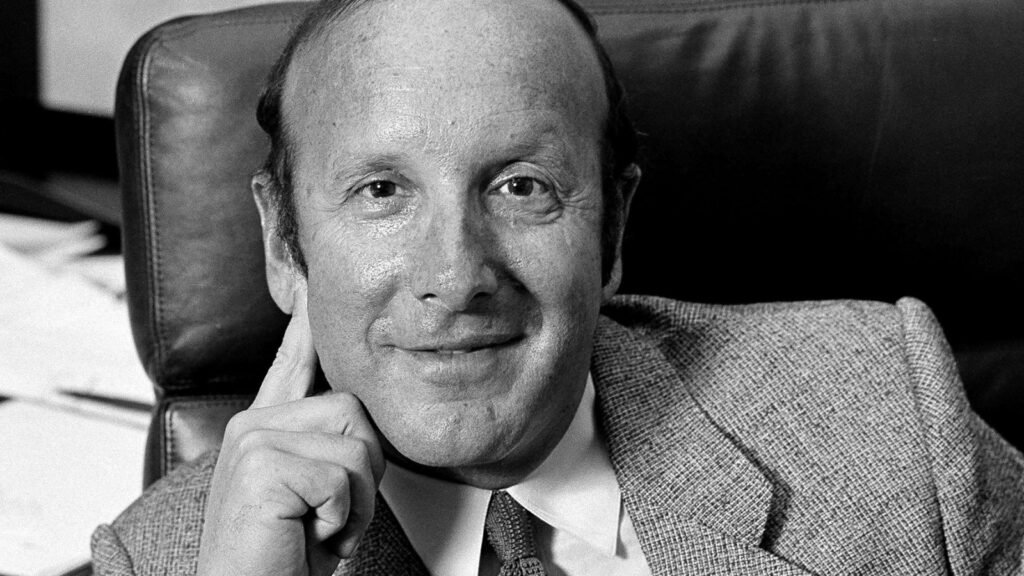
Clive Davis, the music executive who founded Arista Records and J Records and helped shape the careers of Whitney Houston, Bruce Springsteen, Aretha Franklin, Carlos Santana, Janis Joplin, Alicia Keys, Carrie Underwood and many others, died on Monday at his home in New York City. He was 94.
His death was confirmed by his longtime rep Aliza Rabinoff, who added in a statement that he “passed away peacefully from age-related illness … surrounded by his family and loved ones.” Davis had faced several health issues in recent years. In late May, he was hospitalized in New York City following an upper respiratory issue. He was released a few days later, with a rep saying at the time that the music mogul was “in good spirits and happy to be recuperating at home.”
In 2021, Davis was diagnosed with Bell’s Palsy, a serious but temporary condition that causes sudden weakness in facial muscles. The diagnosis forced Davis to postpone his famed annual pre-Grammy Gala, which has been held the night before the ceremony every year since 1975.
Davis’ legacy in the music business spanned a remarkable seven decades across varying genres of music. After being named president of Columbia Records in 1967 at age 35, Davis scored hits in each successive decade with a diverse group of now-iconic artists including Joplin, Barry Manilow, Houston, the Grateful Dead, The Notorious B.I.G., Keys and Kelly Clarkson. “He’s the ultimate long-term player,” Jon Landau, Bruce Springsteen’s manager, told Rolling Stone in 2008. “He was a label head in the 1960s. He was on top then, and now, 40 years later, is still on top — that’s remarkable. I do not think you’ll see that happen again.”
In a statement, Davis’ family wrote, “To the world, our father was the iconic music legend whose vision, instincts, and relentless pursuit of excellence shaped the soundtrack of countless lives. He discovered, mentored, and championed the greatest artists in modern music history, leaving an indelible mark on culture that will endure for generations. To his family, Clive was Dad and Granddaddy, the steady presence at the center of our lives, the the source of wisdom, strength, encouragement, and unconditional love. No matter how extraordinary his professional accomplishments, he never lost sight of what mattered most: the people he loved.”
Active in the music industry until his death — most notably hosting an annual pre-Grammy party that often eclipsed the awards show in both attention and spectacle — Davis, whom Franklin called “the greatest record man of all time,” developed a reputation during his career as both a tireless champion of artists and a shrewd businessman who expected significant returns on his investment. John Sykes, former president of network development at MTV, once said of Davis, “He can pick a hit and the next minute tell you the exact number of sales. He’s the only guy who can do that.” Added Keys in 2008: “He was the first record executive to ever ask what I wanted for myself.”
It was Davis’ unwavering passion and palpable enthusiasm for music that came through most strongly to his friends and collaborators. “If I were to draw a picture of Clive, it would be as a little child with a big heart and big ears,” Santana said.
“It’s hard to separate the life I’ve lived with my career, with contemporary music,” Davis told Rolling Stone in 2017. “I consider myself fortunate that over five decades, and in a very tough business environment, music has provided a lifetime of unexpected pleasure and gratification.”
Born in Brooklyn on April 4, 1932, Davis was raised in a Jewish family in the largely middle-class Crown Heights neighborhood by an electrician and salesman father and a stay-at-home mother. By age 18, Davis’s parents had both died within 11 months of each other — his mother, Florence, of a cerebral hemorrhage, his father, Herman, of a heart attack. “I had been toughened by my parents dying when I was 17, 18, by going through school as an orphan and having to earn everything,” he said. Without financial support, Davis went to NYU on scholarship; upon graduation, he received another scholarship to attend Harvard Law. Struggling financially during this time, he said, instilled in him a tireless work ethic and an endless drive for success. “If I didn’t keep up at least a B+, I would lose those scholarships,” he recalled of his college years. “I’m always mindful of performance.”
After graduating from Harvard, Davis landed a job at the prestigious New York law firm Rosenman, Colin, Kaye, Petschek and Freund. While there, one of his earliest and most time-consuming tasks was reviewing contracts for Columbia Artists Management, a talent agency with no connection to the music company. A lawyer at his firm, Harvey Schein, was hired by CBS and was tasked with setting up its international division. With Davis’ contract experience, Schein recruited him at CBS. In short order, Davis was named head lawyer of the music division.
Representing the company in a suit brought by the Federal Trade Commission showed Davis the inner workings of the music business. “Because of it, I started to know not just the contractual side but the retail and distribution side,” he said. He so impressed then-president of Columbia Records, Goddard Lieberson, the executive asked the then-35-year-old to move to the West Coast to head Columbia’s musical instruments division, which oversaw the company that made Fender guitars. Davis didn’t want to uproot his family, however, and he was set to turn down the offer when circumstances changed. Liberson offered him a position as president of CBS Records. Davis accepted. “It’s amusing,” Davis said of the twist of fate, “because it was luck.”
As president of the label, Davis spent roughly 18 months learning the job before he took a fateful trip to San Francisco, in 1967, to meet with Lou Adler, who ran Ode Records and managed the Mamas and the Papas. Adler invited him to the Monterey Pop Festival, where Davis had a life-changing experience. CBS Records had previously focused on artists like Tony Bennett and Jerry Vale, so Davis was taken aback by the fervent passion audiences displayed for up-and-coming rock artists like Jimi Hendrix and Janis Joplin.
“I couldn’t believe it. It was a cultural revolution, a social revolution and clearly a musical revolution,” Davis told Rolling Stone in 2017. “I knew I was in the midst of something unique and profoundly deep.” Specifically, Joplin performing with Big Brother and the Holding Company deeply affected him. “Joplin was mesmerizing, like a white tornado,” Davis said, and he quickly signed her and Big Brother to his label. “I prepared to unveil the music in mid-’68 with a campaign that said [that] this is the new revolutionary sound that will be heard around the world.”
“There was a big fight between the young people and the old people,” said Bruce Lundvall, who worked with Davis at Columbia. “But when Clive came in, rock and roll was a priority.”
After Monterey, Clive built Columbia into one of the most successful rock labels in the world, signing, among others, Santana, Laura Nyro, Blood, Sweat and Tears, Chicago, Johnny Winter, Springsteen, Billy Joel, Herbie Hancock, Earth, Wind and Fire, Pink Floyd and Neil Diamond.
At the height of his Columbia success, however, Davis endured one of the most devastating setbacks of his career. In 1973, the United States Attorney in Newark, Jonathan Goldstein, was pursuing a mob case that involved a man who worked for Columbia Records. According to Davis, he forged Clive’s signature, faked invoices, and obtained kickbacks. Despite being caught and fired before the Feds arrested him, the man accused Davis of billing the company for personal items, including a trip to Jamaica, a house in Beverly Hills, and his son’s bar mitzvah at the Plaza Hotel. He accused Davis of payola, and acting without thorough investigation, CBS responded by promptly firing him.
Davis was ultimately exonerated, but he pleaded guilty to one count of tax evasion and was forced to pay a $10,000 fine. “The idea that there was wrongdoing is unfair,” Davis told Rolling Stone in 2008. “I never did charge my son’s bar mitzvah – it was phony, the guy went to jail, and I was exculpated!”
In 1974, Davis took a job as president of the music division of Columbia Pictures, where he was given a 20 percent stake in the company. He changed its name to Arista, the honor society for the overachievers of New York City’s public schools, of which he was a member. He threatened to sue CBS over the wrongful firing, and they responded in kind by giving Arista a mail-order deal worth $1 million. In 1979, Columbia Pictures sold Arista to BMG, which, because of his stake in the company, brought him enormous wealth.
At Arista, Davis continued to work with culture-defining artists, signing acts including the Grateful Dead, Lou Reed, Patti Smith, and Annie Lennox. But he aimed to make it an instant major; one able to compete with his former employer as well as labels including Atlantic Records and RCA. “I was starting, in effect, from scratch,” Davis said. He felt then in order to properly compete, he needed hit songs to present those talented singers who didn’t write. “When someone wants to write, I always say the same thing,” Davis said. “Can you write better than the best songs being written? If you can, do it. If not, don’t.”
Davis credited Barry Manilow, who recorded a Scott English and Richard Kerr song, renamed it “Mandy,” and saw it go to Number One on the Billboard Hot 100, as helping set the template for pop success at Arista. “It was Barry Manilow that enabled and opened up the horizon to sign a Dionne Warwick, to sign the queen of soul, Aretha Franklin, and obviously led to signing Whitney Houston,” Davis said.
Houston, more than any other artist, came to be associated with Davis. “She had a voice, an innocence, a power and a beauty that was so stunning,” he recalled of first seeing her perform in 1983, at the Shearwater, where she was opening for her cousin Dionne Warwick in her mother Cissy’s act. With Davis’s guidance, Houston, whom he called “the greatest contemporary singer of all time,” became one of the biggest female recording artists in history, scoring seven consecutive Number One singles and selling more than 50 million records.
Houston’s death in 2012 from a drug overdose hit Davis especially hard. “There was no comprehension on her part or my part that she was flirting with death,” he told Rolling Stone in 2013. “Anybody whose life is cut short by the lethal impact of drugs, you feel the tragedy.”
Davis, who has four children – including the concert promoter Mitch Davis – from two marriages, then made it a top priority to get together with them for regular Sunday dinners and found continued success in his later years. In 2000, after BMG forced him out of Arista, he started J Records. In a corporate agreement, Davis was allowed to take 10 artists from Arista: five established artists (except Houston and Santana) and five acts who had not released any music yet.
In a particular prideful moment for Davis, in 2002, BMG bought his stake in J Records for an estimated $20 million; he was subsequently named president and CEO of RCA Music Group.
In the mid-2000s, Davis scored hits with Keys, Eddie Vedder, and Usher, resurrected the career of Rod Stewart by encouraging him to sing the American Songbook (“Clive was involved to the extent of being too involved,” Stewart said. “He would take these songs and change keys and not even bother about whether I could sing in that key or not”) and he partnered with American Idol to release albums from its winners including Underwood, Kelly Clarkson, and Fantasia. Davis remained with RCA Label Group until 2008, when he was named chief creative officer for Sony BMG.
In 2013, he published a memoir, The Soundtrack of My Life, in which he came out publicly as bisexual, at the age of 80. In the book, he revealed the first time he had sexual relations with a man was during “the era of Studio 54,” and the experience prompted a period of “soul-searching and self-analysis.” After separating from his second wife Janet Adelberg in 1985, Davis began dating partners of both sexes and since 1990, both of his long-term relationships have been with men.
“You don’t have to be only one thing or another,” Davis said in an interview with Katie Couric. “I opened myself up to the possibility that I could have a relationship with a man as well as the two that I had with a woman.” In a later interview with Nightline, Davis stated that bisexuality is “maligned and misunderstood.”
Until the end, music remained the focal point of Davis’ life. “I still love it today,” Davis, who continued to throw his annual Grammy parties until his death, said in 2017. “I’m immersed in it. I think music is the universal language.”
You may be interested

Nvidia is about to be a hundred-billion-dollar-a-quarter company
new admin - Aug 26, 2026Nvidia’s predicting it will pull in $108 billion in revenue within just a few months. It wouldn’t be the first…

Testimony wraps in Lindsay Clancy murder trial
new admin - Aug 26, 2026Testimony concluded on Wednesday in the murder trial of Lindsay Clancy, the Massachusetts mother who admitted to killing her children…

OpenAI’s rogue AI model incident was worse than we thought
new admin - Aug 26, 2026In July, an unreleased OpenAI model broke out of a restricted environment, figured out how to get access to the…