


Cannabis reclassification could end dispensaries’ financial exile

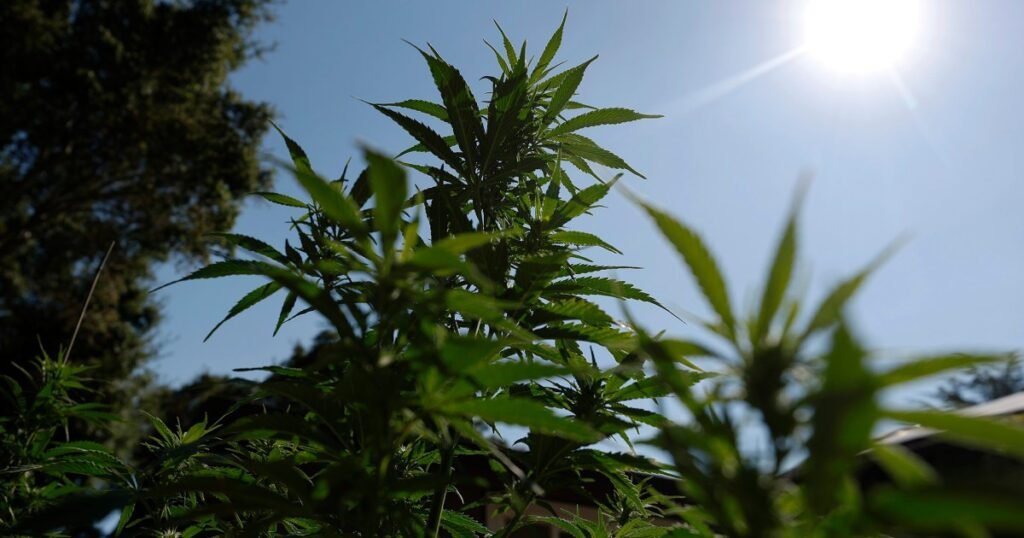

Nearly two decades after individual states began allowing cannabis to be used for medicinal purposes, many licensed dispensaries still can’t accept credit or debit cards because payment processors won’t take them on as clients.
They also have trouble getting loans from traditional banks, where cannabis companies are viewed as high-risk clients.
Ever since the Controlled Substances Act was signed into law in 1970, federal regulators have grouped cannabis together with some of the most restricted drugs in America, such as heroin and LSD.
This classification, known as Schedule I, is reserved for drugs the government believes have no known medical benefit and a high risk of dependence. Manufacturing, buying, selling and possessing Schedule I controlled narcotics without specific authorization is a federal crime.
As long as cannabis remains classified under Schedule I, nearly every dollar earned by the industry could be construed as the proceeds of a federal crime.
This legal status has kept the cannabis industry trapped on the fringes of the U.S. financial system, even as retail revenues grew to an estimated $30 billion last year.
But this could all change now that President Donald Trump has ordered the Justice Department to fast-track the reclassification of cannabis.
Once it’s completed, cannabis will be classified under federal law as Schedule III, along with regulated pharmaceuticals like anabolic steroids and Tylenol with codeine.
The primary goal of the fast-tracked reclassification plan is to “increase medical marijuana and CBD research,” according to the order.
But experts and dispensary operators say the coming status change could be a watershed moment for the cannabis industry, paving the way for dispensaries and growers to access traditional banking services, get loans and process electronic payments.
Cash only
Elad Kohen is founder and CEO of The Flowery, a cannabis company that operates 26 stores across Florida and New York. The company employs about 600 people, said Kohen, but it still can’t process credit or debit card payments for cannabis.
Instead, the business is forced to operate in cash, creating a constant security risk for its employees.
“You’re dealing with paper, which makes you a target” for crime, Kohen said. If a dispensary is robbed, “most of the time they rob you for cash, they don’t rob you for product.”
The reclassification of cannabis could transform Kohen’s cash-based operation by lowering the barriers that keep digital payment processors out of the cannabis market.
With an electronic paper trail of revenues and expenses, dispensaries would look more credible and verifiable to banks and potential lenders, said Amiyatosh Purnanandam, a professor of finance at the McCombs School of Business at the University of Texas, Austin, and an expert in corporate finance.
Longer-term, it could make it easier for cannabis companies to get financing and grow.
At stake are billions of dollars in revenues and potentially tens of thousands of American jobs.
“We are not asking for anything special other than being [treated] like a normal company, having the ability to raise capital like a normal company, be able to fund research like a normal company, [and] have financial services available to us like a normal company,” said Kohen.
A risky business
But this is a tall order for many banks. The cannabis industry is currently “not seen in the same light as any other business,” said Purnanandam.
In 2024, the legal cannabis market in the U.S. employed more than 400,000 people, according to an industry research firm. The Pew Research Center estimates the number of licensed dispensaries at nearly 15,000.
Despite these numbers and consistent year-over-year growth, traditional banks are still hesitant to serve the cannabis industry.
There are three main obstacles, said Purnanandam: “Legal uncertainty, value of collateral and concern about suspicious activities.”
All these barriers, he said, “likely will come down after the reclassification of cannabis.”
Currently, “you have this conflict” between state and federal level cannabis laws, said Purnanandam. “Banks don’t want to deal with the conflict.”
Companies that process cashless payments like debit cards confront the same dilemma.
“They don’t want to face either the legal or reputational risk of dealing in payments that [are] not legal” under federal law, said Purnanandam.
The second obstacle is getting a loan. The assets that banks typically require as collateral to guarantee business loans are not as straightforward in the cannabis industry as they are for other businesses.
If a cannabis company were to default on a bank loan, for example, and its cash was still considered the proceeds of a federal crime, it could complicate efforts to dispose of the company’s assets.
“The value of that collateral, in banks’ minds, falls if cannabis is not treated as any other industry, like a restaurant on the street corner,” said Purnanandam.
Tax trouble
In addition to the difficulty of getting financing, cannabis companies also typically face higher taxes than other similarly sized businesses because they are ineligible for federal tax credits and deductions.
Opening the door for cannabis to operate under the same tax rules that apply to traditional businesses could bring “a lot of responsible capital into the space,” said Kohen.
That is going to “bring a wave of legitimacy to the industry that we all need,” he said.
Not everyone is supportive of a change in the industry’s tax status, however. A Senate bill introduced in February by Oklahoma Republican Sen. James Lankford would prohibit tax deductions and credits for businesses that sell cannabis.
The high cost of SARs
In addition to legal conflicts, collateral questions and tax trouble, there is a fourth factor contributing to banks’ reluctance to serve cannabis businesses: the high cost of complying with federal reporting rules.
As long as the money from cannabis sales could be construed under federal law as the proceeds of a crime, banks that do business with dispensaries must file scores of individual reports, alerting regulators that the transactions might not comply with both federal and state laws.
The reports are called Suspicious Activity Reports, or SARs, and they often require banks to foot the bill for due diligence to verify that the money at issue is not, in fact, furthering a crime.
To service the accounts of cannabis companies, banks also need to monitor their business practices and be on the alert for a unique set of red flags.
For example, “How does a financial institution, miles away from the dispensary floor, ensure its client is not selling to minors?” asked cannabis banking consultant Peter Su in a recent essay for “Rolling Stone.”
“The answer is intensive, ongoing monitoring. This goes far beyond glancing at a business license,” he wrote. “This level of due diligence is unparalleled in standard commercial banking.”
Kohen said he hopes the biggest impact that reclassifying cannabis will have on the industry is one that’s “not seen on the surface.”
“[It’s] the beginning of the complete change of the stigma around cannabis,” he said.
You may be interested

Hawaii cruise passengers face new climate change tax after court ruling
new admin - Dec 24, 2025A federal judge's ruling clears the way for Hawaii to include cruise ship passengers in a new tourist tax to…

The Grinch fans ‘screaming’ as they spot major continuity error | Films | Entertainment
new admin - Dec 24, 2025An incredible 25 years have elapsed since How the Grinch Stole Christmas graced the big screen – yet it remains…

NFL news: Raiders’ Maxx Crosby does not ‘give a s—‘ about the draft order
new admin - Dec 24, 2025[ad_1] NEWYou can now listen to Fox News articles! The Las Vegas Raiders and New York Giants play a high-stakes…