
Campus Speech and Academic Freedom


Campus Speech and Academic Freedom, the new book from University of California, Berkeley, law school dean Erwin Chemerinsky and University of California, Irvine chancellor Howard Gillman, is an excellent analysis of free speech on college campuses, written by two administrators who are among the top experts and best defenders of free expression in higher education. It includes a thorough critique of censorship by the Trump administration and state governments across the country, explaining why this repression is “the biggest threat to campus free speech and academic freedom since the McCarthy era.” The book is correctly critical of administrators and activists who engage in censorship, and offers many good recommendations for colleges to improve their policies and practices.
But there are major problems with how the authors define academic freedom and encourage administrators to punish professors for advocacy in the classroom, ban collective faculty speech and selectively target protests for bans under time, place and manner excuses.
I’ll address these other issues in upcoming columns, but let me begin with the question of academic freedom and classroom advocacy. Unlike some experts who make the mistake of presenting a false choice between free speech and academic freedom as the guiding principle of a college, Chemerinsky and Gillman recognize that both concepts must apply, and they often overlap in important ways. Unfortunately, their vision of academic freedom is too narrow; they regard academic freedom as a much more limited type of free speech that applies only to professors acting professionally in their work.
The authors claim, “Academic freedom does not protect faculty members in using classroom spaces as forums for their personal political agendas or, by extension, to promote their personal religious views.”
But this is wrong. Because academic freedom protects teaching, research and extramural utterances, surely it must include personal political views expressed in any of these arenas; no one could justify a college disciplining a professor for expressing personal political agendas in their publications or their social media, and there is no special classroom exemption to these principles of academic freedom.
The correct way to understand academic freedom is that it protects academic merit as the basis of decisions by prohibiting the punishment of professors for their “political” beliefs unrelated to scholarly accomplishments.
This belief that professors who mention their personal political views in class or in their research are automatically bad teachers and bad scholars is wrong as a presumption and unsupported by any evidence; even if you think that political advocates tend to be bad teachers, colleges still must prove bad teaching in any specific case rather than assuming it by citing the mention of a political agenda.
Professors who fail to do their jobs and teach their politics instead of the subject of their classes can still be punished—but only for failing to do their jobs, and not for the mere mention of politics.
Academic freedom must protect professors who discuss politics because it is far too easy to dismiss important academic insights as “personal political agendas” and for controversial ideas to be selectively punished merely for being political. If we allow every professor who utters one “political” sentence in a class to be suspended, academic freedom will be in jeopardy everywhere and instructors will self-censor anything deemed controversial to avoid the threat of punishment.
Because almost all professors say things unrelated to the content of a course, bans on political advocacy are inevitably a form of viewpoint discrimination against controversial ideas. Professors who waste class time on some personal topic will go unnoticed, while professors who waste the same amount of class time on a “political” topic will be severely punished under this standard.
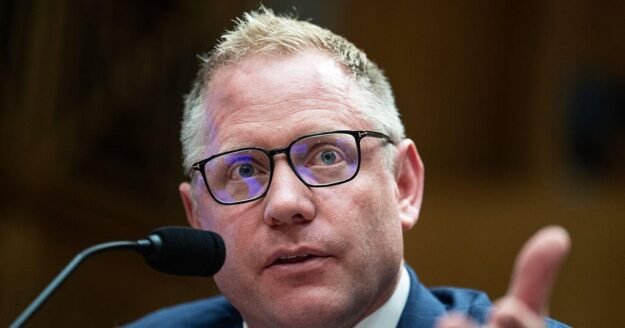
In a recent op-ed, Chemerinsky supported UC Berkeley’s suspension of computer science instructor Peyrin Kao for discussing his criticism of Israel after one class and briefly mentioning his hunger strike in another class: “Neither academic freedom nor the First Amendment protects the right of an instructor to use the classroom to advance a personal ideology totally unrelated to the subject matter of the course.” As I’ve argued, academic freedom must protect this right in order to prevent administrators from punishing controversial speech.
Chemerinsky wrote, “No one would deny that if Kao had done this during class time, he could be disciplined without any plausible claim of academic freedom or freedom of speech. Doing so immediately after class, in the same classroom, with the students still present, is no different.” I would deny that Kao could be disciplined merely for criticizing Israel in his class. And doing so after class is very different. Not only would I deny Chemerinsky’s assumption, but I cannot understand how there is any plausible defense of his position. If Chemerinsky thinks that any professor can be disciplined who has ever uttered a sentence unrelated to their course content, either during or after class, then 99% of all professors could be immediately fired. Any professor who has ever said, “How about this weather?” in a class not related to meteorology is guilty of saying something unrelated to a class—but no one imagines this would ever justify a suspension.
The only alternative is that Chemerinsky thinks professors can be selectively fired for saying controversial things, even if uncontroversial professors use the same amount of class time on content unrelated to the course. But that is clearly viewpoint discrimination, and violates both free speech and academic freedom protections.
The AAUP has a clear standard that controversy cannot be grounds for punishment: “The AAUP has long maintained that instructors should avoid the persistent intrusion of matter, controversial or not, that has no bearing on the subject of instruction.” Professors can only be punished for unrelated speech if it is so extensive that it meets a “persistent intrusion” standard where faculty are failing to teach the content of their classes—something that Kao was never accused of doing.
But because Chemerinsky and Gillman propose a narrow theory of academic freedom that only permits professional speech in the classroom, it opens the door to targeting controversial faculty for their opinions.
The mistake Gillman and Chemerinsky make is a common one, but this narrow view of academic freedom poses new dangers today. The University of North Carolina system is currently planning to impose a new policy that explicitly states academic freedom does not include “teaching content clearly unrelated to the course description”—an exception for even the smallest amount of expression, thereby allowing for selective punishment of faculty who express any controversial ideas deemed “unrelated” to a class.
At a time of unprecedented political persecution at American colleges, when many scholarly ideas (including basic scientific concepts such as climate change) are denounced as “political agendas,” it is alarming to see leading advocates of campus free speech call for radically narrowing the meaning of academic freedom to allow repression of “political” ideas in ways that will endanger free expression.
You may be interested
How some Americans are turning to private firms to flee the war zone
new admin - Mar 05, 2026IE 11 is not supported. For an optimal experience visit our site on another browser.Now PlayingHow some Americans are turning…
Keith Olbermann sparks outrage with social media attack on Lou Holtz
new admin - Mar 05, 2026[ad_1] NEWYou can now listen to Fox News articles! Former ESPN broadcaster Keith Olbermann once again incited backlash on social…
Rep. Tony Gonzales admits to affair with former staffer, calling it a “lapse in judgment”
new admin - Mar 05, 2026Republican Rep. Tony Gonzales of Texas acknowledged for the first time Wednesday that he had a relationship with a former…