




Bringing Admissions Into the 21st Century

Could videos replace traditional essays in the college admissions process? How does a college measure an applicant’s ability to engage in civil discourse? What role should artificial intelligence play in the admissions process? Should transcripts show students’ skills rather than just their classes and grades?
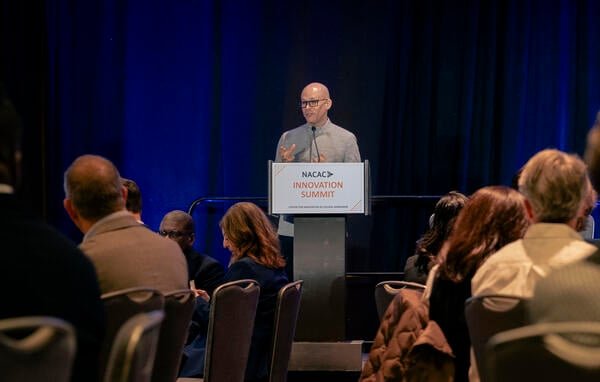
These are some of the questions participants sought to answer at the inaugural summit of the National Association for College Admission Counseling’s Center for Innovation in College Admissions, held Thursday in Washington, D.C. Hundreds of college counselors, admissions leaders, researchers and policymakers gathered to discuss how to modernize the college application process, in what NACAC CEO Angel B. Pérez said was a rare opportunity for different stakeholders to come together.
Seth Allen, vice president for enrollment management and dean of admissions at Dickinson College in Pennsylvania, said he felt the summit was timely, as innovations like AI and direct admissions have already begun altering the admissions landscape.
“It’s decades and decades that we’ve been conducting admissions, for the most part, in a similar way. And now we find ourselves in the 21st century and we find ourselves with experiments … that are going to upend the profession as we know it unless we think about this proactively,” he said.
The three key areas the summit explored were reinventing structures around the application process, seeking new ways to evaluate a student’s college readiness and developing a healthy and diverse admissions workforce.
At the summit, several educational technology companies presented on the tools they’ve developed to help improve college admissions, such as Dialogues, the tool by Khan Academy founder Sal Khan that allows students to participate in anonymous conversations about controversial topics. Dialogues creates a “portfolio” for each participant that some universities now accept as part of their applications as a way of evaluating a student’s civil dialogue skills.
Another company presented an alternative transcript that allows students to highlight their competencies, such as critical thinking, collaboration, and communication, as well as project-based and experiential learning, rather than just their grades and the courses they’ve taken. Called the International Big Picture Learning Credential digital transcript, the presenters said it’s already being used at colleges across Australia. The tool aims to help students—especially those whose traditional metrics, like test scores and grades, may not be as appealing to colleges—stand out for other accomplishments.
Some of the sessions “became pretty spicy, a little combative,” Pérez said. “There was a lot of disagreement and that’s exactly what we wanted, right? Because in design thinking, you’re prototyping, you’re testing ideas out. So the fact that we were able to get people in a room and, for example, for a high school counselor [to say], ‘I don’t know how that’s going to land with a high school student’ … I think that’s how problems are going to be solved.”
He noted that NACAC was not endorsing the products featured at the event, but that the association wanted to give them the opportunity to receive feedback from admissions leaders “on how to develop these tools in an ethical and student-friendly way.”
At the panel for the IBPLC, participants noted that counselors at many U.S. high schools do not have the right advising structures or their advisers would not have the bandwidth to administer the IBPLC digital transcript. Meanwhile, at a discussion on video essays, participants raised concerns about accessibility for students for whom English isn’t their first language and questioned whether coaching students on these videos will simply become a new product offered by independent college counselors, according to Allen.
Allen said he is hopeful that some of the proposals presented at the innovation summit could curb students making decisions like what extracurriculars to participate in or where they work based solely on what will look good to admissions officers.
“I think there may be less trust in the admissions process today, simply because so much has been written and shared about what it is admissions looks for that you can, with minimal effort, align your life” with those perceived requirements, he said. “There is really a yearning on the part of many people in the profession to try to find authenticity again.”
You may be interested

Pirates’ Oneil Cruz faces criticism for defensive effort
new admin - Mar 30, 2026[ad_1] NEWYou can now listen to Fox News articles! Pittsburgh Pirates center fielder Oneil Cruz has come under fire for…
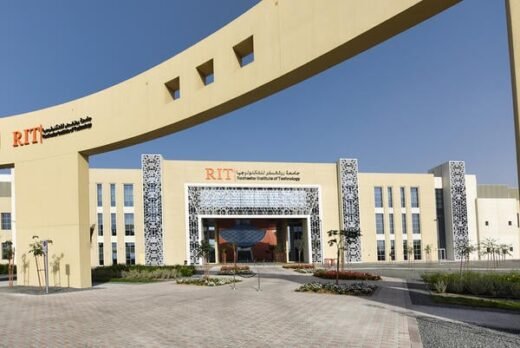
Iran Targets U.S. Universities in the Middle East
new admin - Mar 30, 2026[ad_1] Iran’s Islamic Revolutionary Guard Corps warned on Sunday that U.S. universities are “legitimate targets” after alleged U.S.-led attacks on Tehran University…

Trump warns a ground invasion in Iran could happen despite diplomacy attempts
new admin - Mar 30, 2026Trump warns a ground invasion in Iran could happen despite diplomacy attempts - CBS News Watch CBS News President Trump…