

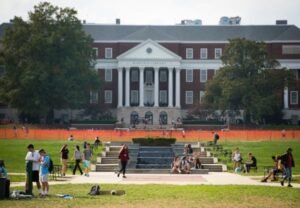


Asian Campuses Shut to Save Energy Amid Middle East Conflict


Universities in Bangladesh and Pakistan have been forced to close campuses and move teaching online as governments introduce emergency measures to conserve electricity and fuel amid an energy crisis linked to conflict in the Middle East.
Similar conservation measures are being introduced elsewhere in the region. In the Philippines, government agencies, including state universities, have been instructed to cut fuel consumption by at least 10 percent in recent days.

Many Asian economies are particularly vulnerable to sustained oil price shocks because of their reliance on imported energy, according to ING, a banking and financial services group.
Bangladesh ordered all public and private universities to close starting March 9, moving up the Eid al-Fitr holiday period to reduce electricity use nationwide.
Authorities said the shutdown would ease pressure on the country’s strained power system.
University campuses consume large amounts of electricity to operate residential halls, classrooms, laboratories and air-conditioning systems, meaning the early closure could significantly reduce demand, according to officials.
Bangladesh, which relies on imports for 95 percent of its energy needs, has already imposed daily limits on fuel sales after panic buying and stockpiling.
Pakistan has directed universities and higher education institutions to move classes online as part of a wider package of fuel-saving measures.
Prime Minister Shehbaz Sharif announced the measures in a televised address, warning that disruptions to maritime traffic in the Strait of Hormuz have placed Pakistan’s economy under pressure.
“The entire region is currently in a state of war,” Sharif said as he outlined the emergency measures.
The government has also introduced a four-day workweek for government offices, cut fuel allowances and encouraged remote work across both the public and private sectors.
Officials said the university shutdown was intended to reduce electricity consumption as demand rises with increased air-conditioning use during warmer months.
Oil prices have climbed sharply since the escalation of the conflict, with WTI crude rising to more than $115 a barrel on Monday, according to reports.

You may be interested

U.S. service member killed in Northern Iraq, says U.S. Central Command
new admin - Jul 19, 2026IE 11 is not supported. For an optimal experience visit our site on another browser.Now PlayingU.S. service member killed in…

Transcript: Border czar Tom Homan on “Face the Nation with Margaret Brennan,” July 19, 2026
new admin - Jul 19, 2026The following is the transcript of an interview with Tom Homan, Trump administration border czar, that aired on "Face the…

Trump watches World Cup final with Melania and Infantino in suite
new admin - Jul 19, 2026[ad_1] NEWYou can now listen to Fox News articles! President Donald Trump was spotted at New York/New Jersey Stadium for…