


As Lawsuits Against Trump Pile Up, Strategies Shift

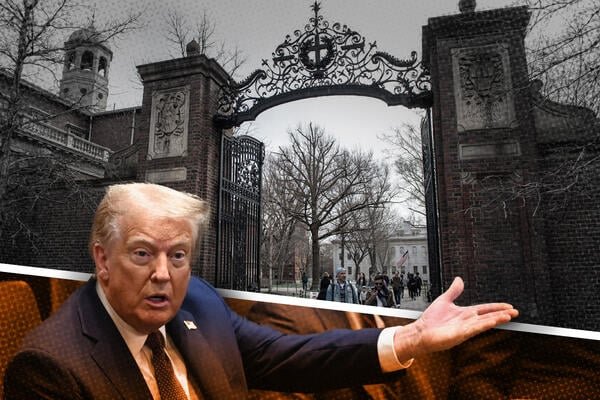
More than a year into President Donald Trump’s second term, federal courts continue to be a key forum for college and university advocates to stymie the president’s flood-the-zone attack against higher education, but the challengers’ strategies have evolved.
The Trump administration has backed off in some of the cases while going on the offensive against some colleges with lawsuits of its own. One legal expert expects to see more targeted challenges as plaintiffs and the government learn from this first round of litigation.
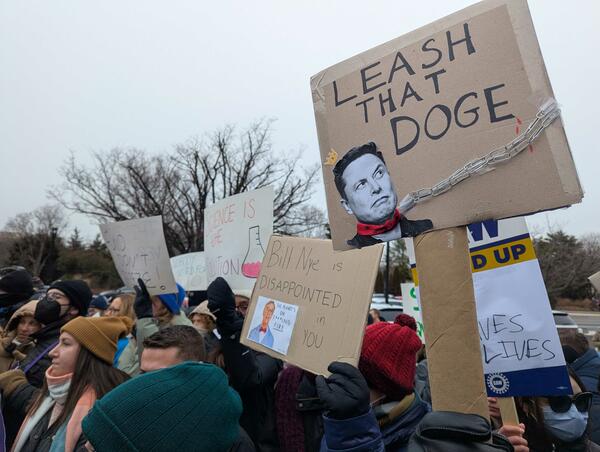
In the last year, higher ed advocates have notched a number of victories against the Trump administration, blocking attempts to freeze federal research funding, restrict international students and crack down on diversity equity and inclusion. Most recently, a district court temporarily barred the Education Department from collecting data on applicants’ race and gender.
However, the Trump administration has also secured favorable rulings, particularly from the Supreme Court, which allowed government agencies to cancel certain research grants and fire thousands of employees. Nonetheless, according to an Inside Higher Ed analysis of more than 60 key higher ed lawsuits, the government has the upper hand in just 17 cases as of April 1. Those include cases regarding the rights of Trump’s Department of Government Efficiency and whether the government can add a $100,000 fee to H-1B visas.
Of the 64 cases in the database, the parties representing educational institutions, associations, Democratic-led states and other advocates are so far winning in 33 lawsuits. The remaining 14 have yet to reach a clear ruling.
One expert told Inside Higher Ed that many of the snags Trump’s policies are facing in court are due to the speed with which the Trump administration moved last year.
In order to drop new directives and policies as frequently as they did, the White House along with the Departments of Education, Justice and Health and Human Services bypassed a number of administrative procedures, courts have found. Now, those decisions are coming at a cost.
“At the very beginning of this administration, what we saw was a lot of pushback on the ‘Oh my gosh, you’re breaking everything,’” said Emily Merolli, founding partner at Sligo Law Group, a firm staffed by former attorneys from the Department of Education. “And now it’s more focused … What we’re seeing is litigation that is both more direct and more nuanced.”
As cases exit the emergency stage and move toward trials and final judgments, more details about the administration’s actions are emerging via briefings and discovery. For example, in a case challenging grant cuts at the National Endowment for the Humanities, a recent tranche of discovery materials suggest those decisions were rushed and chaotic; the plaintiffs filed for summary judgment shortly after the evidence was released.
With more evidence in hand and lessons learned from the first wave of district court rulings, challengers have been able to figuratively take a step back, regroup and come at their cases with a newfound sense of direction, Merolli explained. As a result, they’ve been able to see the bigger picture of Trump’s agenda, including its flaws, and craft more successful arguments.
What was once a frenzy of complaints filed by education advocates as a broad response to sweeping executive actions, she said, has slowly become a more targeted attack, centered on the implications of particular policies and the specific programs they affect.
“We have a little bit more experience under our belts and can say, ‘OK, I see how this puzzle piece might fit into the broader policy objectives of the administration,’” she said. And from there, “we’re better able to respond.”
Grants to federal grant cuts spurred a number of lawsuits, which had mixed results.
Still, the litigation is far from over. As of April 1, 50 out of the 64 cases remain ongoing, and only 30 have reached appeals. An even smaller number of cases have reached the Supreme Court.
As education groups continue to adjust, here are some key trends we’re following.
Trump v. Individual Institutions
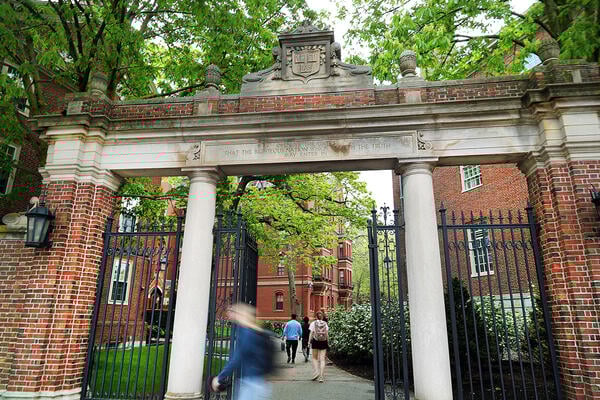
One notable recent shift is how the Trump administration is using the court system—rather than funding freezes—to go after individual institutions that don’t accede to its demands. For instance, in March, the Justice Department sued Harvard University, accusing the institution of inadequately responding to reports of harassment against Jewish students on campus and seeking to recover billions in federal funds. (Harvard is in the middle of a year-long battle with the administration and has so far resisted the president’s demands.)
The Department of Justice also accused Harvard in a separate February lawsuit of failing to comply with a federal investigation into its use of DEI in admissions. The administration also sued the University of California system over its response to reports of antisemitism, which the government’s lawyers say created a hostile work environment for Jewish and Israeli employees at UCLA.
Harvard is one of two universities that has sued the Trump administration on its own.
John Tlumacki/The Boston Globe/Getty Images
Both Harvard and UCLA have said these cases are just the latest chapter in the White House’s “unlawful campaign” to strip universities of millions in federal funding as a consequence for their refusal to capitulate to Trump’s agenda. In its latest filing, Harvard described the antisemitism case as the government seeking a “do-over.”
The administration “brings this case resting on the same debunked assertions and seeking the same unconstitutional result: termination of Harvard’s federal funding,” the submission reads.
Until recently, Harvard was the only university to file a lawsuit on its own against the Trump administration. But in March, San José State University and the California State University system went to court to fight back against Trump’s demands that it bar transgender women from competing in women’s sports and scrub any records held by transgender athletes.
That case is essentially on hold until the Education Department decides whether to withhold federal funding. But if the department does move forward, the university will first have a chance to make its case before a federal judge prior to losing any funds, according to an agreement between both parties.
How all these institutional cases play out will likely inform how other institutions respond to the administration. Merolli from Sligo hopes that the plaintiffs in these suits will become an example for others.
At first, “I think that there was a lot of fear,” she said. But that seems to be changing. “People are increasingly becoming aware that battening down the hatches is not a viable alternative … the fact that litigation is trending in favor of people who are willing to take a stand and take action against the federal government’s continued illegal actions is good.”
Trump Backing Down
The government’s lawyers also have re-evaluated their stances in other lawsuits. In the last few months, the government has voluntarily dropped its appeals in several cases, essentially finalizing district court rulings in favor of higher ed institutions.
Four of these withdrawals concern the Education Department’s guidance that banned race-conscious programming. Two related to government agencies’ effort to cap reimbursements for the indirect costs of grant-funded research. And one dealt with grant cuts within the University of California system. Nearly all of the appeals were dropped after an appeals court upheld district court orders blocking the president’s policies.
The resolution for the UC grant-cuts lawsuit, on the other hand, came after a district court blocked the government from withholding more than $600 million in grants from UCLA. The administration appealed that decision but later withdrew it after the plaintiffs agreed that the preliminary injunction didn’t prevent the government from conducting current or future investigations so long as they end in a voluntary resolution.
Although advocates celebrated several of these withdrawals as a blow to Trump’s DEI crackdown, experts have warned that the administration has other tools to achieve its policy goals.
For example, while courts have effectively deemed the Feb. 14, 2025, Dear Colleague letter dead, the Trump administration has since introduced both a Department of Justice memo and a General Services Administration policy to ban race-conscious programs and activities.
Challenges to In-State Tuition
A key set of lawsuits to watch will be the seven related to Trump’s nationwide campaign to end state policies extending in-state tuition to undocumented students.
So far, the administration has secured agreements from three states—Kentucky, Oklahoma and Texas—to repeal their laws. That means federal judges haven’t had the chance to consider the government’s argument that a federal statute banning undocumented individuals from receiving “any postsecondary education benefit unless a citizen or national of the United States is eligible for such a benefit” pre-empts state laws.
Other states, though, have pushed back. In Minnesota, District Judge Katherine Menendez sided with state leaders and dismissed the lawsuit.
In December, the Justice Department sued Virginia over similar policies, and the then state attorney general, a Republican, quickly sided with the administration. However, before the judge could sign off on the joint motion, the newly elected Democratic attorney general changed Virginia’s position.
A hearing in the Virginia suit is scheduled for July 7.
You may be interested

Why Is Accountability Inconsistently Enforced?
new admin - Apr 03, 2026[ad_1] Colleges and universities often call their campuses communities and their environments family-like. While these metaphors aim to evoke healthy,…

Topps Tiles, William Hill and more stores are shutting down
new admin - Apr 03, 2026Eight shops have already closed, with the remainder set to follow over the next six months. Topps Tiles are yet…

Iran war rages as Trump touts strike on bridge, warns more coming, and Iran hits Gulf states
new admin - Apr 03, 20261m ago Red Crescent says aid warehouse in Iran hit in airstrike The Red Crescent charity said Friday that…