

America’s Dewey Bunnell on Keeping the Band Alive for 56 Years

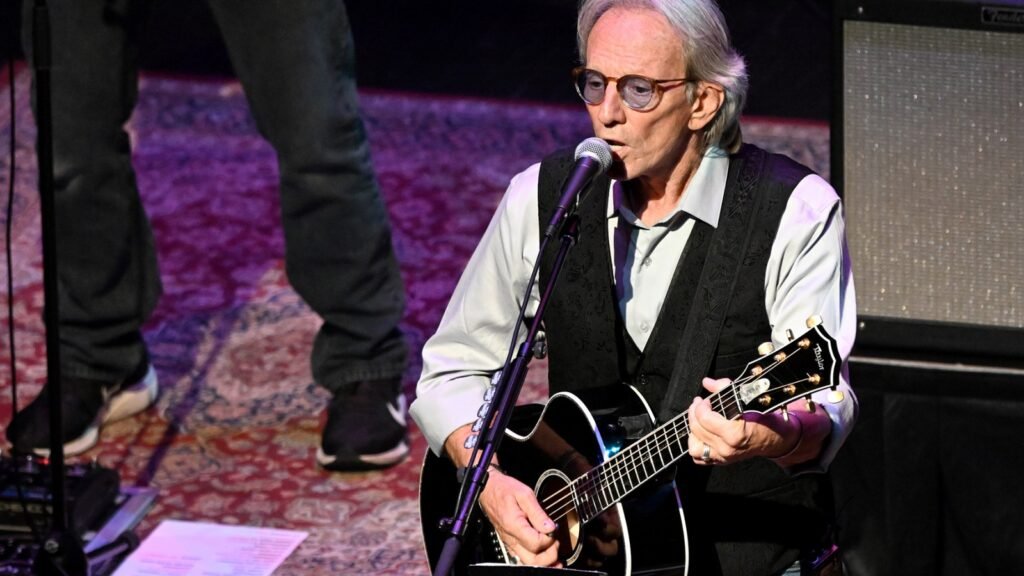
Rolling Stone‘s interview series Last Man Standing features long-form conversations between senior writer Andy Greene and musicians who are the last remaining members of iconic bands. In some cases, they are the only classic-era member in the current touring lineup. In others, they are the only ones still alive. In either case, the task of keeping the torch lit has fallen onto their shoulders, whether they wanted that responsibility or not.
At the dawn of the Seventies, three U.S. Air Force brat teenagers living abroad in England decided to form a rock band and call it America, modeling their sound after Crosby, Stills, and Nash, Joni Mitchell, Neil Young, and other acts over 5,000 miles away in California. Group members Dewey Bunnell, Gerry Beckley, and Dan Peek were all gifted songwriters and harmony singers, and they racked up an impressive string of hits in quick succession, including “A Horse With No Name,” “I Need You,” “Ventura Highway,” and “Sister Golden Hair.”
But Peek left the band in 1977 and found a new career in contemporary Christian music before dying from uremic pericarditis in 2011. Beckley quietly stepped away from the road in late 2023, retiring with his wife to her native Australia. This left Bunnell as the sole original member in the touring lineup.
A one-man version of America might have been tricky to pull off with either of the two other founding members, but Bunnell is the voice behind many of the group’s most beloved songs, including “A Horse With No Name,” “Ventura Highway,” and “Tin Man.” And with help from singer Andy Barr, who tackles Beckley’s signature songs, including “Sister Golden Hair,” “Daisy Jane,” and “I Need You,” the shows have been stellar.
“This is my third year doing it without Gerry, which I never expected in my wildest dreams after 50 plus years,” Bunnell tells Rolling Stone via Zoom from Southern California. “But you never know in life what happens, and it’s been going really well. I’ve got a great support team, a great band.”
Bunnell grew up in Los Angeles and was ironically given the nickname “Dewey” after surf legend Dewey Weber: The man born Lee Merton Bunnell was completely inept in the ocean. Bunnell did, however, love surf music, especially Dick Dale and the Del-Tones, the Surfaris, and, of course, the Beach Boys.
Everything changed when his father was transferred to an Air Force base near London in 1967, where he not only made friends with Peek and Beckley, but also had the chance to see Pink Floyd, the Jimi Hendrix Experience, Led Zeppelin, and other major acts of the time. “It’s only when you step back and decades later you see how intense and rich the times were,” he says, “and how fortunate we were to be right there.” He was also fortunate to discover an incredible music chemistry with his two buddies and to start a band that he’s still fronting nearly six decades later.
The first few times you sang with Gerry and Dan, did you feel the chemistry?
Yeah. Gerry and I graduated from high school, got our diplomas, and Dan went back to the U.S. for one semester of college. But Gerry and I still hung around the base. We would go to shows and do things, but it was never in our mind’s eye that we were going to become a band.
But when Dan came back, the timing was everything. He’d apparently been writing some songs. I was out of school and working at the base. I was living with another family because my parents had moved to Northern England, and I had a lot of time in my bedroom with a guitar.
I started writing a couple songs, and Gerry started writing a couple of songs. Dan burned out on the first semester of college, and came back to England. None of us knew what we were doing. And the three of us got together and said, “Hey, I got a song. You got a song?” And we arranged them vocally.
What happened from there?
I’d never really sung harmony. I’d been in the school choir, and I guess that was singing harmony, of course, you’d learn your part. But the three of us sat in a little bedroom…and in a car too. We used to rehearse in this old car that my dad had gotten for me, an old Morris Minor, and the sound inside the car was really great, and really tight.
Gerry was the great arranger. He’d say, “You sing this part, and Dan, you’re going to sing this.” Dan was equally good at that. I was a Johnny-come-lately to any kind of music theory or any kind of arranging of songs, but we’d pick out those parts.
And yeah, you’re right. When those three voices hit our ears, we both went, “Wow, that sounds great.” And we started taping it and listening back, and that’s when you realize you’ve got something, there’s a blend there. Of course, we were all Beach Boys fans and Beatles fans and all the other harmony singers. But for your readers that don’t know, singing harmony is a very special sound.
You recorded your first album at Trident Studio in 1971. That place fascinates me. Right around that time, David Bowie, Elton John, Genesis, T. Rex, and so many other acts recorded there as well.
Bowie had just left [after recording The Man Who Sold the World] when we were there. We had the same engineer, Ken Scott. We’d been in one other demo studio before that, a place called Chalk Farm, a small, funky little studio to demo a couple of songs. But by the time we were now getting traction with Warner Brothers Records, they were interested.
We’d shopped those demos and settled on a deal with Warner Brothers. It was all happening pretty fast. Then we went into Trident and now it was the real deal.
Do you remember the moment you sat down and wrote “A Horse With No Name?”
I can, actually. We were living with another family, and there were two single beds in the bedroom I shared with a guy named John Alcazar. We’d come and go out of the house because we were working at the base, and John had a different job and his parents worked, so I could be there alone sometimes.
And it was sitting on one of those single beds writing songs. I’d already written a few. “Riverside” from the first album was the very first song I ever wrote. And that was the first song that we started arranging. As I remember, Gerry had “I Need You.” And Dan had written “Never Found the Time.” They’d come over to Alcazar’s house, but it was sitting on that bed that I wrote that song. And it was pretty stream of thought.
I had a strange little new tuning. I’d learned these tunings from Joni Mitchell and Neil Young and stuff. So we were already into them as singer-songwriters, and most definitely emulating them. We’ve always been considered sort of CSN light or whatever, but there’s no doubt that was a reality, that music had really taken the place of the earlier British bands that had influenced us, and Buffalo Springfield and the Byrds and that thing is what we wanted to hitch our wagons to. So we arranged the songs in ways that emulated that. I mean, it’s not like harmony and acoustic guitars were anything brand new, but there was a vibe that we wanted to join.
What put you in the mindset of the desert living so far away in England?
Yeah, good question. I was pining for warm weather for one thing, because England’s weather is a bit damp and rainy and a little bit chilly. So my family had moved around in the Air Force to various bases in the U.S., and my uncle and his family, he was Army, and they lived in New Mexico. So we’d spent time down there in the Southwest desert area a lot.
My brother and I, in our pastime as kids from as far back as we can remember on bases, would go poking around in the wilderness, whatever was around, forests, deserts, whatever, and catching snakes and lizards and things. We loved doing that and we were animal freaks.
So there we were back in England, not so much wilderness, not so much adventuring around the environment. I was just reliving one of those days hiking in the desert. We used to go out there all the time. Vandenberg Air Force Base in California had a lot of open space too, because it was a missile base. So there was a lot of undeveloped land and sagebrushy, desert-esque terrain, but that was the inspiration completely.
Do you get annoyed that so many people are under the impression that it’s about heroin?
That came out of left field. All of us, when we heard that, I never had heard the term “horse” for heroin. Not that we were living in heroin circles, but I heard it was called H or something. We were frankly hash smokers in England. In this day and age, THC and marijuana are passé, but in those days it was a little underground.
People also fixate on lines in the song like “the heat was hot.”
Like I said, it came out verbatim. I hardly changed the line. I think I’d written another verse and canned that because I already had a ton of words in there. But yeah, there’s a couple of odd lines, but I was also taking on a persona. I don’t speak like “‘there ain’t no one for to give you no pain.” It was almost like I was taking on a hick desert rat kind of a persona, and that was the way I figured I’d talk if I was out there poking around looking for old gold mines or something.
It’s pretty crazy that your debut single shoots to Number One. That doesn’t happen with most bands.
Yeah, there’s no accounting for that. Obviously, the strength of the song was much stronger than I ever expected. I’ve said it before, and it’s in print, that I thought of it more as a novelty story song that wasn’t full of nice bridges and fancy chord changes. So it was doubly surprising that it did so well. In England especially, a brand new band, and with the plethora of bands that were coming up then and the great releases going out at the same time….I’m sure Warner Brothers Records were equally surprised.
They did their best to get us on the BBC, and we did some trips over to Europe, went to Radio Luxembourg, which had a big listening audience around Europe, and it got played on there. But nothing like in the U.S. where there’s thousands of radio stations, and you can blanket the country. So it just had some kind of effect, thankfully. It really got traction right away.
What a wild twist of fate that it knocks “Heart of Gold” off the top spot.
Yeah, go figure that one too. We’d seen Neil alone onstage at the Royal Festival Hall [on February 27, 1971], which was fantastic. And we’d seen Joni Mitchell and we’d met Joni briefly. But we didn’t meet Neil. As we all know, Neil’s pretty private, but we just were enamored by that. We never saw CSN until later in life. And of course, we then met Jackson Browne and we were ultimately managed by David Geffen’s office, who managed all those guys, and the Eagles were just coming up.
It was strange that there was Neil climbing the charts at the same time, and he wasn’t known for big hit singles. We loved his albums, his first solo album, and we loved all his work with Buffalo Springfield, every song. Neil is a very special artist, and I’m still drawn to his work. But yeah, to knock him off as it were, it sounds like we’d beat him up or something. We were just the next new thing.
What was it like arriving in Los Angeles when you have this huge hit and they booked you at the Whisky?
Again, this was all on-the-job training. We’d never done this. We’d never traveled very far. We’d gone to some different American schools and played just because of the connection with the U.S. military. And we had played in Holland. We’d gone over on the ferry and [our manager] Jeff Dexter at that point was able to work with some promoters over there and we did half a dozen shows in half a dozen cities. And did we play somewhere in Belgium? I think, but that was our big international touring at that point.
Yeah, now the record is doing well in England. Warner said, “We won’t release it in the U.S. unless you’ll back it up with a tour.” And of course, we were like, “Yeah, sure, absolutely. We’re there, man.”
You didn’t have a band yet.
It was just the three of us on stools with acoustic guitars, and a bass guitar that Gerry and Dan would trade off on certain songs. They’d reach over and pick up the electric bass and the other guy would play a 12-string or six-string. So it was stripped down, three vocals and three guys playing an instrument, no keyboards, no drums, or percussion of any kind.
Like you said, we ended at the Whisky. But we had the better part of a six-week tour to really hone our chops in the U.S. We played in Philadelphia at the Main Point, and the Bitter End in Greenwich Village there in New York. That was really an eye-opener because none of us had been to New York City, and we were dropped in the middle of that. Everybody was going, “Wow, this is what you see in the movies.” And the Bitter End had a huge history. We were following in some big footsteps there. And we sold that out every night too. We were actually opening for Robert Klein, the comedian.
We did about 40 minutes and he’d come on. And from the first show, there were a lot of young people in there and it became pretty evident that…Well, there were Robert Klein fans, but they were coming to see us. And by the end of the week, he was making jokes about the people in the audience. “Yeah, we know who you came to see.”
Tell me about writing “Ventura Highway.”
I actually wrote some lyrics while we were still in England, before we moved out. And it was based on the time that my family lived in California before we went to England. We would drive down into L.A. sometimes because my dad had some business, and we’d turn it into a family trip or sometimes just to go to Disneyland or whatever.
I always remember that coast route, Highway 101. For years, I thought there was no Ventura Highway after everybody pointed it out to me. It’s called the Ventura Freeway, but it turns out there was a road there, and I’ve since seen the sign that says Ventura Highway. But I don’t know if I’d seen that or if I just knew that we were driving through the town of Ventura at the time and that sparked an idea for a song about the free wind blowing through your hair, man.
Why do you think Hat Trick didn’t do as well as the first two records?
Well, on the first album, we had two big singles in “A Horse with No Name” and “I Need You.” Second album, “Ventura Highway” was big, and “Don’t Cross the River.” We’d really saturated. We’d been touring right from that minute on. We were touring like mad all around the U.S. We had Jackson Browne open for us for one whole tour, and J.D. Souther. The Geffen/Roberts camp kept us moving.
At the same time, we were trying to write songs for the third album, which as you note is Hat Trick. I think our plate was so full. I love the album. I still do. But I think also the public moves on. And Geffen did not like the fact that we had decided to pick a cover song, and don’t ask me why. But Willis Alan Ramsey had written this song called “Muskrat Candlelight.”
And we were still absorbing all kinds of music. We were always going to Tower Records and buying albums. “Who’s this? Who’s that?” And for some reason we all thought that was a nice song. We worked it up, and we changed the title to “Muskrat Love,” and that became the single. Geffen didn’t like the idea we were doing anybody else’s music at all because he wants you to do original material. But I don’t know that there was a better song on the album at that point to be a single, so there you go. And it didn’t do as well. I think our popularity, we were saturating the market, and maybe it was just that step down.
What gave you the idea to write a song about the Tin Man from The Wizard of Oz?
I always loved The Wizard of Oz. It’s probably my favorite movie because it was a big part of my youth. We used to have to wait till Thanksgiving every year when it aired on TV. It was always the imagery and the adventure of that story and it was just great. But the lyric to “Tin Man” doesn’t adhere to that storyline so much, but I wanted to get that. And again, it’s bad English. “Oz never did give nothing to the Tin Man that he didn’t already have.” But it’s basically the theme of The Wizard of Oz in some way.
How did George Martin change the way you guys approached your work?
Well, producing is a big job. It’s a bigger job than just saying, “Oh, that sounds good.” And in our infinite wisdom, we thought the three of us could produce albums forever, put our heads together and we would know how to do things. But there’s a lot of administrative work involved with recording. You have to book studios, book equipment, and sometimes book session players.
We were the creators. We didn’t want to be signing checks and contracts to book studios and do this and that. Frankly, I didn’t do much of that anyway, but we had an engineer who was coordinating and we had Geffen and Roberts. So it was time for a producer.
George Martin was known then, and still to this day, as one of the greatest producers ever, having produced virtually every Beatles record. Phil Spector did a little something in there, but George was responsible for corralling that whole Beatle thing. And he happened to be in town, we found out, doing some work with Paul on “Live and Let Die.” And so we were able to get a meeting with him at Geffen. Geffen was another powerful man getting more powerful daily, and he was able to track down George for us, bring him into the office.
We had a meeting. George kicked off his shoes and sat there very comfortably. He was a great guy, a very regal, gentlemanly, princely kind of a guy. And he said he had listened to our first couple of albums. He liked it. He knew about our history in England, and we kind of had the same sense of humor, British humor being what it is. And he said, “Right, let’s try it. Let’s do this, but you’ll have to come to England and work at my studio.” We said, “Great, we love going back to England.”
It was never planned that we’d do as much as we did. We did seven projects with George, and it was going to be a one-off, like “we’ll see how it goes.” But it went on and on after that.
It must have been surreal to sit with him at the mixing desk and think it was the same guy who made “A Day in the Life” and “Twist and Shout” and almost every other Beatles song.
Yeah. It’s funny. It almost was like living in some strange non-reality. We got along well though. He puts his pants on one leg at a time like everybody else. And Geoff Emerick was the engineer. He was a fantastic mixing engineer, and he knew how to set the mics and drum sounds from the Beatles and everybody else that they worked with. He was just fantastic. They were a team.
I’m sure it was hard in those years to watch Dan struggle with drugs and alcohol, and just start to deteriorate.
Yeah. We were all in this together, and all on par because we lived in the same apartment building. And when we first got to L.A. and we’d lived together in this little shack in England breathing down each other’s necks. We were tight that way. But when we got to LA and everyone took on their separate lives. Dan got married to his girlfriend. I’d gotten married and moved to Northern California. We were suddenly divided, the three of us having separate lives. Gerry was the bachelor, the last to marry, and there was so much going on in L.A.
I found out later that he was getting a little heavily involved in drugs, but we were all on par that way, to be perfectly honest. I wouldn’t hide anything. We were from that generation. We’d done acid and dabbled in this or that. Heroin was a no-no. Just seems like we learned that from when we were little kids. But cocaine was around. In fact, cocaine was everywhere. And I never saw Dan slipping as badly because I’d come down for rehearsals and then go back or come down to record and we’d stay in touch on the phone and stuff, but we were leading separate lives at that point.
By the end he was struggling badly, was not making rehearsals, and had been up for days. Bless his heart, he wasn’t coping well. And finally…Gerry is a practical guy. He said, “We can’t keep doing this, Dan.” But it did keep happening and we were missing rehearsals or were working without him.
And so we had to have that meeting, which was a dismissal meeting. We had Dan’s dad fly out, and I sat there on my hands. I couldn’t believe what was happening too. But by the end of that meeting, Dan was out of the band, at least with the concept of “maybe you go check into some rehab.”
They didn’t even call it rehab in those days, as I remember, going into a facility or whatever. We were like, “We’ll see where we go from here, Dan.” That’s the way we left it. Nothing was etched in stone, which was true. Who knows? Dan could have come back with a dozen great songs and been all perky and ready to go. And we finally said, “Well, sure, let’s do it all again.” But then of course, Gerry and I started doing this for ourselves. We moved into the next projects without Dan, and that became permanent.
Did you see Dan much in the decades that followed?
No. To be honest, we didn’t. I didn’t see him for years and years or speak with him much. It was before email. Things were different. He moved back to his hometown of Farmington, Missouri, where he was from. And then ultimately, he became a born-again Christian and did get records together. He did get himself together. He made albums on a Christian label and pursued his own career.
I’ve read different accounts online. Did he ever even guest onstage with you guys again?
No. As far as I can remember. I think he came to a show, maybe, to see us. I really have blacked that out a little bit. It was a painful, difficult time. And it was awkward going from being joined at the hip, the three of us, three musketeers, to avoiding each other a little like that.
Gerry and I still bonded, but the Dan thing was just a bad subject and I know he was upset about it. He wrote a book, and he made it clear that it was upsetting. But the train had left the station, and we were buzzing along with a record deal and George Martin producing the next and the next and the next album.
Was the period around Silent Letter and Alibi tough since those albums didn’t really connect?
Yeah. Again, we were in our own world, and I always thought we were doing the best work we could do at that time and we were being inspired by whatever the topics of the day were and doing the work that we always did. There were more distractions, certainly. There was probably some attention to detail that we did on our previous albums that we forewent at that point.
I still love those albums, and every album can’t be a Number One hit with a huge single. They hold together for me. I don’t listen to them a lot. It’s been a while since I’ve listened to any of our albums from back to front, to be honest. But with Spotify and various services, you can pull up any song at your fingertips. And if I’m reading something about us or about any era in music, I’ll open some songs from that era and compare one of our songs to something. But that stuff is behind us too. It’s just a part of our history now.
There was also a time of disco and punk and new wave. Things were changing very rapidly.
Absolutely, yeah. That’s another reason. Thanks for pointing that out. The times were different. We were in the pocket during the singer-songwriter vocal harmony band days. Now you’ve moved, things have expanded, and there’s a lot of other interesting music to listen to.
How did you feel about “You Can Do Magic” at first? It’s clearly a catchy song, but you guys didn’t write it.
We’d moved on to new management, and that song was brought to us. Our track record at that point was not good. If our music isn’t selling, the ones we’re writing, maybe we need to look at some outside material. We were open to that and that song was written by Russ Ballard. He said he’d written it specifically for us, which made it a little different than going through a bunch of tapes that were sent to the office by anonymous people. And we liked it. We thought we could arrange this. This could be good. It’s got a hooky chorus, and it’s lacking something that I would call us, but it’s still a mainstay in our set.
Suddenly it gives you an audience in the era of MTV.
That’s another good point. We missed the boat on that. A huge part of the change was music videos, and that element of the scene we didn’t really latch onto because that’s a creative device too. And in retrospect, we could have made some pretty cool videos of our music up until then and later, but we didn’t latch onto that.
You made an entire album, Your Move, with Russ after “You Can Do Magic.” It didn’t do very well. Was that a hard time?
We did less writing even on that one, as I recall. It was with Russ again because, “Stick with what you had success with.” But we were writing less. I had a lot more distractions in my life then. I had kids. The touring schedule took up enough time. The rest, I think…any artist that’s lived long enough and gone through life’s changes will say, “Yeah, we just didn’t have the time or didn’t make the time to focus on our music with so many other things going on in our lives.” That’s what happens.
The focus really did move to your live show at this point.
Yeah, that’s true. We always seemed to have that. To this day, our music comes off live really well and I think we have a broad pool of concertgoers that come, young people, old people, baby boomers, whatever, because I call it “palatable.” It’s approachable music, easy enough to understand lyrics and harmonies.
And you and Gerry always seemed to get along. There was never a hint of public discord, unlike so many other duos.
I think there’s different elements. Obviously, every duo or every couple is different, but we had really clung to each other, with Dan, because of that lifestyle of moving as kids, always having to leave friends behind, always having to fit into a new school. I think I was at seven or eight different schools in my life with my dad being reassigned to different bases, and same with a lot of military kids.
So the one thing we had to hang onto was each other, and I’ve never had a relationship with anybody that strong. We’re friends who understand where we’ve come from. And that’s certainly the foundation of Gerry’s and my relationship. Doesn’t mean that he doesn’t have a lot of different things going on, and he always had different interests, but we always knew we were at the end of the phone anytime.
You worked with Carl Wilson very near the end of his life on “Hidden Talent.” What was he like?
Carl was the greatest. We knew all the boys. Dennis was very erratic and everything. He was a charismatic guy, and Brian was a recluse. We were just happy to be able to rub shoulders with those guys and their band members were always great. But Carl was very friendly, and we really enjoyed offstage time with him. He made himself available singing on our records. I can’t say a bad thing about Carl. He was a sweetheart.
When did Gerry start thinking about retirement?
Covid really lit the fuse because we had to stay off the road for about 15 months, which we’d never done. We’ve always toured every single year of these 56 years we’ve been together. But he said to me afterwards, “Why don’t we go on hiatus?” And when he said that, I said, “Yeah, okay. We won’t do the fall. We usually do a fall, October, November. We won’t do that. We’ll wait till the new year.” And come the new year, he said, “I’m done, dude. That’s it.” And I said, “What? I thought this was just a hiatus.” I kind of said, “All right, this must be it.” I told my wife, “Maybe we’re not doing this anymore.”
You guys did do a series of last shows together in 2023, but it wasn’t billed as a farewell to Gerry, even though you knew at the time. Why didn’t you make it public?
We’d seen so many big farewell tours. We just wanted to slide into the background and see what that felt like. We consciously didn’t want to do that even though management and everybody said we should advertise it as the goodbye tour to get more sales. But no, we consciously said we’re not going to call this the goodbye tour.
What happened after you played your last show with Gerry in August 2023?
Our agent got in touch with me and said, “Hey, there’s a stack of offers here on my desk to do shows, and they’re willing to do it without Gerry.” Before that I really thought, “Oh, it’s got to be over if it’s just me.” But they were fine with me.
It was never my ambition to front the band. Gerry was a very good musical director, good frontman. We’d banter onstage back and forth between songs and chitchat and do what we did. But Gerry was always recognized as the de facto leader, and I was fine with that. I don’t like to be the leader, if you will. I’d rather be one of the guys in the background. But then this happened, and I had to come to the fore because I did want to do it again. I wanted to go back on the road. At least I wanted to give it a chance and see how it felt.
So you didn’t think at all about simply retiring?
I knew all good things come to an end. I’m doing that right now as we speak, things are going to come to an end. I’ll be 75 next year, and frankly, I’m getting tired. It’s a repetitive thing. I do enjoy the show. The road itself gets more and more difficult for me. It was exciting in the old days. You’re going to new cities, seeing new sights. This has been 56 years barring the break during Covid. I’ve been there and done that.
There’s something happening up on stage every night that’s different. You’re living in real time. I’m inhaling and singing songs live. So there’s an adrenaline and excitement about that. But from the minute I get off the stage to the next day at four in the morning loading into vans and getting into planes and going to the next city and starting it all over again, that’s definitely taking its toll right now.
How is Andy Barr doing with Gerry’s parts?
He stepped into Gerry’s big shoes. That was not an easy thing, but Andy had been in the band. As soon as Gerry said that to me, and as soon as I’d made the decision with our agent and manager to accept these offers and take America out, I knew I had to find the right guy. And Andy was the first guy I had in mind. Fortunately, he was available and he said, “Sure, I’ll give it a try.” And I said, “Yeah, just do this one summer” or whatever it was at that point. “And that’s what happened.”
What made you add “Cinnamon Girl” into the set?
We had done a couple of Beatles songs, and we wanted to do another cover. I wanted it to be an electric song. It’s really powerful onstage. It’s a great song.
How’s Gerry doing? Are you still talking to him a lot?
Oh, yeah, I’ll tell him how the show goes this week. I just talked to him, I think yesterday or the day before. If we don’t talk physically, we do email and texting and all that. And we keep current on current events, musical events. He tells me, “Did you see this?” He lives in Australia half the year, maybe the better part of half the year, with his Australian wife. So there’s a time zone difference.
Is he happy in retirement?
Yeah, he seems to be. I think he does a little musical event at a local pub or club or something in Australia with some friends. So he plays a little bit, and he works on his solo albums. Gerry’s always done solo albums.
Is there any chance he’ll make a guest appearance at a future show?
Well, I never say never. He knows he’s always welcome. But I think he made it pretty clear to me he didn’t want to do that. He’s pretty well done with it. I respect him for that. I wish I could say that because I do need to put a finish line on this thing, and I’m leaving it this year till late in the game to decide myself.
My wife and I have our family commitments. We have a horse and four cats. I do have a life that I really enjoy off the road, and it’s going to happen, could be this year. I’m not going to make that announcement to you or anybody until I’m absolutely sure. And I certainly first have to talk to the rest of the band and our agent and manager, but they know it’s around the corner.
The guys in our band have other commitments to various things. They do sessions and have outside bands, but this is their primary job. We’re only doing 41 shows this year. In the old days, we’d do 100 shows a year. It was really crammed, but 41 shows, you could practically double that with travel days.
I would love to see you guys finally join the Hall of Fame.
Well, we got in the Songwriters Hall of Fame. Gerry and I both really were excited about that because that’s a real feather in our caps as songwriters. As far as the Rock & Roll Hall of Fame, I’ve always said, “I’m not holding my breath.”
We weren’t really innovators or we didn’t do something that nobody else had ever done. I do think we’ve got… You can check all the other boxes as far as selling a lot of records and longevity and charts and projects we’ve been involved in with other artists and things. I think we probably qualify depending on your criteria.
How do you feel at the end of every night when you sing “A Horse With No Name” and thousands of people sing along to something you wrote as a teenager?
Well, it’s really hard to put that into words. It always surprises me, and I’m always grateful that people still know the song or still care. When I see younger people, I go, “Wow, these folks weren’t around in the Seventies and Eighties.”
I couldn’t describe it. It definitely is the defining stamp of acceptance, I guess. I hate to do the Sally Field thing, but they like me. It’s definitely a rewarding experience to get up there at the end of the show. They respond to a lot of our songs and a lot of people like songs that other people don’t like. And nobody comes to a show for one song anyway, but it’s very nice to know that that’s the cherry on top at the end of the show. And it was the first single, and it was the first Number One, and it wraps everything up in a nice package.
So you don’t envision any sort of America farewell tour even if you decide to call it a day soon?
Not at this point, no. I’m going to take some serious convincing to say, “We’re going to go out, and you’re going to say goodbye to everybody every night.” I don’t know about that.
It’s so common though, and bands sell so many more tickets when they do that.
Yeah, I know. Hell, going back to Cream. Cream made an album called Goodbye. I know every band does it. Well, nothing’s off the table. That’s all I can say about that.
When you retire, will America just be over? Can you imagine Andy leading the current band and calling it that name?
I don’t foresee that. I don’t know why. I mean, it would be a tribute band, of course. But if it was the band that was actually up there, I don’t know, what do you call that? Tribute Light or something?
I don’t know if the music is going to be played by a sanctioned tribute band or if the guys wanted to do that. That’s a discussion that’s not been had, and I don’t even foresee… In fact, you just brought that up. I’ve never thought about it.
I think when I go, that’ll probably be it. But the listening public, who knows what they want. There’s so many great tribute bands. We played a cruise ship recently, and saw a bunch of these bands, and they were really good, and it’s fun to listen to that music that you grew up with or that you have found and like as a new listening experience. And the only way you can hear it live is another band.
What’s amazing is you’ve really kept your voice. Gerry too. That vocal blend was there up until the very end.
Yeah, maybe we’ve got to get Gerry out again a little bit this year, but I doubt it. You can’t look back though. You’ve got to say, “This is what we are now. This is how we’re doing it.” And if some tribute band does it in the future, that’s going to be the closest you’re going to get to America. The music is still there.
Right now, it’s no tribute band. If you’re on that stage, it’s America.
Yeah. This is America. I’m waving the flag.
You may be interested

Trump meets with Netanyahu for first time since Iran war began
new admin - Jul 29, 2026Trump meets with Netanyahu for first time since Iran war began - CBS News Watch CBS News President Trump took…

Thames Water confirms whether water bills are reduced after hosepipe ban
new admin - Jul 29, 2026Some parts of the country are facing water restrictions after experiencing long periods of extreme heat. Watering gardens or filling…

At least 13 killed in Japan earthquake as rescuers race to find others trapped in rubble
new admin - Jul 29, 2026Japan’s meteorological agency warned there could be more earthquakes of similar intensity.“For the next week or so, especially the next…