


Americans win Nobel prize in medicine for work on human immune system

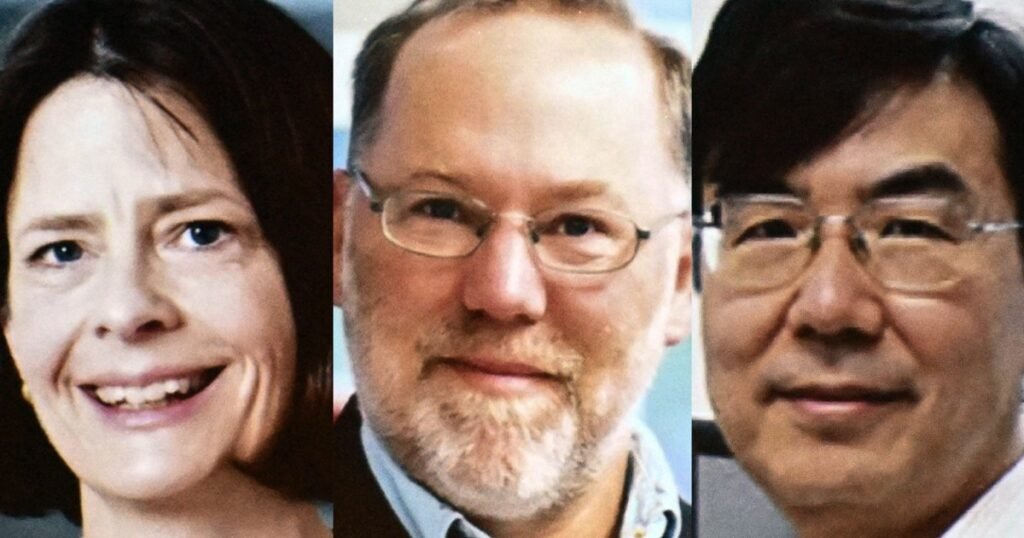
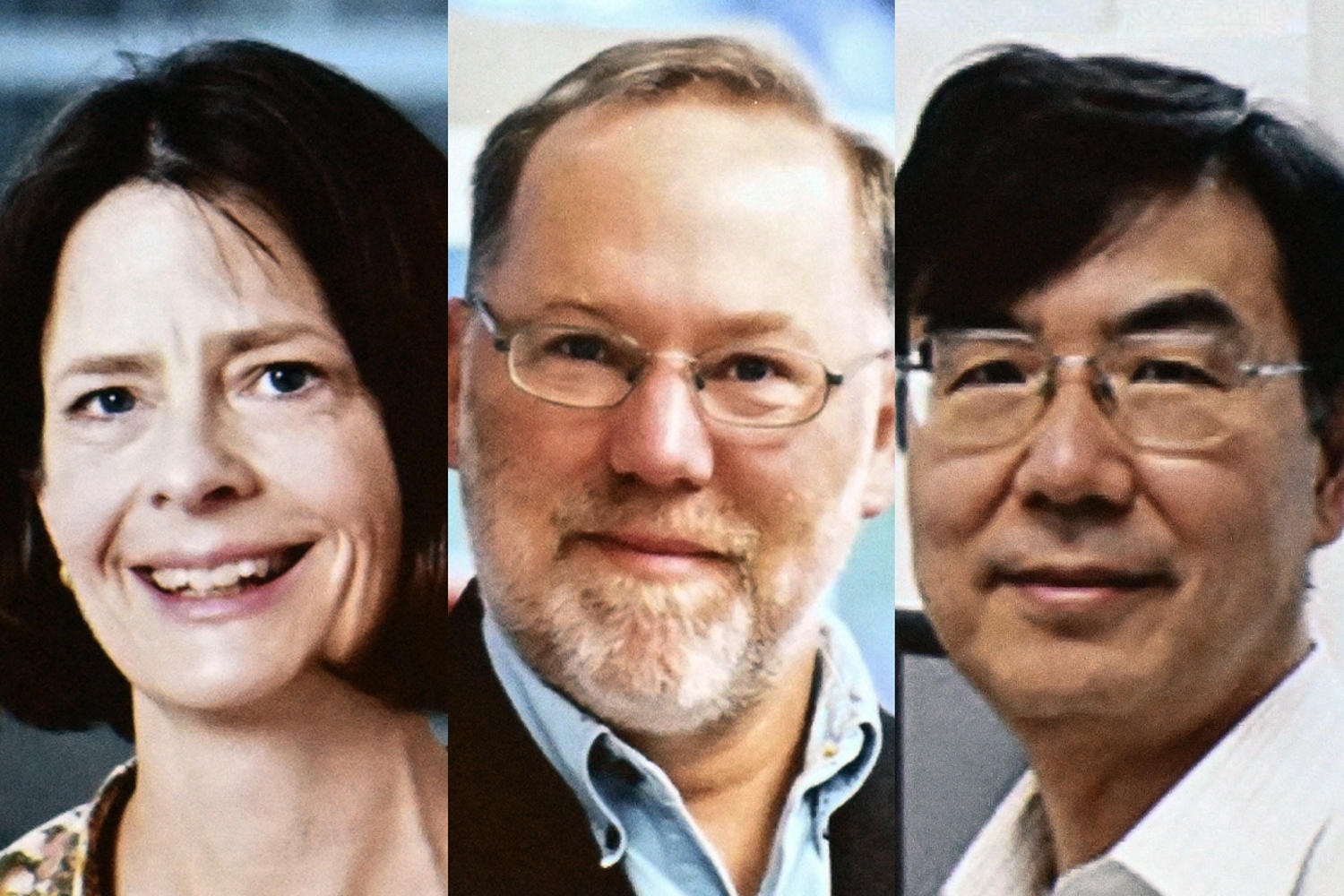
A trio of scientists — two of them American and one Japanese — have won the Nobel Prize in Medicine for their discoveries concerning peripheral immune tolerance, a mechanism by which the body helps prevent itself from attacking its own tissues instead of foreign invaders.
Mary E. Brunkow, Fred Ramsdell and Shimon Sakaguchi will share the prize for discoveries that “launched the field of peripheral tolerance, spurring the development of medical treatments for cancer and autoimmune diseases,” the Nobel Assembly said in a news release. The trio will now share the prize money of 11 million Swedish kronor (nearly $1.2 million).
“This may also lead to more successful transplantations. Several of these treatments are now undergoing clinical trials,” it added.
Autoimmune diseases can be triggered when T cells, our body’s primary defense mechanism against harmful pathogens, malfunction.
Together, the trio’s discoveries lay a crucial foundation for understanding another way our immune system keeps itself in check, known as peripheral tolerance — a key to understanding why some people suffer from certain autoimmune diseases while others don’t.
To prevent damage, our body attempts to eliminate malfunctioning T cells in a lymphoid organ located in the chest, called the thymus, through a process known as central tolerance, according to the Associated Press.
The discovery began in 1995, when Sakaguchi, a distinguished professor at the Immunology Frontier Research Center at Osaka University in Japan, found a previously unknown class of immune cells that protect against autoimmune diseases.
Six years later, in 2001, Mary Brunkow, now a senior program manager at the Institute for Systems Biology in Seattle, along with Ramsdell, now a scientific adviser for Sonoma Biotherapeutics in San Francisco, discovered the specific genetic mutation that results in a severe autoimmune disease called IPEX.
They named this gene Foxp3.
In 2003, Sakaguchi was able to prove that it is, in fact, the Foxp3 gene that governs the development of the cells he had identified nearly a decade earlier. These cells are now known as regulatory T cells, and their job is to monitor other T cells and ensure they don’t go awry.
“Their discoveries have been decisive for our understanding of how the immune system functions and why we do not all develop serious autoimmune diseases,” said Olle Kämpe, chair of the Nobel Committee.
Announcing the award, Thomas Perlmann, Secretary-General of the Nobel Committee, said he was only able to reach Sakaguchi on Monday morning.
“I got hold of him at his lab and he sounded incredibly grateful, expressed that it was a fantastic honor. He was quite taken by the news,” Perlmann said, adding that Sakaguchi said he had left voicemails for Brunkow and Ramsdell.
The award ceremony will be held on Dec. 10, the anniversary of the death of Alfred Nobel, a Swedish industrialist who founded the awards to recognize those who have contributed the most to humankind. The first award was presented in 1901, on the fifth anniversary of his death.
The announcement of the Nobel Prize in Physiology or Medicine was made in Stockholm at the Karolinska Institute on Monday and will be followed by the Physics Prize on Tuesday, the Chemistry Prize on Wednesday, and the Literature Prize on Thursday.
The Nobel Peace Prize will be announced on Friday.
You may be interested

Shopify opens its catalog up to more AI agents
new admin - Oct 13, 2026More AI agents will soon be able to browse and purchase from Shopify listings, marking an expansion of the company’s…

Why AI could end the price tag as we know it
new admin - Oct 13, 2026The humble price tag has long served as a common measure of value for consumers. Now, experts warn that artificial…

Rivian spinoff Mind Robotics hires Doug Field as president
new admin - Oct 13, 2026Rivian spinoff Mind Robotics announced the appointment of Doug Field as president in a major coup for the EV company’s…