



A mom “didn’t feel taken seriously” even as her symptoms worsened. Then tests found a rare disease.

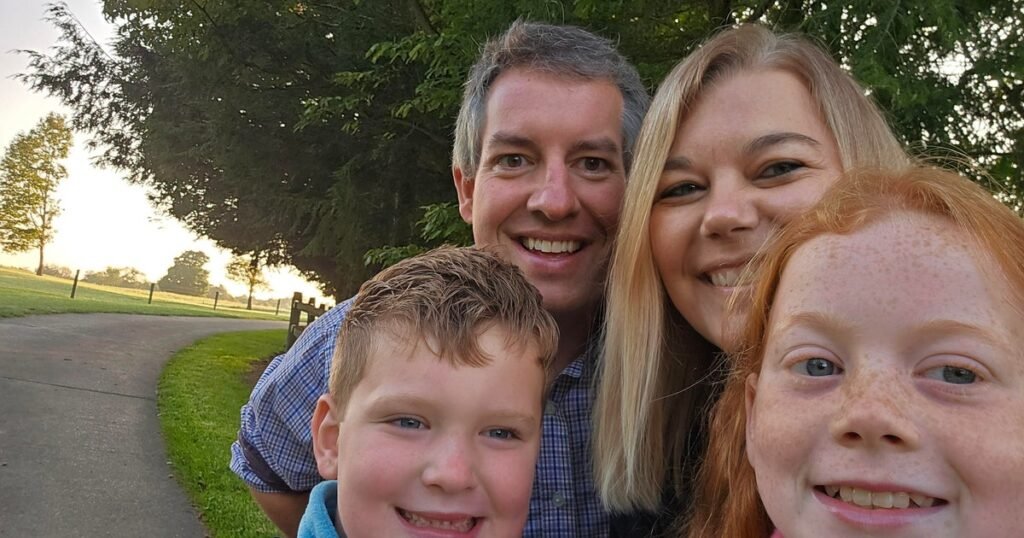
When Michelle Williams started experiencing high blood pressure, she didn’t pay it much attention.
She had two small kids, the COVID-19 pandemic was raging, and she and her husband were in the middle of renovating a farmhouse they had recently purchased. It made sense stress would spike her blood pressure. Her doctor recommended some minor lifestyle changes, but didn’t seem alarmed.
Other symptoms escalated slowly. Williams’ feet became so swollen she had to buy larger shoes. She was fatigued, but more and more frequent bathroom visits kept her from sleeping. Her blood pressure kept rising. Her ankles started swelling, then her legs. Finally, her doctor referred her to a nephrologist, or kidney specialist.
That visit, in June 2023, didn’t go well, Williams said. The physician assistant she saw did not show interest in the medical records she had printed out and brought, she said. The PA advised her to work to lower her blood pressure, but showed no interest in understanding why it was so high, Williams said. She was told to return in six months.
“I got to my car, and I was just depressed. Something was wrong. I didn’t feel taken seriously,” Williams said. “I didn’t really feel like I had six months to wait.”
Michelle Williams 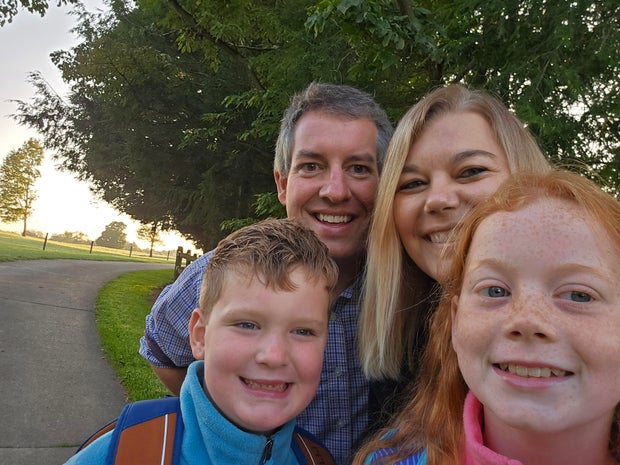
“Please help me”
In July 2023, Williams referred herself to the Cleveland Clinic, where her father-in-law had once undergone a kidney transplant. She sent over her medical documentation, along with a “kind of impassioned letter about ‘Please help me, something’s wrong.'” Several weeks later, she was scheduled for two full days of appointments.
After a barrage of exams, Williams and her husband made the two-hour drive home. As they pulled into their driveway, her phone rang. The nephrologist she had seen was alarmed by her blood work, and wanted to biopsy her bone marrow and kidney.
“That was kind of scary, right?” Williams said. “So we gathered up a few things and turned around and went back.”
Williams had both biopsies done over the next 24 hours. She also answered hundreds of questions meant to help doctors eliminate possible diagnoses. After recovering from the biopsies, she returned home.
Tests showed abnormalities in her urine and bone marrow, leading to a diagnosis of multiple myeloma, a form of blood cancer than can cause kidney problems. For nearly six months, she underwent chemotherapy and immunotherapy. Still, Williams’ symptoms persisted.
“It really got me thinking: If we are treating the underlying cause and she’s not improving, then what else are we looking at and what else are we missing?” said Dr. Jagmeet Dhingra, a nephrologist at the Cleveland Clinic. “It didn’t sit right that she wasn’t showing the response we wanted to see. So we kept looking.”
Michelle Williams 
What is IC‑MPGN?
Another round of biopsies showed Williams’ bone marrow was healthy, but complex immune deposits were building up in her kidneys. After ruling out all other possibilities, Dhingra finally diagnosed Williams with IC‑MPGN, a kidney disease related to the immune system.
The disease is “one of the rarest” kidney conditions, said Dr. Carla Nester, a nephrologist, researcher and professor at the University of Iowa. Nester, who was not involved in Williams’ care, estimated that only about one to four people per million are diagnosed with IC-MPGN.
In most cases, IC-MPGN has no known cause, Nester said. Patients most often notice symptoms like swelling and fatigue, as Williams did. Most people don’t get diagnosed until they have “quite a significant burden of symptoms,” she said.
At the time of Williams’ diagnosis, there was no specific treatment for IC-MPGN available. Nester said that until 2025, standard treatment included steroids, immunosuppressants and even chemotherapy. They helped some symptoms, but didn’t slow the progression of the disease, Nester said. Patients were told they had about 10 years between diagnosis with IC-MPGN and end-stage kidney disease. Even a kidney transplant only delayed the inevitable, because the underlying condition wasn’t being treated.
“We were not fixing the problem. It was a horrible prognosis, frankly,” Nester said.
Finding “freedom” in a clinical trial
Williams felt trapped. Dhingra was prescribing multiple medications, but they either made no difference or left her feeling unwell.
“For quite a while, I was just in a kind of fog,” Williams recalled. “Knowing there wasn’t a lot of options, it just felt like I had to make it work.”
Then she received a surprising call in November 2024. Dhingra had learned about pegcetacoplan, a medication still in clinical trials, that was showing potential as a real treatment for IC-MPGN. Williams was nervous, but agreed to join the trial. She was enrolled in February 2025. Things took a turn immediately.
“Right away, we saw change. I was back to my feisty self. I felt like I had freedom back,” Williams said.
Six months later, it became the first medication to be approved by the FDA for the treatment of IC-MPGN. The injectable medication is sold under the brand name Empaveli and is a “game-changer for patients,” Dhingra said.
“We were suddenly able to stop using all that other crazy stuff we were doing. We were suddenly able to put patients in remission on targeted therapy, and … stop using the other things that weren’t working well anyway,” said Nester, who noted the medication is FDA-approved for adults and children over the age of 12.
After over a year on the medication, Williams is doing significantly better, Dhingra said. She still sees him every other month for monitoring, but those visits will become more spaced out if her condition stays stable, Dhingra said. Day-to-day life is much more normal: Her swelling is gone and she is on far less medication.
“I don’t have that paranoia over me anymore about what I eat, and getting enough sleep,” Williams said. “It’s kind of been a game changer. I just feel back to myself again.”
You may be interested
United Airlines employee appears to threaten to call ICE on passenger: “You don’t act like a citizen”
new admin - Jul 21, 2026A United Airlines employee appears to have been caught on video threatening to call U.S. Immigration and Customs Enforcement on…

World Cup champs greeted as heroes in Spain as 2026 tournament comes to an end
new admin - Jul 21, 2026World Cup champs greeted as heroes in Spain as 2026 tournament comes to an end - CBS News Watch CBS…

New round of strikes targeting Iran underway, U.S. officials say
new admin - Jul 21, 2026A 10th straight night of U.S. strikes on Iran is underway as President Trump vows Tehran will pay for the…