




A Modest Proposal for Dual Enrollment


I’ll admit up front that this is relevant only in some states. But where it applies, it matters.
Dual-enrollment classes should be supported financially by states and/or by financial aid. The parent-pay model doesn’t work.
That position puts me out of step with some major organizations in the community college world, but I stand by it.
The idea behind financial aid is that student talent and drive don’t correlate perfectly with parental income. Making higher education accessible only to those who can afford to pay full price would leave a lot of talent on the table. And the seeming savings in terms of taxes would be illusory; if you think the nursing shortage is bad now, imagine what would happen after a decade or so of minimal new entrants. Supply and demand would work their magic, resulting in wildly higher costs for medical care.
It’s cheaper to keep producing new nurses (and dental hygienists, and teachers, and police officers, and welders, and …) than to establish bidding wars for the ever-shrinking number of incumbents. Even better, aid offers a shot at real economic mobility for students who might otherwise not have a chance. We know that full self-pay would leave out far too many and would increase inequality even more.
And yet, we apply self-pay to dual enrollment without a second thought.
Many colleges compensate by underpricing dual enrollment, but that strains institutional budgets. In budgetary terms, a colleague of mine refers to dual-enrollment credits as empty calories—they break the connection between head-count enrollment and revenue.
Some states cover the cost of dual enrollment, either through institutional support or through scholarships that cover tuition. I know that can make a difference, because we’re in the second year of a two-year grant to cover tuition for dual enrollment for students in technical majors; not surprisingly, enrollment skyrocketed as soon as the funding came through.
When I made this argument years ago at a gathering sponsored by the American Association of Community Colleges, I was informed that the association disagreed, at least as far as financial aid goes. Its position was that using financial aid for college courses in high school wouldn’t leave enough aid for when students get to college itself. (In fairness, this was shortly after the lifetime limit on Pell Grants was reduced to the equivalent of 12 semesters.)
I disagreed on multiple grounds. First, that takes the limit as given and unalterable, which it is not. Second, the entire point of aid is equalizing opportunity. When some students’ parents can afford to pay for dual enrollment and others’ can’t, we’re compounding existing inequalities.
Dan Greenstein wrote last week about the K-shaped enrollment patterns in higher education mirroring the K-shaped economy. Part of what drives the increasingly K-shaped economy is a growing sense that a rising tide doesn’t—shouldn’t, can’t—lift all boats. Instead, we take a winner-take-all economy as some sort of law of nature and set the task at hand as making sure that the few winners are as unfettered as possible. If your parents can’t afford to get you the best possible educational opportunities, well, too bad. Gotta keep the taxes down for the winners.
Doing dual enrollment the right way requires resources and rules. The resources need to be there to make the offerings sustainable, and the rules need to be there to make the offerings worthwhile. In too many states, we don’t have either. It wouldn’t take much to do this right, and to offer the students on the lower leg of the K a chance to do better. That’s supposed to be the point.
You may be interested

Best Contemporary Country Album Nominees
new admin - Oct 19, 2026[ad_1] Leading up to the Grammy nominations on Nov. 16, Rolling Stone is breaking down 11 different categories. For each,…

Wyze moved the screen on its new smart scale to the handle so it’s easier to read at eye level
new admin - Oct 19, 2026Wyze announced a new version of its Ultra BodyScan smart scale that debuted nearly a year ago with additional electrodes…
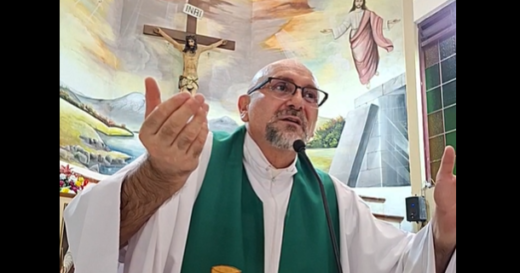
Falling crucifix kills priest during livestreamed Mass in Ecuador
new admin - Oct 19, 2026A Catholic priest died Saturday when a wooden crucifix fell from a wall and crushed him against the pulpit during…