





Fibrosis of the Liver – Liver and Gallbladder Disorders

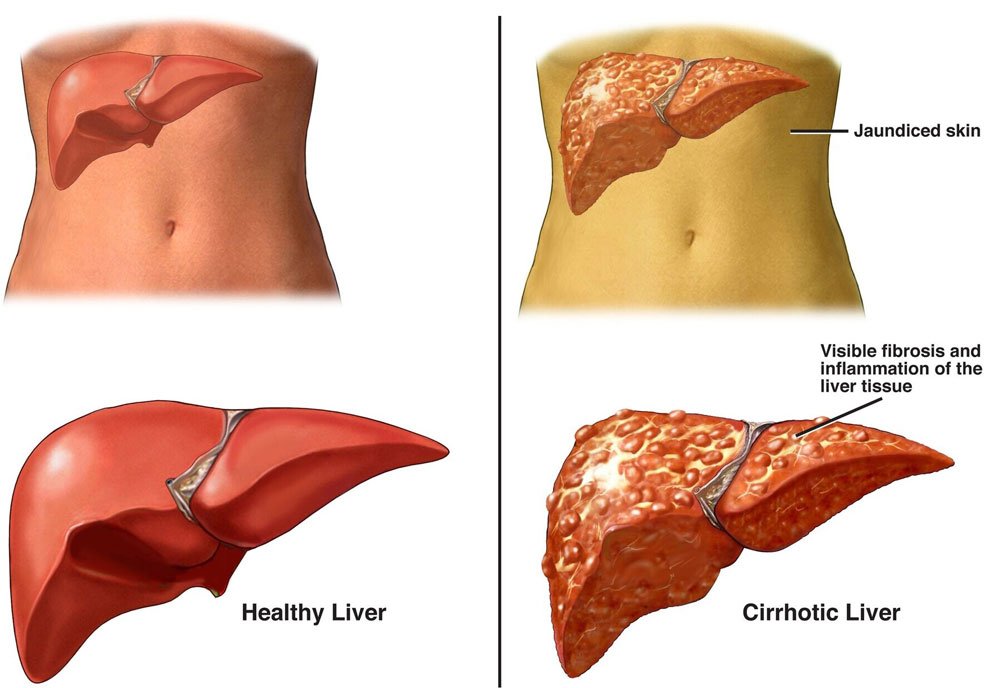
Doctors suspect fibrosis when people have a disorder or take a medication that could cause fibrosis or when routine blood tests to evaluate the liver indicate that the liver is damaged or is malfunctioning. Tests are then done to confirm the diagnosis, and if fibrosis is present, tests are done to determine its severity. These tests can include imaging tests, blood tests, liver biopsy, and sometimes specialized imaging tests to determine how stiff the liver is.
Imaging tests such as ultrasound, computed tomography (CT), and magnetic resonance imaging (MRI) do not detect early or moderately advanced fibrosis. However, these tests may show abnormalities that can accompany cirrhosis and portal hypertension (such as an enlarged spleen or varices).
Certain combinations of blood tests can distinguish between 2 levels of fibrosis:
-
Absent or mild
-
Moderate to severe
The severity of fibrosis helps indicate the prognosis in people who have chronic viral hepatitis.
Liver biopsy is the most reliable way to detect and stage (determine the amount of) fibrosis and to identify the disorder causing fibrosis. Biopsy is often done to confirm the diagnosis, to identify the cause of the liver disease, to stage the level of fibrosis or the presence of cirrhosis, as well as to assess the response to the treatment. Because liver biopsy is invasive and can cause complications, doctors may first do blood tests and imaging tests to determine the level of fibrosis and then decide about the need for a liver biopsy. Doctors rely on specialized (and noninvasive) imaging tests as alternatives to biopsy.
Specialized imaging tests can determine how stiff the liver is. The stiffer liver tissue is, the more severe fibrosis is likely to be. These tests (transient elastography, magnetic resonance elastography, and acoustic radiation force impulse imaging) use sound waves applied to the abdomen to determine how stiff the liver tissue is. Unlike liver biopsy, these tests are not invasive and thus have some advantage.
Transient elastography and magnetic resonance elastography are being used in people with various liver disorders to diagnose and stage the fibrosis. Additionally, these tests are used to assess the amount of liver fat in people with fatty liver disease. Conventional ultrasound can be unreliable because results depend on the skill of the person doing the procedure. In contrast, these specialized imaging tests report their measurement in numbers, allowing objective assessment.
Combinations of blood tests and imaging tests, some of them highly specialized, may improve the doctor’s ability to accurately assess the degree of fibrosis.
You may be interested

The best Cyber Monday deals you can already shop
new admin - Nov 29, 2026Cyber Monday is just around the corner, giving you one last chance to save big on our favorite goods and…

Israel’s Netanyahu and Eisenkot hold talks in push for a unity government to break deadlock
new admin - Nov 29, 2026Israeli political rivals Benjamin Netanyahu and Gadi Eisenkot held talks Sunday on the possibility of forming a national unity government,…

11/28: CBS Weekend News
new admin - Nov 29, 2026Los Angeles hit by magnitude 5 earthquake; Macy's Thanksgiving Day Parade held after delay. Source link