
Cuba’s doctors confront medicine and supply shortages along with power outages amid ongoing U.S. sanctions

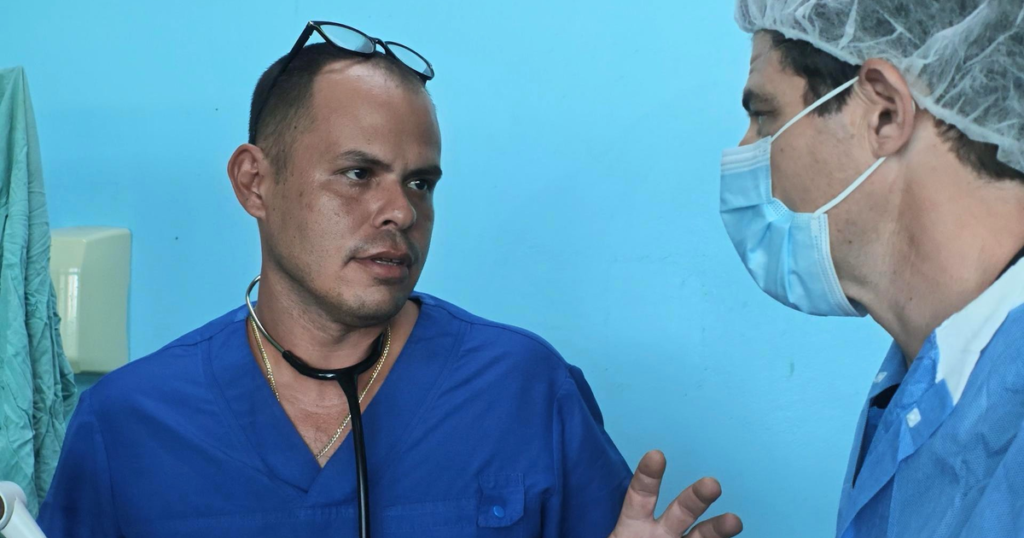
Cuban doctors rushed a 2-month-old baby, dehydrated and suffering from malnutrition, to the intensive care unit.
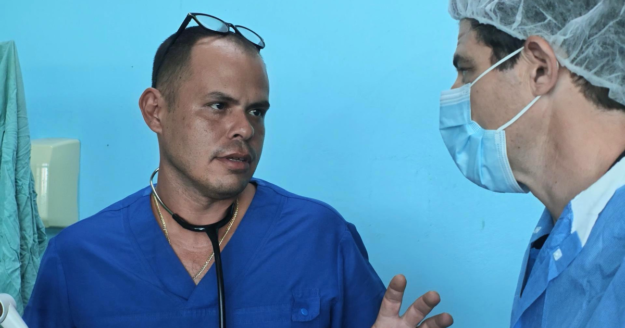
He weighed less than 5 pounds and had been taken to William Soler Pediatric Hospital in Havana, Cuba, by protective services after being abandoned. After he was stabilized, the 2-month-old boy needed specialized formulas, many of which come from the United States, according to Dr. Alejandro Chong, head of the ICU.
“We have to make do with formulas made from malanga — a starchy root vegetable — and chicken,” Chong said.
Doctors in Cuba make compromises like that on every shift. Just 90 miles from the U.S., Cuba has always imported much of what it needs — now new restrictions are making it harder to import food and medical supplies. Cuba has been under a trade embargo with the U.S. for decades, but now President Trump has tightened the vice, threatening to sanction those who do business with the Cuban regime. Washington says it does not intend to restrict food and medical supplies, but many foreign companies, fearful of U.S. penalties, won’t sell them to Cuba.
U.S.-Cuba conflict impact on medical care
Cuba’s problems long predate the Trump administration’s new sanctions. For decades, the U.S. says the regime mismanaged Cuba’s economy and let its infrastructure crumble.
But only a single tanker of oil has reached the Caribbean island since early January, according to Cuban officials, which has crippled the country’s electrical grid.
A generator quickly turns on at William Soler Pediatric Hospital, but the moment between when the electricity goes off and the generator turns on can be critical for medical care.
“Those few seconds might seem insignificant to someone outside the medical field, but they’re precious seconds when you’re dealing with a patient under general anesthesia or a patient on a ventilator in the intensive care unit,” Chong said.
Doctors said when the generators fail, they’ve had to finish surgeries using the light from their cellphones. If ventilators stop working, they pump oxygen for critical patients by hand.
Because it’s exhausting and poorly paid work, a huge number of doctors have left the profession or the country itself. Many who’ve stayed have taken second jobs just to get by, including Chong.
He makes more money at the food stand he owns than he does running the ICU.
Dr. Lórien Rodríguez, a second-year resident in pediatric surgery, supports herself by working as a radio announcer.
“There are fewer personnel, fewer resources, and it makes all the work we’re doing much more difficult,” she said.
Doctors told 60 Minutes cancer drugs, anesthetics and lab equipment are all in critically short supply. Rodríguez said doctors are “constantly” forced to tell patients they’re unable to help because of the issues. When 60 Minutes visited, doctors said a toddler had been waiting 68 days for an artificial lung machine component critical to surgery she needed, which normally had a wait time of two days.
Paloma Blanco, a dancer with the National Ballet of Cuba, is 8 months pregnant with her first baby. She said she trusts the doctors, but she’s nervous about the lack of supplies. Blanco said she has asked friends in the U.S. to send surgical supplies just in case she needs a cesarean section.
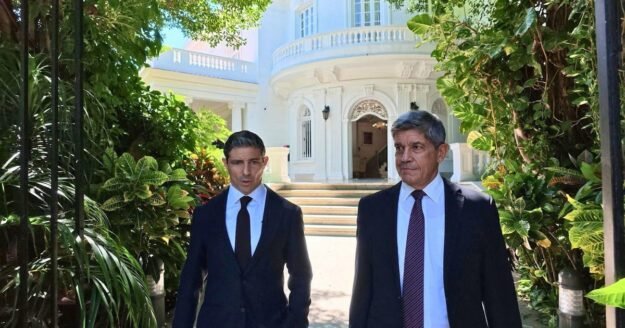
Carlos Fernández de Cossío, Cuba’s deputy foreign minister and a main negotiator with the U.S., said he owes it to families “to do as much as we can to ease the situation that the population faces.”
Conflict between U.S., Cuba goes back decades
Cuba has been under communist rule since the 1960s. The government employs most of the country’s workers and runs the hospitals and schools. Opposition parties are illegal. Cuba’s leaders have jailed critics, limited free speech and Washington says the regime has hoarded billions of dollars.
Since former leader Fidel Castro seized power back in 1959, nearly every American administration has tried to force change in Havana.
For decades, a U.S. embargo has cut the island off from American trade. Washington blames the crisis in Cuba on Havana, saying a corrupt communist regime has mismanaged the country for decades. Havana blames Washington, saying U.S. policies are designed to turn Cuba into a failed state.
“The United States has no legitimacy to what they’re claiming. They just have brutal power against the whole population of another country. That is criminal,” de Cossío said.
In his second term, Mr. Trump has turned up the rhetoric. His administration wants Havana to know there are “no escape valves,” as Secretary of State Marco Rubio previously told Axios, and has even threatened potential military action in Cuba.
“Actually, what we’re gonna do with Cuba is we’re gonna come back from Iran, those beautiful ships will pass Cuba. We’ll have one of them stop about 50 yards off the coast. They’ll raise up their hands and then we’re gonna send Marco Rubio in to finish up the deal,” Mr. Trump said at an event last month.
Rubio, the son of Cuban immigrants, has made regime change the signature issue of his career and, as secretary of state, turned it into one of the administration’s priorities.
Rubio declined a request for an interview, but in a statement, a spokesman said, “The failing Cuban regime continues to blame the United States and everyone else for their own incompetence and corruption,” adding, “They hide billions in overseas bank accounts instead of investing in electricity, infrastructure … and the daily needs of its people.”
Negotiations between the U.S. and Cuba stalled earlier this year. Last week, tensions exploded into public view during a speech by Mike Waltz, the U.S. ambassador to the U.N. Cuban officials confronted him, and one Cuban diplomat was expelled from the U.S.
Can there be change?
For most Cubans, staples are out of reach. Eggs can cost more than a month’s salary. That reality has forced people to find their own solutions, such as buying medicine at a black market.
De Cossío blames the U.S. for Cuba’s worsening crisis, but said, “Every government has responsibility for their people.”
“The unique position of Cuba is that in addition to whatever responsibility the government has, it has an external, very powerful factor having an influence in the reality of the population,” he added. “But our government has a lot of responsibility because there could be decisions that could have been better.”
Cuba has also lost powerful benefactors. First, it was the Soviet Union. Much more recently, it was Venezuela. When the U.S. captured the Venezuelan president, Nicolás Maduro, on Jan. 3, 2026, Cuba lost its main oil supplier.
This year, Cuba made the biggest economic reforms in more than six decades, including dropping its monopolies on fuel, banking and pharmacies. U.S. companies have started exporting fuel to Cuba’s private sector. But it’s prohibitively expensive.
Asked why Cuba had not opted for political reforms, de Cossío said, “I believe that rather than in Cuba, it is in the U.S. where it should be political reform. Cuba does not threaten the U.S. or any country.”
When it comes to its own country, Cuba has cracked down on dissidents; almost no one 60 Minutes met was willing to openly criticize the Cuban government.
De Cossío sees the impasse with the U.S. ending with “a change of attitude from the United States.
“We see every reason for that to occur. What we see no reason is for the U.S. government to continue to punish the whole population of a country,” he said. “How long is that sustainable? How acceptable is that? Just because power exists in the hands of the United States. Does everybody have to bend to that?”
This weekend, 60 Minutes checked in with Dr. Chong, and he said the baby 60 Minutes saw being treated during a hospital visit suffered respiratory complications and was readmitted to the ICU, where he died on Thursday.
You may be interested

Victor Wembanyama: The 60 Minutes Interview
new admin - Nov 02, 2026Spurs center Victor Wembanyama can dunk without jumping, freeze defenders with his ballhandling, and drain three-pointers. Wembanyama, 22, is the…
To honor America's 250th anniversary, vote
new admin - Nov 02, 2026When it comes to politics, Americans are often too ready to complain, rather than do something. In this 250th anniversary…

'Spectacular' and 'unflinching' war film with perfect rating on Netflix now
new admin - Nov 02, 2026Fans have said the hidden gem war film on Netflix is "better than Saving Private Ryan". Source link