


Personalized mRNA vaccine for melanoma cut risk of cancer’s return in late-stage trial

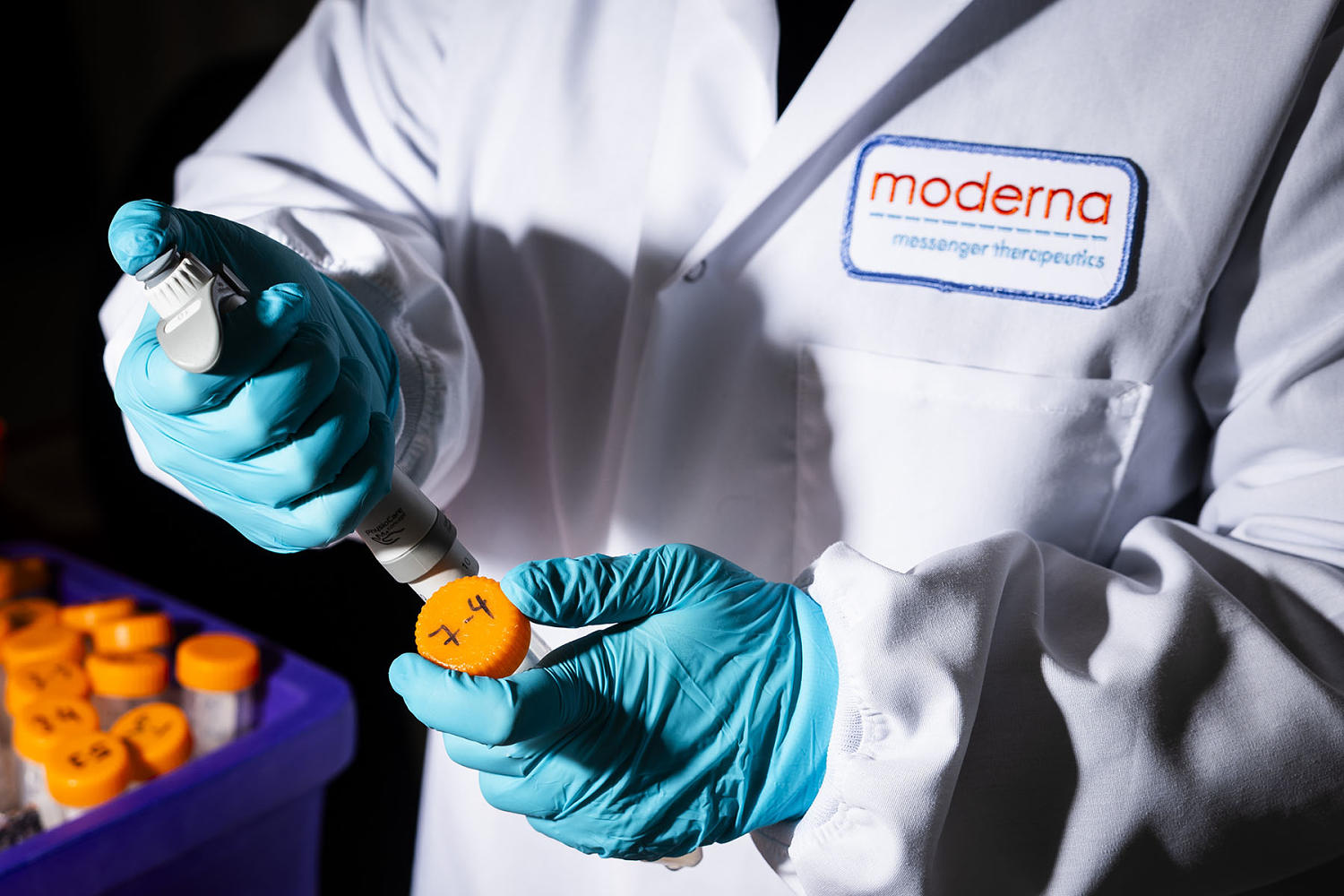
A new personalized mRNA vaccine for melanoma is being hailed by some oncologists as a major breakthrough after it reduced the risk of cancer recurrence and death by 42% compared with standard treatment in a late-stage clinical trial.
Dr. Robert Vonderheide, director of Penn Medicine’s Abramson Cancer Center and president-elect of the American Association for Cancer Research, said the results are a “game changer.”
“It will be seen as the first step toward using cancer vaccines to their full potential,” said Vonderheide, who was not involved in the trial.
The experimental vaccine, called intismeran, was developed by drugmakers Moderna and Merck. Intismeran is personalized to each patient, using genomic data from the patient’s tumor. The new results will be presented Saturday at the annual meeting of the European Society for Medical Oncology in Madrid.
The trial included 1,137 Stage 3 melanoma patients. All of the participants had undergone surgery to remove their tumors and were being treated with Merck’s immunotherapy drug Keytruda.
In addition to Keytruda, 757 of the participants also got the personalized vaccine; the remaining 380 got a placebo. Two years later, 82% of the patients who received both the new vaccine and the immunotherapy hadn’t had a recurrence, compared with 70% in the immunotherapy plus placebo group.
In Stage 3 melanoma, the cancer has spread to nearby lymph nodes or other sites on the skin, but it hasn’t spread to distant organs. Cancer recurrence is the “dreaded event” for these patients, Vonderheide said. If it does return, spread to distant organs is more likely.
Dr. Georgina Long, co-medical director of the Melanoma Institute Australia who led the clinical trial, said that while scans might suggest that melanoma has been completely removed by surgery, invisible cancer cells may still be lurking.
“This treatment is about mopping up the cancer cells we can’t see,” Long said. “We know with [Keytruda] alone, that works really well, but not in everyone.”
Keytruda works by mobilizing immune cells called T cells to spot and destroy cancer. The vaccine also helps the immune system fight cancer. Each vaccine is created by taking the excised tumor, sequencing its genome and identifying a tell-tale fingerprint of abnormal proteins known as neoantigens, Long said. The vaccine trains the immune system to recognize and target these neoantigens, similar to how a standard vaccine is trained to recognize and target a virus or bacteria.
Intismeran uses messenger RNA technology, the same platform pioneered in the development of Covid vaccines that’s hailed for how quickly it can be rolled out. Each patient received their personalized vaccine in a little over nine weeks on average.
“They’re not on the shelf,” Vonderheide said. “They have to be made for that patient. Can that be done in a few weeks in order to have a timely treatment? Turns out, the answer to that is yes.”
Dr. Shirin Bajaj, incoming director of hHead and nNeck mMelanoma at Mount Sinai in New York, said that while Keytruda works by taking the brakes off the immune system and enabling it to recognize cancer cells, the new vaccine is likely enhancing its abilities by mobilizing additional immune cells called killer T cells.
“It essentially creates an army of killer T cells that are meant to recognize the tumor,” said Bajaj, who was not involved in the trial.
Side effects of the vaccine included pain around the injection site and a mild fever — similar to those seen with Covid vaccines.
For Dr. Gino In, an associate professor at the USC Keck School of Medicine Norris Comprehensive Cancer Center in Los Angeles, that is a major selling point. In some cases, Keytruda can result in serious organ inflammation, and previous attempts to combine the immunotherapies with other drugs have not only failed to improve cancer recurrence outcomes, but resulted in worse side effects.
“In prior trials, other drugs that were studied in combination with [this class of immunotherapies] led to significant, and eventually potentially permanent side effects, particularly side effects that triggered the immune system to attack our own body,” In, who wasn’t involved with the trial, wrote in an email.
Despite the positive results, investors reacted poorly when the findings were leaked on Thursday, causing Moderna’s stock price to fall. Bajaj said that this may be because while the trial’s results are a significant breakthrough for the field of cancer vaccines, the difference between taking Keytruda and the vaccine compared with Keytruda alone is still relatively modest.
“The reality is that on one hand, any difference you see is amazing because it’s one more option for a patient,” she said. “Is this likely helpful for a handful of patients? I would say yes, but it’s hard to say whether at this point we have data to suggest that this is actually the next blockbuster.”
The full data is yet to be published in a peer-reviewed journal, and Bajaj said that the patients in the trial still need to be followed for several more years to see whether the vaccine continues to offer additional benefits in terms of preventing the return and spread of melanoma as well as its effects on survival.
In addition, Bajaj said she had questions over the scalability of the treatment. She noted that of the 1,749 melanoma patients who were initially screened for participation in the trial, 17% did not have tumor samples that were big enough for a vaccine to be created.
“It’s amazing, but I think some of the logistics are going to need to be worked out,” she said. “But nothing that I saw from this study made me think that the logistics are infeasible. It’s just that it will be a hurdle to actually do this at a wide scale.”
However, Vonderheide described the results as a very welcome boost for the field of cancer vaccines. In recent months, the German company BioNTech announced clinical trial failures for experimental vaccines for colorectal and head and neck cancers.
He suggested that intismeran’s success may be because the Merck and Moderna trial focused on preventing melanoma recurrence rather than prolonging survival in later stage patients.
“The field of cancer vaccines has been filled with disappointments in treating patients with advanced disease,” Vonderheide said. “Some people look at those results and say, ‘cancer vaccines will never work.’ These results show that cancer vaccines are incredibly powerful when deployed in the right clinical setting. Vaccines work to prevent.”
Still, intismeran is being studied in a separate clinical trial in patients with advanced melanoma that has already spread to distant organs.
“This is just the proof of concept,” Long said. “We’re going into advanced melanoma, but we’re also doing work in many other cancers — bladder cancer, kidney cancer, lung cancer, using this concept.”
She said that researchers will also be actively working to understand more about why the vaccine worked to see if that can lead to further clues.
Vonderheide described the future possibilities for preventing cancer recurrence as being myriad. “One day, we might be able to think of how to use a cancer vaccine to prevent cancer in the first place,” he said. “That’s a very ambitious, far-off goal. But these results bring that goal even closer to reality than we might think.”
You may be interested

How Thomas Jefferson politicked his way into the Louisiana Purchase
new admin - Oct 23, 2026The Louisiana Purchase was the biggest territorial expansion in American history. A new book, "Jefferson's Landmark Deal," examines the unique…

More candidates are using AI in political ads to get your vote
new admin - Oct 23, 2026[ad_1] South Carolina Lt. Gov. Pamela Evette appears distressed in a gloomy room as she undergoes a polygraph test that…
How Elon Musk's Starlink and Starshield are shaping the war in Ukraine
new admin - Oct 23, 2026Elon Musk's Starlink and Starshield satellite networks play different roles in Ukraine's fight against Russia. Here's how the two systems…