




Universities Have Gone on an AI Philosopher Hiring Spree

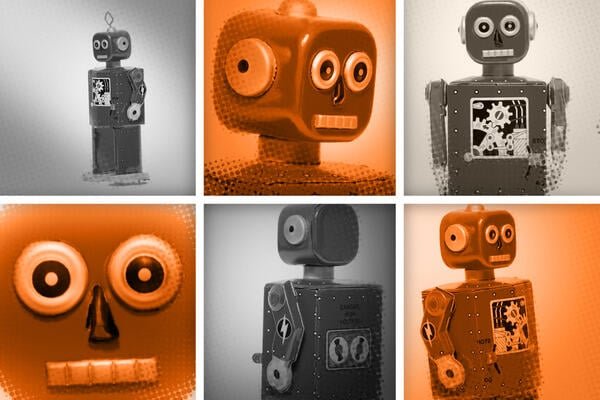
Numerous philosophy departments have hired faculty to focus on AI, exploring questions such as what it means to have a mind and what constitutes knowledge.
Photo illustration by Justin Morrison/Inside Higher Ed | membio/iStock/Getty Images
The job market for humanities scholars may be bleaker than ever—except for the handful of academics who specialize in the philosophy of artificial intelligence.
Although a small subset of philosophers have long worked at the intersection of science and technology, the rapid integration of generative AI into daily life over the past four years has heightened demand for their expertise. Philosophy departments across the country have already hired faculty for new, AI-specific positions, and a quick scan of the online job board PhilJobs.com shows that the trend isn’t slowing down. So far this fall, more than a dozen philosophy departments—including at Purdue University, the University of Illinois at Chicago and the Georgia Institute of Technology—have announced searches for AI-focused tenure-track faculty.
“While other humanities disciplines have much to offer in our current technological transition, too, philosophy is uniquely well suited to address the full range of needs and challenges posed by the rapid development and adoption of AI technology today,” said Cameron Buckner, who became an endowed chair in the philosophy of AI at the University of Florida in 2024. That’s because the existential questions AI is raising—such as what it means to have a mind and what constitutes knowledge—“are questions that philosophy classes have always explored,” he said. “Philosophers can contribute a great deal of value to these conversations.”
‘Hunger’ to Understand
College students looking for answers to those and other questions about how AI may influence their futures are part of what’s fueling the AI-philosopher hiring spree.
“There is a great hunger amongst the undergraduates to understand how the world is shifting under their feet, perhaps more rapidly than at any other time in history than perhaps the Industrial Revolution,” said Buckner, adding that his department has no trouble filling seats in its undergraduate ethics, data and technology course. “They recognize that they are subjects in a worldwide experiment in turning over vast swathes of human thinking to machines whose inner workings we barely understand.”
The creators of these powerful AI systems are also interested in what philosophers think. In recent years, numerous philosophers have left academe to work in research labs at companies such as Anthropic, Google DeepMind and Meta. For instance, since 2021, New York University–trained philosopher Amanda Askell has been working for Anthropic, shaping what she calls “the soul” of its large language model, Claude.
“At this point, half of my friends in the [field] have already been scooped up by one or another big tech company to go do something very similar to what they were doing in the academy, but now at the forefront of AI research,” Buckner said. Although companies with philosophers on staff have occasionally eschewed research showing potential downsides to their products, in most cases “not only do they listen to the philosophers, they offer them wheelbarrows full of money and place them in leadership positions to drive their research agenda.”
For philosophy departments, the urgency to understand AI also presents an unusual opportunity to hire more faculty—so long as their research engages AI.
“It’s wild. I’ve never seen one area so dominate what [philosophy departments] are looking for,” said Joshua Thurow, chair of the philosophy and classics department at the University of Texas at San Antonio. “A lot of people are having a hard time getting hires approved by their administration. Departments are just looking for something that the administration is going to be excited about, and AI is the thing that every university is excited about right now.”
That excitement enabled Thurow to make his department’s first tenure-track hire in years just before the start of this fall semester; UTSA received money from the state to hire a cross-discipline cluster of faculty members to study AI and education, including one philosophy position.
A ‘Foolish Waste’?
However, philosophy departments may not be producing enough qualified applicants to meet the ballooning demand for AI philosophers.
As in most humanities fields, both the pool of philosophers and available faculty jobs have shrunk over the past 10-plus years. According to data from the American Academy of Arts and Sciences, between 2011 and 2022 the number of completed doctoral philosophy degrees across the United States fell from 580 to 477. And only a fraction of those graduates have expertise in AI-related subfields.
“Philosophy of technology has been a less emphasized area among most of the top 50 Ph.D. programs in the United States,” Thurow said. “Consequently, I think a lot of programs were sort of ill prepared to meet this demand. Now they’re changing fast.”
But not every philosopher welcomes the field’s embrace of AI.
Brian Leiter, a philosophy professor at the University of Chicago School of Law, called the trend “a foolish waste of philosophy lines, no doubt partly a result of administrators hopping on the bandwagon and pressuring departments to find warm bodies” in a blog post last week. “Why not give the lines to specialists in the post-Kantian Continental traditions, which are a magnet for students … and in whom interest is strong across disciplines?”
At the same time, faculty who have been hired as a result of surging interest in AI say this moment is a chance for the field to spotlight the practical applications of studying philosophy.
“AI raises some really profound questions about the nature of the mind, knowledge, language, aesthetics and other areas that turn out to be quite salient in both the design and use of the technology,” said Heidi Furey, the associate professor of philosophy at UTSA who was hired to research AI, ethics and education as part of the cross-campus cluster. “Philosophy used to be the thing that was nice to think about if you had the time, interest and inclination. People are starting to see it as fundamental to the whole thing.”
You may be interested

Microsoft says Windows 11 is now ‘more responsive’ and runs better on 8GB of RAM
new admin - Oct 15, 2026Earlier this year Microsoft laid out a plan to fix Windows 11, with a focus on performance, reliability, and the…

Businesses were hit even harder by inflation than consumers
new admin - Oct 15, 2026[ad_1] Businesses were hit by inflation last month at levels not seen since late 2022.The latest U.S. wholesale inflation report…

New Earnings Test Will Have Limited but Concentrated Impact
new admin - Oct 15, 2026[ad_1] A new report and interactive tool from the Postsecondary Education & Economics Research Center at American University show that…