


Trump Admin. Expects Institutions to Pay $70K OPT Fee

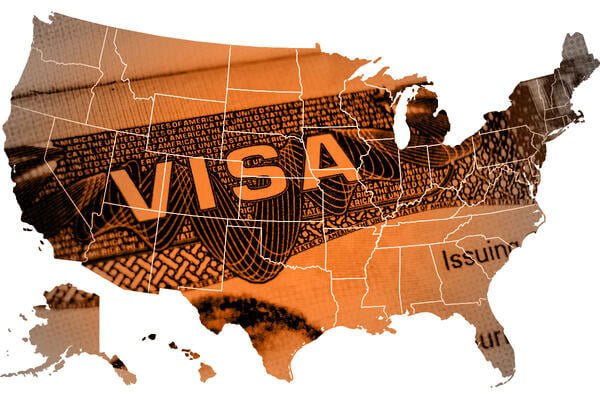
International education experts have long anticipated changes to OPT under Trump.
Photo illustration by Justin Morrison/Inside Higher Ed | Uladzimir Zuyeu/iStock/Getty Images
The Trump administration wants to charge a significant fee for international students to work temporarily in the U.S. after graduation—a proposal that some warned would further deter foreigners from studying in the United States.
Any F-1 student looking to start optional practical training, the program that allows international students to work in the U.S., would be subject to a $70,000 fee, while STEM OPT extensions would cost $30,000. Institutions would be expected to pay the fee when they “recommend an F-1 nonimmigrant student for any type of OPT,” according to the proposal released Wednesday.
Officials wrote that the goal of the fee is to curb cases of OPT fraud, in which students use OPT to remain in the country but are not actually doing legitimate work; the Department of Homeland Security cites a local NBC investigation that found over 4,000 had used shell companies to falsify employment records to receive OPT. It also cited a recent DHS investigation that it said found 10,000 F-1 students on OPT who “were working for highly suspect employers.”
DHS hopes the fee will encourage colleges to recommend “only high achieving eligible F-1 nonimmigrant students who are pursuing OPT directly related to [the students’] major program of study, thereby ensuring both F-1 nonimmigrant students and employers benefit from OPT.”
The rule is not yet final. The public has 30 days to comment on the rule before it is finalized. DHS will then have to review and respond to the comments before issuing a final rule. Students approved for OPT before the fee takes effect won’t have to pay it.
Nearly 290,000 students were authorized for OPT or STEM OPT in 2024, at which point the number of students participating in OPT had been steadily increasing for several years. DHS expects the fee to lead to a smaller pool of participants.
The fee has been a long time coming. Conservative leaders have long criticized OPT for the fraud issues presented in the proposed rule, but also for, in their view, taking job opportunities away from American citizens. Recently, several Republican legislators have called to end OPT.
And the administration has already used fees to dissuade other nonimmigrants from working in the U.S. The administration has twice attempted to attach a $100,000 fee to H-1B visas, which allow companies to hire skilled foreign workers and which are frequently used by institutions of higher education and medical centers; the first iteration was tossed out because the judge ruled DHS needed approval from Congress to implement the fee.
Reports first emerged in November that the administration was working on a plan to end or limit the program, and international education leaders have warned the other new policies could negatively affect OPT.
On Wednesday, international educators expressed concern about the proposed fee, arguing that the rule will further drive international students away from U.S. universities and from jobs in high-demand fields.
“OPT enables international students to gain the same hands-on experience as their domestic peers while filling labor shortages in high-demand STEM fields and generating jobs for U.S. workers on U.S. soil,” wrote Fanta Aw, executive director and CEO of NAFSA: Association of International Educators. “Driving away the talents, perspectives, and aspirations of international students will only hurt American innovation, economic growth, workforce development, and global leadership.”
Aw also cited research from the Niskanen Center in 2023 and the National Foundation for American Policy that both found that OPT does not take away job opportunities from U.S. workers. NAFSA’s own research has indicated that international students and their families contribute tens of billions of dollars to the U.S. economy annually.
OPT is also a major draw for international students to the U.S., meaning that the loss of the opportunity could result in a further decline in international student enrollment, which has already affected some U.S. universities that rely on tuition revenue from that population.
But DHS argues in the rule that the impact on institutions is not significant enough to outweigh the national security concerns, writing that colleges “should be able to attract foreign students without relying on OPT and STEM OPT, as students rely on myriad factors when applying for and selecting a school to pursue a course of study.”
The rule, too, says that employers should not be adversely impacted: “To the extent employers [sic] staffing levels may be impacted by this proposed fee, they can minimize this impact by recruiting U.S. citizens or candidates with other lawful work authorization to fill the vacancies.”
In a statement, the Association of Public and Land-grant Universities expressed doubts that colleges and universities can afford to shoulder the $70,000 fee, calling the proposal “deeply flawed.”
The OPT rule notes that institutions may pass the fee off to student, to the employer or to the student body at large, if they wish.
You may be interested

Apple and LG leak shows new ‘tap to control’ HomeKit features
new admin - Oct 09, 2026A post on X from “pdfu,” who has previously posted leaks and renders of suspected Apple features and LG smart…

Mastodon Are Releasing Vinyl Containing Actual Mastodon Fossils
new admin - Oct 09, 2026[ad_1] Limited to 170 copies, the "Bone Dust" vinyl was pressed in partnership with Waxwork Records and the University of Georgia's…
DOJ says it won’t enforce provisions of 1934 firearms law that were gutted by court ruling
new admin - Oct 09, 2026Washington — The Justice Department said on Friday it will no longer enforce certain provisions of a 1934 law that…