

University of Tennessee President Tours Rural Colleges

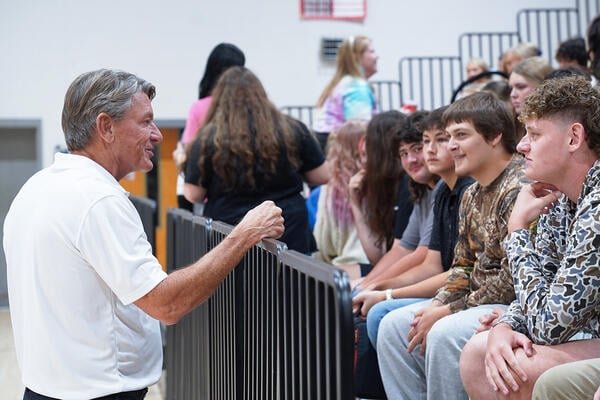
Few students at Polk County High School, one of two high schools in the rural county near Tennessee’s border with Georgia, imagine themselves going to a four-year college.
The school’s leadership has led a multiyear campaign to help them understand their postsecondary options, according to Principal Rachel Lowe—including educating students about Tennessee Promise, the state’s free community college program.
Most see four-year college as unaffordable, Lowe said—especially at the state’s flagship institution, the University of Tennessee at Knoxville. Even she used to believe that the university was not the most “financially responsible choice,” she said.
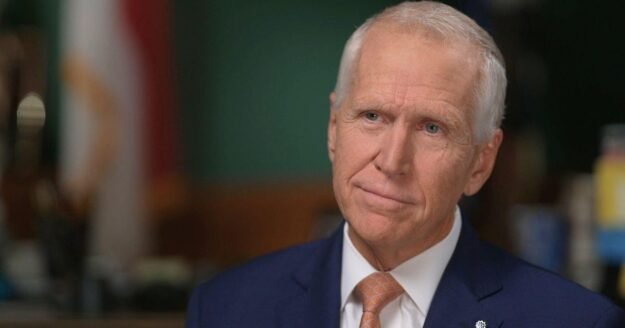
That changed this week, when the UT system’s president, Randy Boyd, visited the 400-student high school. Boyd has toured high schools in the state at the start of every academic year since he came to UT eight years ago, he said in an interview with Inside Higher Ed. But this year’s tour, which took place over the final two weeks of September, was the first to comprise just rural schools.
“While we have some great programs that make college affordable, [and] we have great reasons why you should go to college, the message just isn’t getting to the students in rural communities,” Boyd said. “And unfortunately, you have a culture that believes that people in this particular community aren’t supposed to go to college. We’ve actually, literally had superintendents of different districts in the past say, ‘Oh, in our district, people don’t go to college. That’s not what we do.’ And so we had to help them change the mindset by having this outreach.”
The change is part of a trend of colleges and universities across the country engaging more with students from rural communities, which experts say historically have been underrepresented in college recruitment and enrollment. Just 53 percent of rural students attend college right after graduating high school, according to the National Student Clearinghouse’s most recent High School Benchmarks report, even though they graduate at higher rates than urban and suburban students.
Colleges traditionally send most of their recruiters to urban areas, in part because it’s a more efficient use of staff and resources; a recruiter embedded in a major city likely reaches thousands more students than a recruiter in a rural area. But that’s changing: In 2023, a group of selective private and public colleges, called the Small Town and Rural Students College Network, came together to commit to visiting and recruiting from rural high schools. Thirty-two institutions now participate.
Outreach to rural students addresses the twin issues of college access and enrollment declines. Rural students often don’t see college as an option for themselves; they view it as too expensive or worry they won’t fit in—perceptions colleges hope to dispel. Meanwhile, as institutions across the U.S. contend with a decreasing number of high school graduates, some hope that enrolling more rural students could offset that decline. (Tennessee is one of the states that will not see a drop-off in the number of high schoolers.)
Meeting Students Where They Are
Research has shown a visit to a local college can have a major impact on rural students, according to Elise Swanson, director of research initiatives for college and career success at Harvard University’s Center for Education Policy Research.
“There are strong theoretical considerations for why these visits would be helpful for students in terms of developing a sense of belonging on campus, just sort of understanding how the campus works, building up some specific knowledge of what they need to do [to get there] and just a better sense of their own self-advocacy for being able to be successful in those spaces. There’s some empirical evidence to support that,” she said.
Less research exists on college recruiters coming to rural high schools, and none on the impacts of a top administrator like Boyd making an appearance. But Swanson said she believes that such visits would at least help rural students see that they are wanted on college campuses.
Students and families are far more likely to engage when universities demonstrate a long-term commitment to their schools and communities and take the time to understand local needs and priorities.”
—Marshall Stewart, president of North Dakota State University
Principal Lowe told Inside Higher Ed that Boyd’s visit to Polk County High School was more impactful than a visit to UT Knoxville would have been, mainly because it reached more students. A field trip to a campus can only fit 30 or 40 students and must end by 2 p.m. so all buses are available to take students home from school. When Boyd visited, though, UT was able to reach the school’s entire 400-person student body in one afternoon.
“[Boyd] was like, ‘Just keep that in mind, as you’re evaluating your list: I came here to personally invite you to attend one of our UT schools,’ and that was really neat,” Lowe recalled. “He was very personable with the students, and his message was very much on point for our students and the needs of our students.”
Other college leaders agree that reaching students in their own communities is key to getting them interested in higher ed. Visits to local high school have long been part of the recruitment strategy for community colleges, which are, comparatively, favored by rural students, according to the High School Benchmarks reports. While the share of rural high school graduates who go to four-year colleges trails behind urban and suburban students by 5.6 percent and 10.9 percent, respectively, the share who go to community college is the same for rural and urban graduates, and rural graduates are slightly more likely than their suburban peers to go to community college.
Representatives from Louisiana Community & Technical Colleges, a system composed of 65 two-year campuses, attend over 120 events at state high schools—most of which are rural—over the course of a recruitment season, tailoring those visits so that the high schoolers can learn about whichever LCTC campus is closest to them.
Sometimes, LCTC is the only institution that visits a given high school, said Queena Grant, executive director of strategic enrollment management for the system. The message the system aims to deliver to those students, Grant said, is that LCTC is not lesser than a name-brand school.
“[Louisiana State University] is king here, right? And everybody wants their kid to go to LSU. However, reality is everyone may not be able to meet the requirements for LSU,” she said. “Our colleges do a very good job of explaining in the recruitment process that … you’re not choosing the consolation prize.”
Effective Outreach
Other institutions are developing innovative strategies for getting in front of rural students. North Dakota State University’s admissions office recently launched a partnership with the state’s 4-H program, which is conducted by NDSU Extension. The partnership brings college and career readiness directly into 4-H clubs and after-school programming, wrote NDSU President Marshall Stewart in an email to Inside Higher Ed.
Stewart said bringing higher education into students’ backyards is especially vital in a mostly rural state like North Dakota, where it can be especially hard for students to visit campus or feel like they are a part of the college community.

Students at Polk County High School pose with UT swag.
University of Tennessee System
But it’s also not enough to just show up in rural communities, Marshall said.
“Outreach must be relevant. Students want to understand how education connects to their goals. Programs are most effective when they help students see a clear connection between what they are learning today and the opportunities available to them tomorrow,” he wrote.
“Effective rural outreach starts with listening. Communities want partnerships, not transactions. Students and families are far more likely to engage when universities demonstrate a long-term commitment to their schools and communities and take the time to understand local needs and priorities.”
During Boyd’s tour, affordability was at the forefront of the presentations. He told Inside Higher Ed he wanted to make sure rural students knew that they didn’t have to move to Knoxville or Chattanooga to attend a UT; they could attend a campus near their hometown if paying for room and board at an urban campus isn’t an option.
Most eye-opening to Lowe was a data point Boyd shared: Fewer than 50 percent of UT graduates leave the university with debt.
“That’s a huge number. That they’re committed to finding ways to financially provide a way for students to come to one of the UT schools—that’s huge,” she said.
Boyd’s visits, which he described as rallies, also featured alumni of the high school or a nearby high school who attended a UT school, plus the chancellor of whichever UT campus was closest to the high school. And, of course, they handed out UT shirts, which Lowe said some students changed into before the school day was even over.
You may be interested
Extreme heat putting births in jeopardy, U.N. climate chief warns
new admin - Oct 05, 2026Nadi, Fiji — Extreme heat is increasingly linked to problems such as premature births or underweight babies, the U.N. climate chief…

Spots 'cleared up in 48 hours' with £29 serum hailed as 'truly life changing'
new admin - Oct 05, 2026[ad_1] This stuff works miracles for me. One use and I'm healing, again before bed and my skin feels amazing.…
DHS Appeals Block on International Student Time Limits
new admin - Oct 05, 2026[ad_1] Secretary of Homeland Security Markwayne Mullin is one of the defendants in the lawsuit. Michael M. Santiago/Getty Images The…