

When Community Colleges Become Transfer Destinations

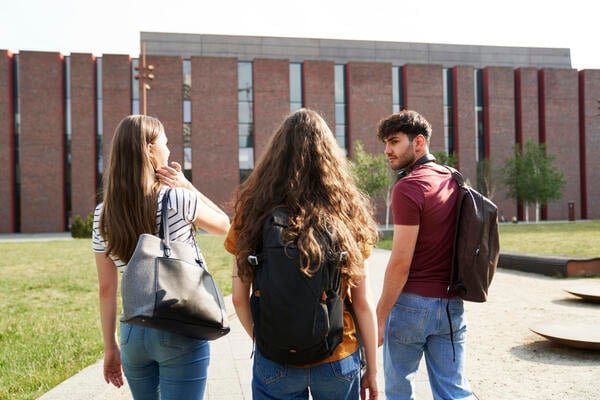
Today, roughly 200 community colleges across 24 states offer bachelor’s degree programs, challenging the notion that community colleges are exclusively two-year institutions.
As such programs expand, they are thrusting community colleges into a new role. While they have traditionally been viewed as starting points for students who transfer to four-year bachelor’s degree–granting institutions, now some community colleges are becoming transfer destinations themselves.
New cross-state partnerships at Yavapai College offer one example. The public community college in Arizona partnered with Moraine Park Technical College in Wisconsin and Central Community College in Nebraska this past spring, creating new avenues for graduates of both institutions to enroll in Yavapai’s bachelor’s degree programs.
Beyond the individual articulation agreements, the model raises broader questions about whether networks of community colleges could share academic capacity, expanding bachelor’s degree opportunities for students without requiring every institution to develop its own four-year programs.
Doug Berry, acting president of Yavapai College, said students can transfer their entire associate degree toward one of Yavapai’s 92-credit bachelor’s degrees, leaving them with roughly 30 to 32 credits to complete. A full-time student could therefore finish a bachelor’s degree with about one additional year of study.
“As a community college, we’re used to having our students complete and then move on to a university,” Berry said. “So when we entered this space, we got a chance to almost reverse-engineer that.”
Beyond two-year degrees: The growth of community colleges that offer bachelor’s degree programs has not been without friction. Supporters argue the programs can provide a more affordable and accessible path to a four-year degree, particularly for place-bound students and in regions where employers struggle to fill high-demand jobs. But some four-year institutions have pushed back on their expansion over concerns about competition and duplication of existing programs, arguing that community colleges should stay focused on their traditional two-year mission.
Enrollment in community college bachelor’s programs remains low. Last spring, about 2 percent of community college students nationwide were enrolled in a bachelor’s degree program, according to the Community College Research Center. California, where community colleges have offered bachelor’s degrees under strict parameters for more than a decade, recently expanded their ability to develop four-year programs after debate over the respective roles of two- and four-year institutions.
Research suggests the programs may be reaching students who otherwise would not pursue a four-year degree. One recent study from the National Bureau of Economic Research found that community college bachelor’s degree graduates earned between $4,000 and $9,000 more annually than comparable associate degree holders; researchers found that many students enrolled in the programs had not previously considered pursuing a bachelor’s degree.
Arizona joined the movement in 2021, when then-governor Doug Ducey signed legislation allowing the state’s community colleges to offer bachelor’s degrees. Yavapai College began offering four-year degrees in fall 2023 with the launch of a bachelor of science in business.
Two years later, the Higher Learning Commission approved Yavapai to offer a reduced-credit bachelor’s degree, and the college subsequently developed a 92-credit bachelor of applied science in business, which it now offers as an option for students transferring from its community and technical college partners.
Moraine Park and Central Community College first learned about the opportunity through the Alliance for Innovation and Transformation, a national network of community and technical college leaders.
Erika Liodice, the organization’s executive director, said the partnerships reflect a reversal of the traditional transfer relationship between two- and four-year institutions.
“The traditional model of sending students to a four-year university doesn’t necessarily work for everyone,” Liodice said. “So what’s great about this model is that it’s reaching students who may not have otherwise been on a path to a bachelor’s degree, and that’s a win for all of us.”
A new transfer route: Berry said Yavapai is applying the model through its partnerships as a way for community colleges to work across institutional and state boundaries to expand bachelor’s degree attainment and respond to workforce needs.
For Moraine Park students, the partnership creates a fully online route to a bachelor’s degree and is the first arrangement of its kind for the Wisconsin technical college.
Bonnie Baerwald, president of Moraine Park, said the goal of partnering with Yavapai was to help students earn a bachelor’s degree more efficiently while meeting regional workforce demands.
“I wanted to ensure that we were helping our employers develop the pipeline for the future,” Baerwald said. “Most of our employers need workforce talent today—not two years from now, three years from now or four years from now. Anything that we can do to streamline that was attractive to me.”
Baerwald said partnerships between two-year institutions can expand the degrees available to students without requiring every college to become a bachelor’s degree provider itself. That distinction is particularly significant in Wisconsin, where technical colleges cannot offer bachelor’s degrees.
“The technical colleges aren’t allowed to offer baccalaureate degrees, and some of our four-year college and university partners are slow to navigate the transfer,” she said. “A lot of times, our students are repeating classes and having to duplicate costs.”
Similarly, community colleges in Nebraska cannot offer bachelor’s degrees. Matt Gotschall, president of Central Community College, said the partnership with Yavapai gives its associate degree graduates access to four-year programs the college cannot provide itself, while allowing students to continue living and working in Nebraska.
“Even among our four-year partners—we have dozens of 2+2 agreements with some great institutions—but our colleges in Nebraska were slow in wanting to create different transfer pathways [like] a reduced transfer or a reduced bachelor format,” Gotschall said. “When this opportunity came about, we could sit around and wait a few more years for Nebraska to catch up at our four-year schools, but why?”
“We have students that need these degrees now and want these degrees now,” he added. “And it’s a lot more economical than what we even have for some of our in-state colleges.”
Measuring success: The partnerships are still in their early stages. At least one Central Community College graduate is already enrolled at Yavapai through the agreement, according to Gotschall. Berry said several more students are in the pipeline and considering enrolling.
Baerwald said the reduced-credit model is less about minimizing the number of credits students take than ensuring that the credits they earn count toward their degrees.
“It’s an excellent opportunity for our students to get their baccalaureate degree and take the courses that they absolutely need,” Baerwald said. “It’s not meant to take fewer credits. It’s a program where the goal is to take the right credits.”
As the partnerships develop, Berry said, Yavapai will be watching both student interest and, ultimately, how many students successfully complete their degrees. The college is exploring additional partnerships with technical colleges in Wisconsin and institutions in Arizona, but Berry said Yavapai wants to see meaningful results for students before significantly expanding the model.
“Quite frankly, we’re not a super well-resourced community college,” Berry said. “So we have to be really mindful of how we’re bringing students in and … the quality of the transfer that they’re getting, their student experience, their academic experience and any additional supports such as mental health.
“We’re working with these two institutions because of the relationships we’ve built at the [Alliance for Innovation and Transformation] over the years,” he added. “The goal is to build really meaningful partnerships, not to create a lot of partnerships.”
Gotschall said Central Community College is interested in pursuing additional partnerships where it identifies unmet academic or workforce needs, rather than expanding the model for its own sake.
“We’re not looking at trying to get a dozen of these, either, but we want to be strategic in the areas where there are those gaps,” Gotschall said. “I do think that’s another place where community colleges are good about knowing the needs of our communities, where the gaps are, and then going out and trying to find those solutions.”
Get more content like this directly to your inbox. Subscribe here.
You may be interested

Spots 'cleared up in 48 hours' with £29 serum hailed as 'truly life changing'
new admin - Oct 05, 2026[ad_1] This stuff works miracles for me. One use and I'm healing, again before bed and my skin feels amazing.…

DHS Appeals Block on International Student Time Limits
new admin - Oct 05, 2026[ad_1] Secretary of Homeland Security Markwayne Mullin is one of the defendants in the lawsuit. Michael M. Santiago/Getty Images The…

Battle for control of Red Sea, attacks on energy infrastructure temper news of rising oil flow
new admin - Oct 05, 2026Middle East oil exports, excluding those from Iran, surpassed their pre-war levels last week, despite attacks on ships in the…