



After Legal Setback, Antioch Fights to Preserve Governance


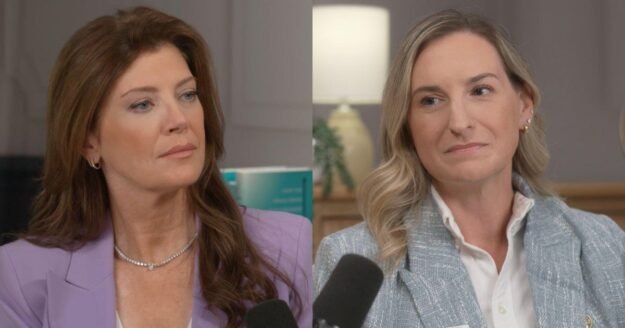
Antioch University’s legal fight to block the dissolution of its board hit a setback on Monday when a judge denied its request for a preliminary injunction. Now the Coalition for the Common Good, formed when Antioch struck a partnership with Otterbein University, is moving forward with its plan to remove Antioch’s Board of Governors and its president, Lori Varlotta.
But Antioch is not giving up the fight.
Antioch sued CCG last month in an effort to keep its governing board intact and stave off a plan to fire Varlotta, accusing CCG of a staging a “hostile takeover.” An Ohio court temporarily blocked the plan, but after the judge refused to issue an injunction Monday, CCG issued a statement indicating that its proposed “changes are now in effect.” Officials said they “were necessary to protect Antioch University’s stability, strengthen accountability and ensure responsible fiduciary oversight.”
An external public relations firm representing CCG told Inside Higher Ed that it had already placed Varlotta on paid administrative leave.
But both Antioch’s board and Varlotta reject CCG’s authority to carry out such actions.
Steve Crandall, chair of the Antioch Advisory Board of Governors, said that CCG appears to be acting based on the judge’s decision not to issue a preliminary injunction. But he noted that ruling was because the judge found that the Antioch board was not considered a member of CCG and thus did not have legal standing. The decision did not address the merits of Antioch’s argument.
“Their actions violate the founding agreements, the affiliation agreement, the strategic operating agreement, the shared services agreement, but also their very own bylaws, and they violate the Antioch Board of Governors charter,” Crandall said. “They are not free to do whatever they want to to revive those unlawful acts and claim that the court’s decision gave them that authority.”
Varlotta was similarly defiant.
“Nowhere in my contract, nowhere in the bylaws, nowhere in the affiliation agreement and nowhere in the AU charter is the CCG board given any authority to terminate me or put me on leave,” Varlotta told Inside Higher Ed. “I will say that the CCG board has informed me that they put me on leave, and I would like to see what authority they have and where they’re deriving that authority from.”
Now a member of the CCG Board of Directors is taking up the fight for Antioch.
After the court decided that the Antioch Advisory Board of Governors lacked standing because it was not a CCG member, Therese Cannon—who sits on both boards—filed a motion Tuesday seeking “a temporary restraining order and preliminary injunction to prevent a hostile takeover of Antioch,” which she alleged would violate “contractual arrangements and governing documents.” (The CCG board is comprised of four directors from each university and one jointly selected independent member.)
Cannon’s motion asks the court to block the Coalition for Common Good from taking control of Antioch’s finances, dissolving its governing board, amending its bylaws and terminating or taking “adverse action related to any employee affiliated with Antioch.” She also accused CCG of attempting to strong-arm Antioch rather than using mediation to resolve its governance dispute.
Both sides insist they are legally in the right, which CCG emphasized in its statement.
The CCG Board of Directors wrote that while it expects continued “accusations and rhetoric from those who oppose these actions,” it has both the authority and the responsibility to act when governance structures are no longer serving students, faculty, staff or the institution’s future.”
Though Antioch is anticipating a temporary restraining order, Varlotta said she would prefer mediation. She noted that the two sides previously agreed to mediation to address governance concerns and were set to do so in September before CCG suddenly backed out days before the talks were to begin.
“We believe that the path forward should be that we come to as amicable a dissolution or as amicable a disassociation as possible. But we’re very interested in continuing to do what we do best, and that is to serve graduate and adult students, to offer justice-oriented education, and, frankly, to fight the good fight in the world, and now, interestingly, in our own community,” Varlotta said.
Actions to dissolve the board run counter to statements made by Otterbein officials when the two institutions announced their partnership in 2022. At the time, Otterbein President John Comerford told Inside Higher Ed that the two universities would maintain “separate boards.”
(Comerford is now the president of both CCG and Otterbein.)
Edelman, the public relations firm representing CCG, did not answer specific questions from Inside Higher Ed about when or why officials backed off the idea of having separate boards.
Officials also said in 2022 they aimed to bring more partners on board. But that has not yet materialized. However, on the CCG website, the organization noted on a frequently asked questions page that “the focus in the first few years was not on expansion, given the amount of work required in integrating Antioch’s new programs and standing up shared services.”
You may be interested

Samsung’s new SmartTag is smaller, longer-lasting, and works with iOS
new admin - Sep 30, 2026Samsung has announced its third-generation Bluetooth tracker, the Galaxy SmartTag 3. It combines a smaller design and improved battery life…

We're Going Backwards: The $20 Billion Plan to Close the Gender Healthcare Gap
new admin - Sep 30, 2026The world of women's health is underfunded, under-discussed, and under-researched. Less than 10% of the funding at the National Institutes…
Anyone who bought or leased car or van from 2006-2015 could be due payout
new admin - Sep 30, 2026Martin Lewis has issued advice to millions of drivers who bought or leased a vehicle from 2006-2015. Source link